

Vitamin B12
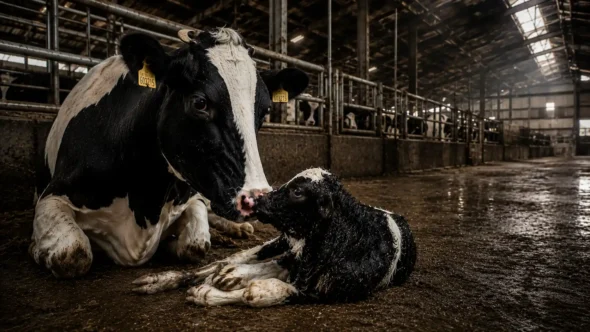
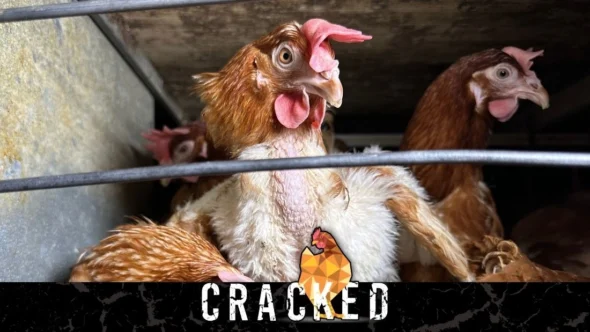
Vegans need to take a B12 supplement. This does not undermine a vegan diet, many people, regardless of diet, would benefit from taking B12 and it turns out, meat products contain substantially less B12 than they did in the 1990s. Furthermore, farmed animals are fed a B12 supplement so we suggest you just cut out the middleman and take your own.
How much do you need daily?
While there are many vegan sources of B12 in food, Viva! recommends taking a daily vitamin B12 supplement providing at least 50 micrograms per day, or weekly supplements once or twice a week that add up to 2,000 micrograms. We also suggest choosing foods, such as yeast extracts, plant-based milks, yoghurts, desserts, breakfast cereals and spreads, that are fortified with B12.
Official daily recommendations for B12 intake are low; 1.5 micrograms in the UK, 2.4 micrograms in the US and 4.0 micrograms in Europe (EFSA) but scientists suggest that these recommendations may be too low and that four to 20 micrograms a day is more appropriate to prevent B12 deficiency.
The reason we advise 50 micrograms a day or 2,000 a week is because research shows that as the dose of B12 you take increases, the percentage your body absorbs drops. So, while you absorb over 50 per cent of a one microgram dose, you might only absorb 16 per cent of 10 micrograms, three per cent of 50 micrograms, two per cent of 500 micrograms and just 1.3 per cent of 1,000 micrograms. So, a high oral dose of 2,000 micrograms might only deliver 26 micrograms of B12 into the body.
Vitamin B12 is a water-soluble vitamin, so excess amounts leave the body in the urine and the government says taking 2,000 micrograms of B12 or less a day is unlikely to cause harm.
The government recommends the following intakes
| Age | Amount of vitamin B12 recommended (micrograms per day) |
|---|---|
| 0-6 months | 0.3 |
| 7-12 months | 0.4 |
| 1-3 years | 0.5 |
| 4-6 years | 0.8 |
| 7-10 years | 1.0 |
| Males | |
| 11-14 years | 1.2 |
| 15-50+years | 1.5 |
| Females | |
| 11-14 years | 1.2 |
| 15-50+ years | 1.5 |
| During pregnancy | No increase required |
| Breastfeeding | +0.5 |
Are we getting enough?
Low B12 levels in the UK are not uncommon, especially among older people, affecting around one in 10 people aged 75 or over and one in 20 aged 65 to 74, according to the UK’s NHS. They also say a lack of B12 in the diet can happen if you are vegan and do not take a supplement or eat foods fortified with vitamin B12. This is why Viva! says it is important for vegans to take a B12 supplement.
The government’s National Diet and Nutrition Survey (2017) found low vitamin B12 blood levels (below 150pmol/L) in 2.2 per cent of boys and 4.3 per cent of girls aged 11 to 18 years; 2.5 per cent of men and 7.1 per cent of women aged 19 to 64 years, and 5.9 per cent of adults over 65. At a population level, that amounts to a substantial number of people.
Furthermore, some people can show signs of deficiency even when their results appear to be within the normal range. The National Institute for Health and Care Excellence (NICE) now advises doctors to consider additional tests for people with borderline results, particularly when symptoms suggest a possible deficiency.
Interestingly animal foods, specifically pork-based products, have significantly lower vitamin B12 (and iodine), around one-third less, compared with the early 1990s. This may be because pigs are no longer fed animal offal! You really are better off taking a supplement.
Why do we need it??
All B vitamins help the body produce energy from food. Vitamin B12 also helps maintain healthy nerve cells and helps in the production of DNA, the body’s genetic material. Vitamin B12 works closely with folic acid, to make red blood cells, to help iron work better in the body and to produce a compound involved in immune function and mood.
B12 is made by bacteria in soil and water and to some extent, bacteria in the gut (although production in the gut occurs in a different area to where absorption takes place). Traditionally, people, as well as farmed animals, got B12 from eating food from the ground. However, now food production systems are so sanitised, we need to take a supplement. Animal products contain vitamin B12 because many farmed animals are given this vitamin in their feed too. Official figures are difficult to find, but industry estimates suggest that around half of industrially produced vitamin B12 is used in animal feed. This makes the recommendation to eat animal products to obtain B12 somewhat invalid. Cut out the middleman and get it straight from the source.
Whether you choose B12-fortified foods or B12 supplements, you need to consume these regularly. There’s no need to take extra high doses but if you do have a high-dose supplement, taking up to 2,000 micrograms a day is unlikely to cause any harm.
There are different forms of B12 – the main two are cyanocobalamin and methylcobalamin. Cyanocobalamin is a cheaper and stable form of B12 used in most enriched foods and supplements – as long as you’re healthy, it’s perfectly suitable. Methylcobalamin is an ‘active’ form of vitamin B12. It costs more as it is not so stable and is recommended for smokers and people with kidney problems.
Absorption of B12 is dependent on its binding with intrinsic factor, a protein produced in the stomach. Absorption can be reduced by a number of factors: poor functioning kidneys; the diabetes drug Metformin and proton pump inhibitors (PPIs); nitric oxide in cigarette smoke and nitrous oxide (laughing gas) used for anaesthesia.
If you heat B12-fortified plant-based milks, some of the B12 might be lost – it depends how long you’re heating it for and at what temperature. In a microwave, B12 can get destroyed in a couple of minutes but if heating on the hob or steaming it, the milk would have to be at or near boiling temperature for five to seven minutes to destroy a significant amount of B12. So a traditional approach is better!
Do I need a supplement?
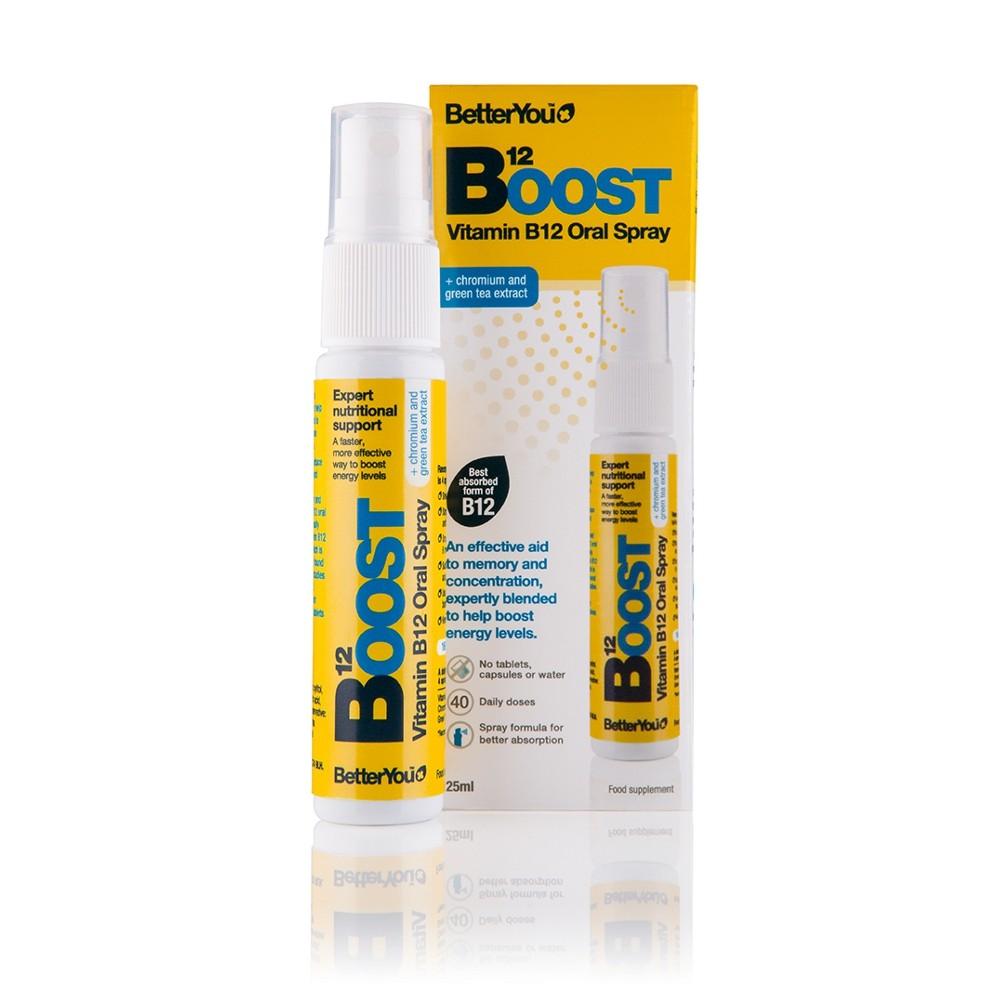 Yes, a B12 supplement is recommended to vegans and everyone over 50, regardless of diet. The human body is less efficient in absorbing vitamin B12 with age so it’s important to take a supplement to prevent deficiency.
The best plant sources
The best plant sources of vitamin B12 include yeast extract (Marmite/reduced salt Vegemite*), nutritional yeast flakes with B12, B12-fortified plant-based milks, B12-fortified plant-based yoghurts and desserts, B12-fortified breakfast cereals and B12-fortified margarine. Make sure the ones you buy are fortified with B12 but remember to take a supplement too!
*Vegemite 40% less salt is fortified with additional B vitamins (B6 and B12) but the regular Vegemite is not.
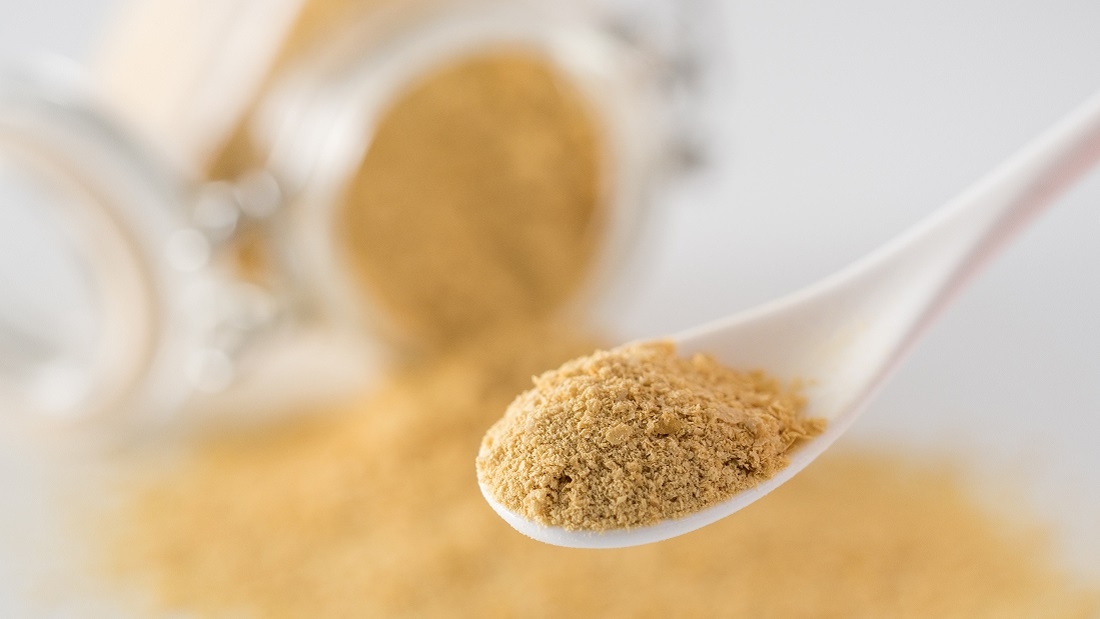
nutritional yeast flakes
Signs of deficiency
The following symptoms may be a sign of B12 deficiency:
- extreme tiredness
- lack of energy
- pins and needles sensation
- muscle weakness
- depression and cognitive problems such as impaired memory, understanding and judgement
A lack of B12 can lead to a raised level of the amino acid homocysteine in the blood which has been linked to heart disease.
If you are concerned, B12 levels can be checked by a doctor and any deficiency can be treated with supplements or a course of injections.
Foods to include
There are lots of great vegan sources of B12. Here are just a few:
| Food | Micrograms of vitamin B12 per serving | % of government recommended daily amount (1.5 micrograms) |
|---|---|---|
| Meridian Yeast Extract (4g serving – enough for one slice of toast) | 2.8 | 187 |
| Marigold Yeast Flakes with added B12 (5g) | 2.2 | 147 |
| *Weetabix Weetaflakes (small portion, 30g) | 1.2 | 80 |
| *Weetabix Oatibix Flakes (50g) | 1.1 | 70 |
| Violife cheese (2 slices, 40g) | 1.0 | 67 |
| Marmite (4g serving – enough for one slice of toast) | 1.0 | 64 |
| Plant-based milk alternatives, fortified with vitamin B12 (1 glass, 200ml) | 0.8 | 51 |
| Violife Chicken, Ham and Turkey slices (2 slices, 28g) | 0.7 | 47 |
| Vecon Vegetable Stock (1tsp/5g) | 0.7 | 43 |
| Alpro Desserts and Yogurts (125g pot) | 0.5 | 32 |
| Koko Dairy Free Original yogurt (125g pot) | 0.5 | 32 |
Source: manufacturer’s websites.
Note that organic versions of these products are not fortified with B12.
*Many cereals fortified with B12 also contain vitamin D (D3) from lanolin, a substance obtained from sheep’s wool. At the time of writing, Weetabix Oatibix Flakes and Weetaflakes both contain B12 and no vitamin D, so are suitable for vegans. This can change, and often does, so do read the ingredients list on the packet when you buy cereal.
Additional information
Absorption – a complex issue
Taking too much folic acid can mask the symptoms of vitamin B12 deficiency, which can allow problems associated with this deficiency to develop untreated. You would have to be taking quite a lot of folic acid for this to happen (for example five milligrams or more a day) but it is worth bearing in mind if your doctor has advised you to take higher amounts of folic acid for some reason.
Pernicious anaemia
Pernicious anaemia is an autoimmune condition where the body’s defence system that protects against illness and infection attacks the body’s own cells that produce the intrinsic factor, necessary for B12 absorption. A B12 deficiency will ultimately develop but most cases can be easily treated with injections.
What’s the beef with B12 in meat?
B12 in meat is bound to animal protein which makes it harder to absorb. Our ability to absorb it declines with age due to loss of intrinsic factor and a drop in acid production in the stomach. Mild to moderate B12 deficiency is common in industrialised countries despite the fact that that a typical western, meaty diet provides around five to seven micrograms of B12 a day. Up to 40 per cent of older people in the UK suffer from low B12 levels because of impaired absorption and as most meat is consumed after cooking, there are further losses of B12. In the US, all adults over 50 are advised to get B12 from supplements or fortified foods because of the high incidence of reduced absorption from animal foods in this age group. Vegans have a heads-up if they routinely include both in their diet.
What about vegans and B12?
B12 intake among vegans is increasing as many are routinely consuming B12-fortified foods and supplements and are therefore less likely to experience deficiencies due to age. So, a well-planned and varied vegan diet, including B12-fortified foods and supplements, not only meets our requirements but provides a healthier and safer source, setting us up for a healthy old age.
Useful Resources
List of All Nutrients
This post has been categorised in: A-Z of nutrients, A-Zs, Health