How Dairy Cows Are Farmed and Killed
Summary — Quick overview
SUMMARY
Cows are intelligent, socially complex animals with strong maternal instincts, lifelong bonds and clear individual personalities. In natural and semi-wild herds, mothers and daughters remain close for life, calves form lasting friendships and herd stability matters deeply. Studies and observations show that cows recognise individuals, communicate in distinct ways, enjoy problem-solving and can suffer anxiety, depression and grief when separated from their young.
Dairy farming ignores these needs. To produce milk, cows must be made pregnant, usually for the first time in their mid-teens in months, and then made to give birth every year. In the UK, around 1.6 million cows are in the milking herd and roughly 2.5 million female cows are tied to the dairy industry overall. Most cows are impregnated by artificial insemination, calves are usually removed within hours or days of birth and female calves may be confined alone in hutches for weeks before being reared as replacements.
The physical cost is severe. Modern dairy cows are bred and managed for unnaturally high yields, averaging about 8,000 litres a year in the UK. They are commonly impregnated again while still milking, forcing their bodies to sustain both pregnancy and lactation. This contributes to metabolic strain, mastitis, lameness and a wide range of other illnesses. Some are kept indoors for half the year or longer, while others in zero-grazing systems never go out to pasture at all.
When their productivity falls, cows are culled and sent to slaughter at around six and a half years old, despite a natural life expectancy of about 20 years. Male dairy calves, deemed of little value to the industry, are still killed in huge numbers. In 2024, 81,744 male dairy calves under eight months old were killed, including 32,540 killed on farm under two months of age. Behind the image of milk lies a system built on repeated impregnation, loss, disease and early death.
KEY FACTS
- Cows are highly social, intelligent mammals who form lifelong bonds, maintain matriarchal family structures and show strong maternal behaviour.
- Modern domestic cattle descend from the auroch and were domesticated around 10,000 years ago.
- In the UK, around 1.6 million cows are in the milking herd and roughly 2.5 million female cows are tied to the dairy industry overall.
- Dairy cows must be made pregnant to produce milk and are typically expected to give birth every year.
- Between 90 and 95 per cent of dairy cows in the UK are impregnated by artificial insemination.
- The vast majority of calves are separated from their mothers within hours or a few days of birth.
- The average UK dairy cow produces around 8,000 litres of milk a year and is typically considered spent by around six and a half years old, despite a natural life expectancy of about 20 years.
- Around 20 per cent of dairy farms are estimated to use zero-grazing systems, where cows never graze outside.
- Mastitis is one of the most common dairy cow diseases, with around 50 to 70 cases per 100 cows per year in the UK, and around one-quarter of dairy cows may be experiencing some degree of lameness at any one time.
- In 2024, 81,744 male dairy calves under eight months old were killed, including 49,204 in slaughterhouses and 32,540 on farm under two months of age.
FAQ
Why do dairy cows produce milk?
Like humans, cows only produce milk after pregnancy and birth. Dairy farming depends on repeated impregnation so that cows continue lactating and producing milk for sale.
What happens to calves born into the dairy industry?
Most calves are taken from their mothers within hours or a few days of birth. Female calves are usually reared to replace older cows in the milking herd, while male dairy calves are often treated as surplus and many are killed or diverted into beef or veal supply chains.
How long do dairy cows live?
Cattle can naturally live for about 20 years, and some live into their 30s at sanctuaries. In the dairy industry, cows are typically slaughtered at around six and a half years old when their milk yield falls or health and fertility problems make them less profitable.
What health problems do dairy cows face?
Dairy cows commonly suffer from mastitis, lameness and other diseases linked to high milk yields, repeated pregnancies, hard flooring, confinement and poor management. The strain of producing large volumes of milk while often carrying another calf can leave cows in severe physical decline.
How are dairy cows and male calves killed?
Most cattle in the UK are stunned, usually with a captive-bolt pistol, then shackled and bled to death. Male calves may be killed in slaughterhouses after stunning and bleeding, or on farm by shooting or captive bolt followed by pithing or bleeding. Failures in stunning can occur, and the process can be terrifying and traumatic for the animals.
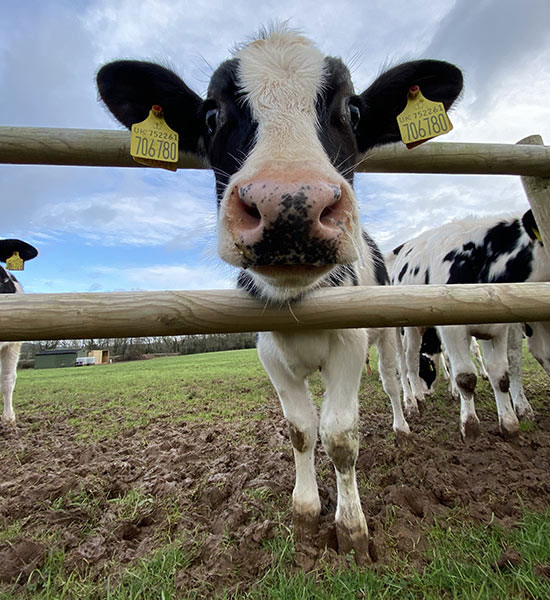
- Cows recognise different people and other cows by sight – even from photos.1Proudfoot KL, Ede T, Ryan CL et al. 2025. Cognition of dairy cattle: Implications for animal welfare and dairy science. JDS Communications. 6 (1) S37-S41.
- Cows solve problems, such as mazes or novel tasks, often showing excitement such as jumping when successful.2Stenfelt J, Yngvesson J, Blokhuis HJ et al. 2022. Dairy cows did not rely on social learning mechanisms when solving a spatial detour task. Frontiers in Veterinary Science. 9, 956559.
- Cows form strong social bonds, remember familiar individuals, hold grudges and exhibit playfulness.3Bekoff, M. 2025 The social and emotional lives of cows from the outside in. Psychology Today. 14 October 2025. Available at: https://www.psychologytoday.com/us/blog/animal-emotions/202509/the-social-and-emotional-lives-of-cows-from-the-outside-in
- Cows use unique vocal ‘names’ for each other, with low tones for nearby calls and high-pitched ones to signal distress over distances.4Gavojdian D, Mincu M, Lazebnik T et al. 2024. BovineTalk: machine learning for vocalization analysis of dairy cattle under the negative affective state of isolation. Frontiers in Veterinary Science. 11, 1357109.
- Cows have been observed using tools, such as flexibly manipulating objects to achieve a goal, which suggests untapped problem-solving abilities.55. Osuna-Mascaró, A and Auersperg, AMI. 2026. A tool-using cow is challenging what we know about farm animal intelligence. Scientific American, 19 January. Available at: https://www.scientificamerican.com/article/first-ever-flexible-tool-use-seen-in-a-cow-suggests-livestock-are-smarter/
- Cows protect vulnerable herd members, helping them keep pace with the group.3Bekoff, M. 2025 The social and emotional lives of cows from the outside in. Psychology Today. 14 October 2025. Available at: https://www.psychologytoday.com/us/blog/animal-emotions/202509/the-social-and-emotional-lives-of-cows-from-the-outside-in
- Cows self-medicate by selecting specific plants when unwell.6Villalba JJ and Provenza FD. 2007. Self-medication and homeostatic behaviour in herbivores: learning about the benefits of nature’s pharmacy. Animal. 1 (9) 1360-1370.
- Cows show emotional depth, including maternal protectiveness and mothers grieve when their calves are taken.3Bekoff, M. 2025 The social and emotional lives of cows from the outside in. Psychology Today. 14 October 2025. Available at: https://www.psychologytoday.com/us/blog/animal-emotions/202509/the-social-and-emotional-lives-of-cows-from-the-outside-in
The Maternal Instinct of Cows
Cows are highly social animals that form structured dominance hierarchies based on matriarchal families within herds.1Krahn J, Foris B, Weary DM et al. 2023. Invited review: Social dominance in dairy cattle: A critical review with guidelines for future research. Journal of Dairy Science. 106 (3) 1,489-1,501. Their social lives revolve around stable relationships and strong bonds, with mother cows forming especially tight bonds with their female offspring sustained by close contact and grooming during early life.2de Freslon I, Peralta JM, Strappini AC et al. 2020. Understanding allogrooming through a dynamic social network approach: an example in a group of dairy cows. Frontiers in Veterinary Science. 7, 535. Herds like stability and any disruption to the group, such as losing a herd mate, can be very stressful.3Valníčková B, Bartošová J and Bartoš L. 2024. Losing a herd mate: negative effects on milk yield and udder health indicators in loose-housed dairy cattle. Animals (Basel). 14 (23) 3,459.
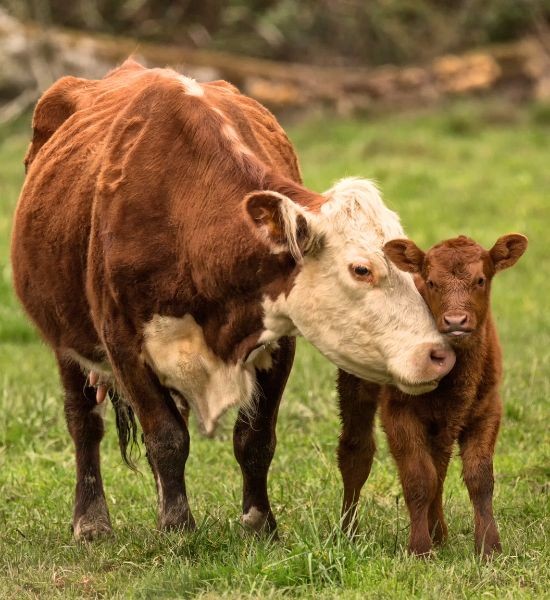
Just like humans, cows are extremely protective and caring of their offspring. They give birth in private and hide the calf in long grass out of sight during the first days after birth before introducing the newborn to the rest of the herd.4Jensen MB, Franchi GA, Schumacher M et al. 2023. Do calves hide after birth? Postpartum behavior of dairy calves and their dams housed in individual calving pens. JDS Communications. 4 (6) 474-478. The herd approves the new member, who then joins them. Female calves suckle from their mother for nine months and then stay together for the rest of their lives. Male calves suckle for about a year and then leave to join a bachelor herd.
While cows are sometimes portrayed as lacking intelligence, studies have shown that cows enjoy problem-solving, recognise individual humans, play games and have a variety of vocal calls to communicate with one another.3Valníčková B, Bartošová J and Bartoš L. 2024. Losing a herd mate: negative effects on milk yield and udder health indicators in loose-housed dairy cattle. Animals (Basel). 14 (23) 3,459. 4Jensen MB, Franchi GA, Schumacher M et al. 2023. Do calves hide after birth? Postpartum behavior of dairy calves and their dams housed in individual calving pens. JDS Communications. 4 (6) 474-478.5Gutmann AK, Špinka M and Winckler C. 2015. Long-term familiarity creates preferred social partners in dairy cows. Applied Animal Behaviour Science. 169, 1-8. Cows have different personalities, hold grudges with one another, bicker, bond and form friendships that can last for years.5Gutmann AK, Špinka M and Winckler C. 2015. Long-term familiarity creates preferred social partners in dairy cows. Applied Animal Behaviour Science. 169, 1-8.
Do cows have feelings?
Yes! Research has shown that cows have complex emotional lives in which they experience a full spectrum of emotions, including excitement, affection, sadness and fear.
Cows can also feel depression and anxiety. For example, calves kept in isolation hutches – a standard practice in the dairy industry – show clear signs of depression, just as solitary confinement affects humans negatively.6Gaillard C, Meagher RK, von Keyserlingk et al. 2014. Social housing improves dairy calves’ performance in two cognitive tests. PLoS One. 9 (2) e90205. There are clear similarities between cows and other animals, such as dogs and humans, as highly social animals who depend upon one another for our mental wellbeing.
Unfortunately, despite the emotional complexity and intelligence evident in dairy cows, the way they are treated in modern UK farming shows a complete disregard for their wellbeing and their sentience.
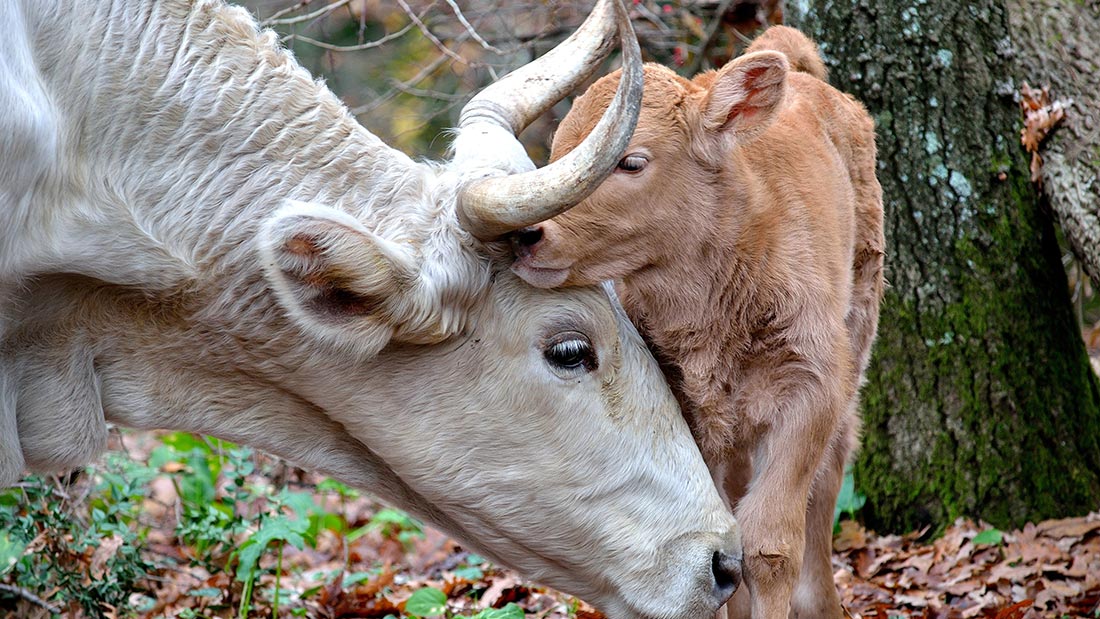
Cattle are highly intelligent, sentient mammals who have evolved complex social behaviours over many thousands of years. Their natural lives are very different to those they are forced to endure on dairy farms.
Where do cows descend from?
Cows are members of the Bovidae family, which includes antelope, goats, sheep, bison and buffalo. Modern domestic cattle (Bos taurus) descend from the much larger auroch (Bos primigenius) an extinct wild cattle species which once ranged throughout Europe and parts of Asia and North Africa. They went extinct in 1627 with the last known individuals seen in Poland. Modern cows are believed to have been domesticated some 10,000 years ago and selective breeding over the millennia has caused substantial changes in size, behaviour and productivity compared with their wild ancestors.1Bollongino R, Burger J, Powell A et al. 2012. Modern taurine cattle descended from small number of near-eastern founders. Molecular Biology and Evolution. 29 (9) 2,101-2,104.
Semi-wild cattle
Populations of semi-wild cattle still survive in several countries, including the white cattle of Chillingham Park in Northumberland, who have roamed free for at least 700 to 800 years. Studies of this herd and other semi-wild herds have provided insight into natural cattle behaviour under natural or near-natural conditions.
Semi-wild cattle form small groups, averaging 15 to 20 animals with a strict social hierarchy. The structure is matriarchal, and offspring inherit the mother’s social status within the herd. It is common for calves to establish lifelong friendships at a young age, and mutual grooming reinforces social bonds between cows.
Natural Diet
Contrary to the popular belief that cows just eat grass, they like a mixed diet. Just as humans have different preferences for different foods depending on the time of day, cattle show a preference for clover in the morning and grass in the evening, with more of an inclination towards clover than grass in general.2Rutter SM, Orr RJ, Yarrow NH et al. 2004. Dietary preference of dairy cows grazing ryegrass and white clover. Journal of Dairy Science. 87 (5) 1,317-1,324.
Life Expectancy of Cattle
Cattle have a life expectancy of around 15 to 20 years; some have even been known to live into their 30s at sanctuaries.
Predators
Worldwide, the most common predators of cattle are feral or free-ranging dogs and coyotes (especially calves), while wolves and big cats such as cougars, leopards, jaguars, lions and tigers are important regionally, with hyenas, bears and crocodiles acting as more localised or opportunistic predators.
Semi-wild Cattle and Modern Cattle
Much of the behaviour found in semi-wild cattle can still be found in domesticated cattle. Despite having strong maternal instincts and a clear desire to bond with a stable herd, in modern dairy farming, calves are removed from their mothers shortly after birth. Cows have been known to grieve and fall into deep depression as a result, much like the loss a human mother would feel if her baby was forcibly removed.3Gutmann AK, Špinka M and Winckler C. 2015. Long-term familiarity creates preferred social partners in dairy cows. Applied Animal Behaviour Science. 169, 1-8. Cow’s strict social hierarchies cannot be maintained in the dairy industry, where herds vary significantly in size and there are frequent additions and removals.
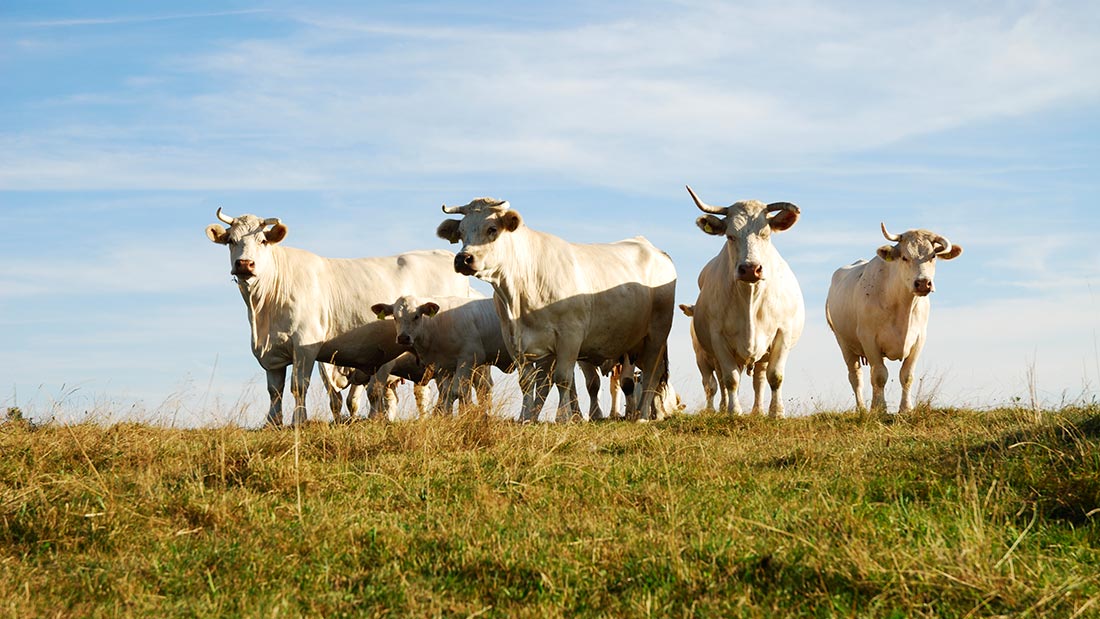
One of the public’s biggest misconceptions about dairy production is the way in which cows produce milk. Many are still unaware that in order to produce milk, a cow first needs to be pregnant, just like humans, and must give birth every year in order to meet the demands of modern, high-yield dairy farming.
How many dairy cows are there in the UK?
The dairy industry has been in long-term decline and this is expected to continue.1AHDB. 2026. GB dairy population: 2025 figures mark the lowest on record. Available at: https://ahdb.org.uk/news/gb-dairy-population-2025-figures-mark-the-lowest-on-record However, the number of cows farmed for milk in the UK is still enormous.
Modern dairy farms divide cows into different groups depending on their milk production status. The milking herd only includes cows that are currently lactating and there are around 1.6 million of them in Great Britain in January 20262AHDB. 2026a. GB dairy population: January 2026 marks the lowest on record. Available at: https://ahdb.org.uk/news/gb-dairy-population-january-2026-marks-the-lowest-on-record Dry cows are so-called because they are not milked during a brief ‘dry’ or resting period before giving birth and young cows (also not milked) that have yet to give birth to their first calf are called heifers. When they are old enough to give birth they will take the place of older, worn-out cows in the milking herd and thus are sometimes called ‘replacers’. Because there are so many of them, rearing dairy heifer calves is the second-largest annual expense for dairy farms, accounting for about 20 per cent of production costs.3AHDB. 2023. Dairy calf management. Available at https://ahdb.org.uk/knowledge-library/dairy-calf-management Taken together, in January 2026, the GB female herd total stood at 2.5 million, a 1.6 per cent decline year-on-year.2AHDB. 2026a. GB dairy population: January 2026 marks the lowest on record. Available at: https://ahdb.org.uk/news/gb-dairy-population-january-2026-marks-the-lowest-on-record
Over time, the UK dairy industry has shifted from many small farms to fewer, larger ones with smaller producers leaving the industry. Since the early 1990s, for example, average herd sizes rose from around 70 cows per farm to around 200 or more today, with the number of dairy producers falling from around 35,000 to about 7,000.4Defra. 2007. The environmental, social and economic impacts associated with liquid milk consumption in the UK and its production. Available at: https://assets.publishing.service.gov.uk/government/uploads/system/uploads/attachment_data/file/69436/pb13644-milk-envsocecon-impacts-080111.pdf5AHDB. 2025. GB producer numbers: Good economics until now slowed declines. Available at: https://ahdb.org.uk/news/gb-producer-numbers-good-economics-until-now-slowed-declines
Holstein Friesian breeds remain the most popular dairy breeds in the UK, but their prevalence in the milking herd has steadily declined in recent years. UK dairy farming is increasingly using beef genetics on dairy cows rather than breeding dairy males, meaning a growing share of calves from dairy herds are now ‘dairy-beef’ animals (such as Angus or Hereford crosses) raised for beef rather than replacement dairy stock; as a result, the number of pure-bred dairy bull calves has fallen and by the early 2020s more than half of calves from dairy farms were destined for the beef supply chain.6AHDB. 2024. Long-term trends in breeding choices on the dairy farm. Available at: https://ahdb.org.uk/news/long-term-trends-in-breeding-choices-on-the-dairy-farm
Value of the cow’s milk trade
The latest government figures suggest the value of milk and milk products in the UK increased by 5.5 per cent to £6.3 billion between 2023 and 2024.7Defra. 2025. Agriculture in the United Kingdom 2024. Available at: https://www.gov.uk/government/statistics/agriculture-in-the-united-kingdom-2024 However, there has been volatility in the market more recently due to a mismatch between supply, demand and costs. In 2026, the UK’s Agriculture and Horticulture Development Board (AHDB) – the levy board which represents farmers, growers and others in the supply chain – said UK milk prices were under pressure because there is more milk available than processors need, so prices are being pushed down, while farmers’ costs remain high. The AHDB said, “Quite simply, there is too much milk around, both in the UK and globally, and prices are feeling the strain”.8AHDB. 2026b. Milk prices under pressure. Available at: https://ahdb.org.uk/news/milk-prices-under-pressure
UK cow’s milk consumption has halved since 1974, dropping from 2,978 mL per person per week in 1974 (approximately two glasses per day) to 1,635 mL in 2022 (approximately one glass per day).9Nowson GK, Fallaize R and Earl KE. 2025. Exploring the nutritional profile and cost of plant-based milk alternatives compared with dairy milk in the UK with consideration of environmental impact data. Current Developments in Nutrition. 2025. 9 (6) 107436. This reflects reduced consumption of traditional ‘host’ foods such as breakfast cereals and porridge, alongside the growing uptake of plant-based alternatives. More milk is now used to produce processed dairy products such as cheese and yogurt. We’ve clearly gone off drinking milk!
 Breeding
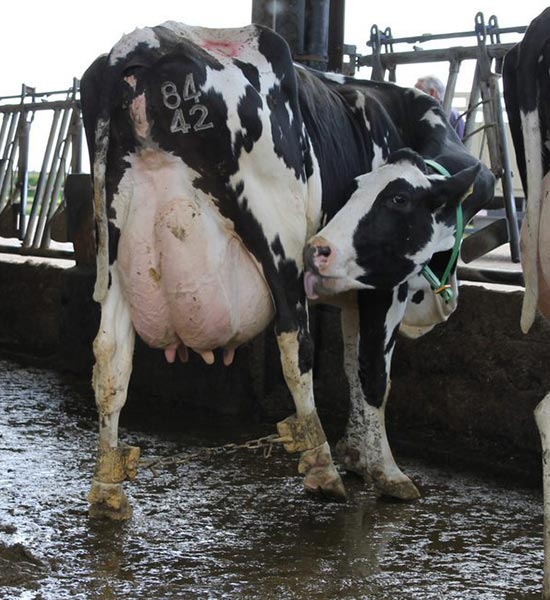
Young heifers in the UK are usually made pregnant at around 13 to 20 months of age, they then give birth when they are around two years old. To maximise profitability, the industry now promotes first calving by 24 months as a key efficiency target to cut rearing costs and improve lifetime productivity.10AHDB (no date). Calf to calving. Available at: https://ahdb.org.uk/knowledge-library/calf-to-calving After this, they will be expected to give birth again every year until their productivity, fertility or health declines and they are slaughtered.
Historically, farmers relied on progeny testing – where a bull’s genetic value was assessed after his daughters had matured and produced milk. This required the use of older animals, but the process has since been significantly replaced using modern genomic selection.
Picking an unsuitable bull can increase the risk of calving difficulties by producing larger calves or calves that are harder to deliver, particularly in younger heifers. Difficult calvings may also result from heifers being underdeveloped at first calving or from oversized calves. In severe cases, complications can cause injury, including nerve damage that affects mobility. This is one of the most severe outcomes of difficult calving and affects a mother’s ability to control her back legs, resulting in her being unable to stand and potentially doing the splits. The farmers’ answer is to shackle her hind legs together with steel ‘hobbles’. Although it is disturbing to see and hear an animal dragging around chains, it is standard practice in the industry as a means of keeping cows mobile and capable of walking to the milking parlour in order to exploit every last drop of milk she can produce.
In recent years, farmers have increasingly used genomic information to increase the efficiency of semen selection, allowing them to assess a bull’s genetic merit at a much younger age than was possible under traditional progeny testing. As a result, semen from genomically tested young bulls has become the dominant source of dairy inseminations in the UK, rising rapidly through the 2010s to account for the majority of use by around 2020. So popular is the new way of selecting semen that around 95 per cent of breeding companies supplying UK dairy farmers participate in the AHDB’s Dairy Semen Code of Advertising, which provides farmers with up-to-date comparable data on the genetic merit of the marketed semen, ensuring that “genomic information is built into farmers’ semen-buying decisions”.11AHDB (no date). Dairy Semen Code of Advertising. Available at: https://breedingdairy.ahdb.org.uk/resources/code-of-advertising/
The idea is not primarily to prevent calving difficulties, which still continue, as Viva!’s exposés have revealed, but to maximise profit. According to industry data, genetic evaluations have increased dairy cow productivity such that in 2019, cows were producing milk for an average of four to six months longer than in 2013, as they were less likely to be culled for non-production reasons such as poor health or fertility.12Wall E, Coffey M, Pritchard T et al. 2021. Incorporating novel data-driven approaches into cattle genetic improvement programmes leads to better animal performance and overall economic gains. Available at: https://pure.sruc.ac.uk/en/impacts/incorporating-novel-data-driven-approaches-into-cattle-genetic-im
Artificial Insemination
Artificial insemination is a widely used reproductive technology in many livestock species, including turkeys, sheep, pigs and cattle. It involves the collection of semen from a male and its subsequent introduction into the reproductive tract of a recipient female to achieve pregnancy.
Reproductive technologies (eg artificial insemination, sexed semen and embryo transfer) are now used by 95 per cent of dairy farms.13Defra. 2026. Animal Welfare Committee (AWC): Opinion on breeding and breeding technologies in commercial livestock agriculture. Available at: https://www.gov.uk/government/publications/animal-welfare-committee-awc-opinion-on-breeding-and-breeding-technologies-in-commercial-livestock-agriculture/animal-welfare-committee-awc-opinion-on-breeding-and-breeding-technologies-in-commercial-livestock-agriculture Artificial insemination may be carried out by a veterinary surgeon, a ‘competent’ full-time employee of a licensed supplier or by a farmer or his employee who has been trained.14Defra. 2024. Code of recommendations for the welfare of livestock: cattle. Available at: https://www.gov.uk/government/publications/code-of-recommendations-for-the-welfare-of-livestock-cattle/code-of-recommendations-for-the-welfare-of-livestock-cattle
The process can be painful and traumatic for cows, who are forced into confined spaces to be impregnated. Generally, the farmer or employee inserts one arm into the cow’s anus to manipulate her reproductive organs while an artificial insemination gun is inserted into her vagina to deposit semen. This highly unnatural way of impregnation can cause cows distress, particularly as any mishandling of her organs may lead to severe pain and nerve damage. Inexperienced farmers practise on live animals raising the risk of injury. While the industry describes the procedure as safe when carried out by a trained professional, it is widely recognised that an untrained or inexperienced person performing artificial insemination can increase the risk of physical injury and unnecessary stress for the cow.
Every dairy cow endures the same gruesome cycle of enforced insemination, pregnancy, giving birth, having her calf taken and then being impregnated again while being milked. This is repeated on average three to four times over the short course of a dairy cow’s life.
Calves
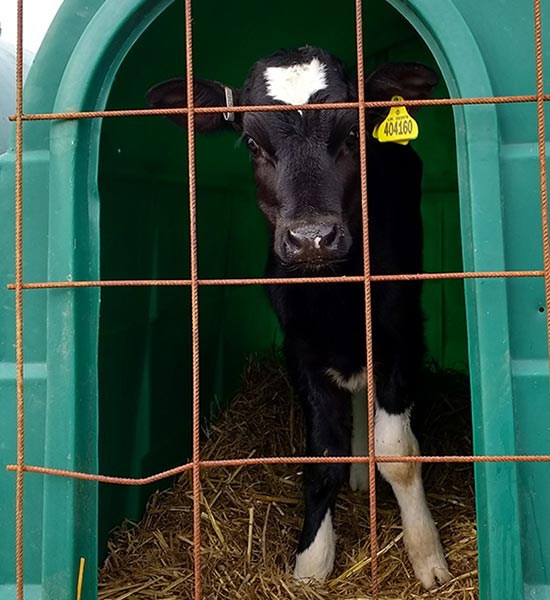
Following a nine-month pregnancy, the vast majority of calves are separated from their mother within 12 to 24 hours of birth14Defra. 2024. Code of recommendations for the welfare of livestock: cattle. Available at: https://www.gov.uk/government/publications/code-of-recommendations-for-the-welfare-of-livestock-cattle/code-of-recommendations-for-the-welfare-of-livestock-cattle The industry argues that this is for the health of the calf. They claim it better enables them to measure the amount of colostrum – a form of milk that precedes the main milk supply and which contains antibodies to protect newborns against disease. In reality, calves are removed so all the cow’s milk can be taken for human consumption.
The separation process is a painfully emotional experience, with mother cows bellowing for days, calling for their lost babies. Female calves are replacements for the milking herd and are moved to isolated plastic hutches – much like an outdoor dog kennel – sometimes just metres away from their mothers. Here they can be confined legally for up to eight weeks before being transferred to group housing with other young females awaiting a life sentence of suffering.14Defra. 2024. Code of recommendations for the welfare of livestock: cattle. Available at: https://www.gov.uk/government/publications/code-of-recommendations-for-the-welfare-of-livestock-cattle/code-of-recommendations-for-the-welfare-of-livestock-cattle
It is not uncommon to find calves older than eight weeks still living in isolation, struggling to fit inside their hutches, which were designed for much smaller animals. On a farm in South Devon, footage obtained by Viva! Campaigns showed calves of more than 12 weeks old still living in solitary hutches with little room to turn around, let alone exercise15Poulter S. 2018. Distressing footage taken from inside British dairy farms shows calves torn from their mothers and crammed into tiny cages as one cow is left with a bone poking through its skin’. The Daily Mail. 30 April. Available at: https://www.dailymail.co.uk/news/article-5672113/Disturbing-dairy-farm-footage-shows-apparently-emaciated-calves.html They were without food, water and maternal nurturing.
Female calves will eventually enter the dairy herd to replace worn out cows and will be forcibly impregnated for the first time during their second year of life – a few months after their first birthday.
The Fate of Male Dairy Calves
Pure-dairy-bred male calves are of little use to dairy farmers as they are unable to produce milk. It used to be common practice for farmers to shoot them at birth. A young calf at the centre of a 2011 Viva! Campaigns investigation into dairy farms supplying Cadbury, for example, was shot in the head on the back of a truck and his body was given to the local foxhounds for food.16Viva!, 2011. A calf and a half. Available at https://viva.org.uk/animals/campaigns/scary-dairy/investigation-cadbury/
In 2018, a Guardian investigation estimated that 95,000 male calves were being killed every year within a few days of birth.17Levitt T. 2018. Dairy’s dirty secret: it’s still cheaper to kill male calves than to rear them. The Guardian, 26 March. Available at: https://www.theguardian.com/environment/2018/mar/26/dairy-dirty-secret-its-still-cheaper-to-kill-male-calves-than-to-rear-them Following this bad publicity, supermarkets and dairy processors called for a ban on the routine killing of male dairy calves and various industry-backed strategies were launched with the aim that dairy-bred calves should be reared for a purpose – as part of either the dairy or beef supply chains. In 2021, Red Tractor stated that the routine euthanasia of calves on-farm would end by 2023.18Red Tractor. 2021. Dairy standards. Available at: https://redtractorassurance.org.uk/wp-content/uploads/2021/08/RTStandardsV5_Dairy_SINGLES.pdf
Since then, two strategies have been employed to reduce the number of pure-dairy bred male calves: sexed semen is used to produce female dairy ‘replacers’ and beef semen is used to produce higher value calves to be sold on for beef or veal.
However, despite what the dairy industry claims about the use of new technologies reducing the death count, the dairy industry still kills tens of thousands (see numbers below) of young male calves every year.
Dairy Cow Life Cycle
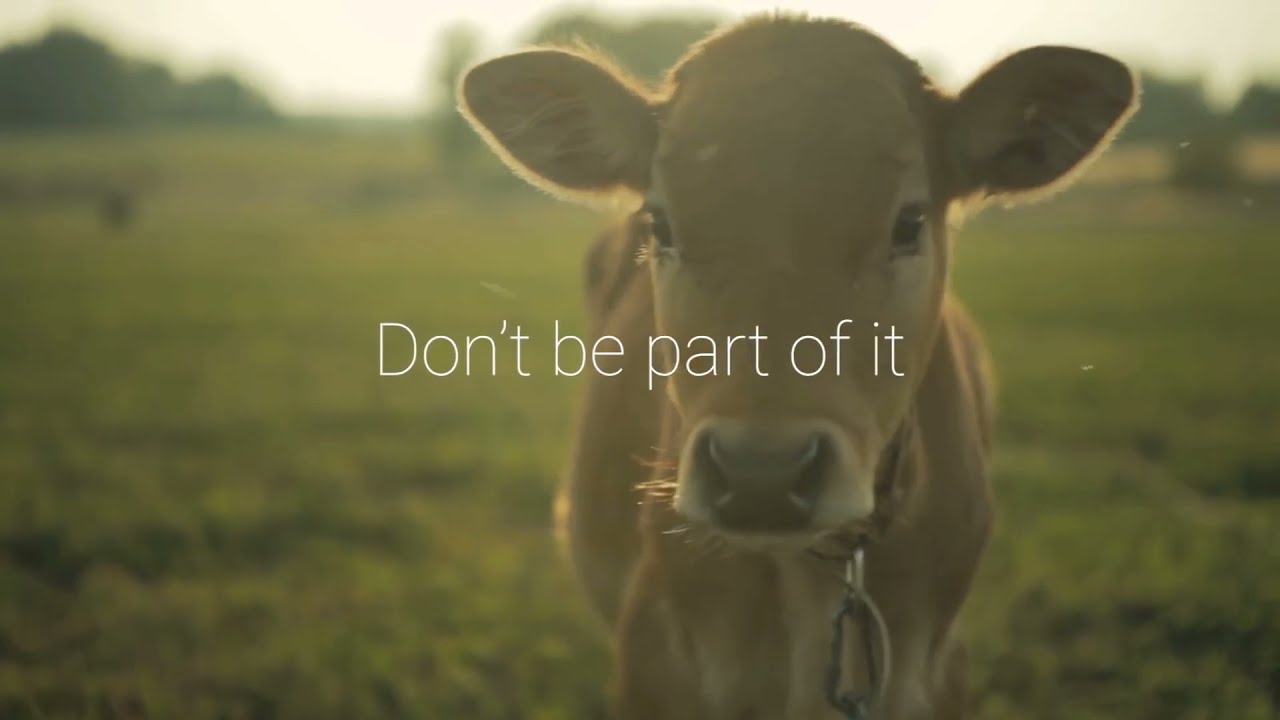
Dairy farmers usually plan for their cows to give birth to their first calf when they’re around two, so heifers will usually be pregnant for the first time when they’re around 15 months old. They will be pregnant for nine months and produce milk for about 10 months after calving. After this, they will be expected to give birth again every year. The average UK dairy cow produces around 8,000 litres of milk each year and has just under four ‘milk producing cycles’ during her lifetime, which is typically six and a half years.19RSPCA (no date). Dairy cows – farming. Available at: https://www.rspca.org.uk/adviceandwelfare/farm/dairy/farming.
In nature, young herding mammals usually have regular physical and social contact with their mothers and the herd. In dairy production, early separation and social deprivation have been shown to have short-term (in calves) and long-term (in heifers or cows) negative effects on behaviour, stress reactivity and the ability to cope with different challenges. Research shows that allowing dairy calves to remain with their mothers for the first three months significantly boosts long-term social competence compared to early separation. Calves raised with maternal contact show increased affiliative or friendly social behaviours, such as social licking (allogrooming), seeking the company of peers and resting in physical contact with others. By reinforcing social bonds and reducing isolation, this maternal care appears to be a critical factor in developing socially adept and well-adjusted herd animals.20Magierski V, Barth K and Waiblinger S. 2025. The effects of cow-calf-contact rearing on dairy animals’ social traits – a pilot study. Applied Animal Behaviour Science. 284, 106548.
Because of the extreme stress dairy farming methods put on their bodies, combined with unnaturally high milk yields, dairy cows are considered ‘spent’ typically by the age of around six and a half years.19RSPCA (no date). Dairy cows – farming. Available at: https://www.rspca.org.uk/adviceandwelfare/farm/dairy/farming Cows have a natural life expectancy of 15 to 20 years but once their milk yield declines or fertility drops and they cease to be profitable, they are sent to slaughter to be sold as cheap beef.
Milk Yield
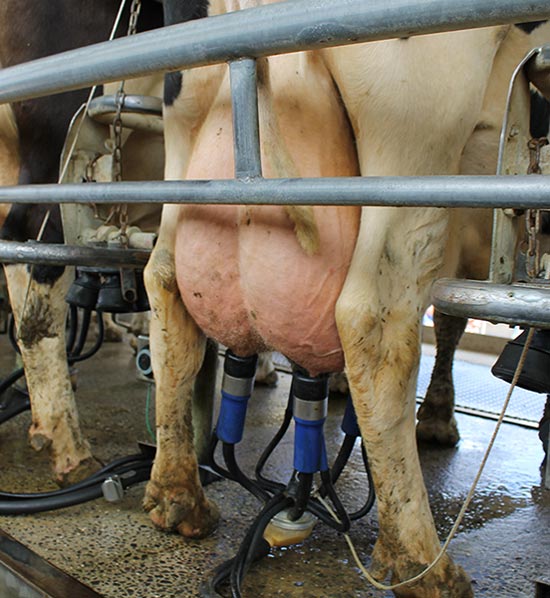
The Holstein Friesian, easily recognised by its distinctive black-and-white or reddish-brown markings, remains the UK’s most common dairy breed. Their ability to produce extraordinarily high milk yields has made them the primary choice for industrial dairy systems focused on maximizing commodity output. Through breeding techniques, the average amount of milk a dairy cow produces has increased dramatically over time. For example, in 1920, a North American Holstein cow produced on average 2,000 litres of milk a year. A century later, they produce over 10,000 litres of milk – five times more!21Medeiros I, Fernandez-Novo A, Astiz S et al. 2022. Historical evolution of cattle management and herd health of dairy farms in OECD countries. Veterinary Science. 9 (3) 125.
In the UK, the average amount of milk produced by a dairy cow has increased from 6,763 litres in 2004 to 8,278 litres (27 litres per day) in 2024.22AHDB. 2025a. UK milk yield. Available at: https://ahdb.org.uk/dairy/uk-milk-yield That’s an increase of over 20 per cent over the last 20 years.
The huge increase in milk yield over the years is due to selective breeding and intensification of herd management. It has inflicted a huge strain on cows, leading to complete body breakdown. The problem is made worse by the almost universal practice of impregnating cows a couple of months after they have started lactating so that for seven months of every year they face the dual burden of producing vast quantities of milk and nurturing a growing foetus. It is an impossible burden!
A calf would normally feed five to six times a day and the maximum amount of milk in the cow’s udder at any one time to meet this demand would be around two litres. But on most dairy farms, a cow is milked only twice a day, meaning that up to 20 litres of milk can accumulate in her udder. This greatly enlarges it, causes pain, leads to lameness in her hind legs and predisposes her to mastitis (a painful infection of the udder).
An increasing number of farms use an automatic milking system (AMS) to increase milk production and decrease labour costs – thus increasing profit. With automated systems, cows may be milked two or three times a day. However, research suggests an increase in milk production of two to 12 per cent in cows milked more than twice a day in AMS compared with cows milked twice per day in traditional milking parlours.23Cogato A, Brščić M, Guo H et al. 2021. Challenges and tendencies of automatic milking systems (AMS): A 20-years systematic review of literature and patents. Animals (Basel). 11 (2) 356. So, despite robotic milkers being heralded as benefitting welfare, they may do little to relieve the burden of painful, oversized udders.
Housing and Intensification
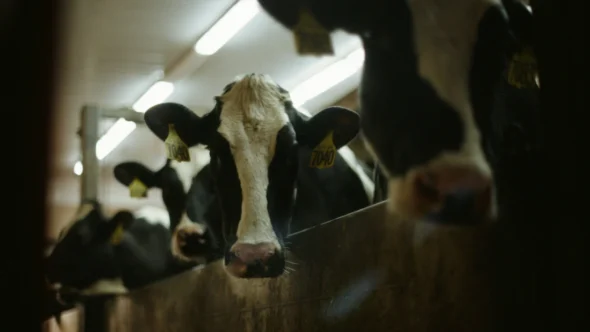
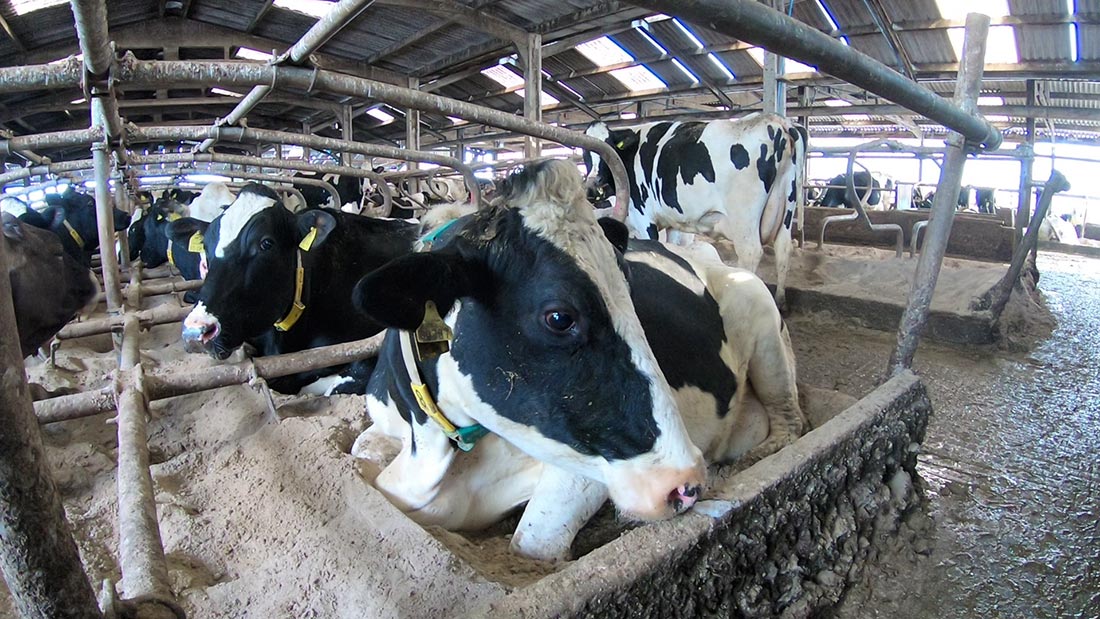
Some dairy cows in the UK graze outside during the day for six months of the year (April to September) but are confined to sheds for the remaining six months, with no access to the outdoors. If the weather is bad, they can be incarcerated for even longer. These sheds rarely provide cows with the space they need and prevent them from expressing their natural instincts for at least half their lifetime.
Zero Grazing and factory farming
An increasing number of dairy cows in the UK are being farmed under a system referred to as zero grazing. They literally never graze outside but are instead fed on a diet of silage (wet, fermented grass) and a high-concentrate mixture of cereals, rape meal, sunflower meal, maize and soya. They may be kept permanently in sheds or yards and never walk on grass. While industry proponents may argue that indoor housing protects cows from extreme weather and allows for better monitoring, the weight of independent scientific evidence supports the claim that continuous confinement increases the risk of both physical health issues and the inability of the animal to express natural behaviours. Depriving the cow of her natural environment in this way increases the risk of lameness, hoof problems, teat tramp, mastitis, metritis, dystocia, ketosis, retained placenta and some bacterial infections.24EFSA Panel on Animal Health and Animal Welfare (AHAW). 2009. Scientific opinion of the panel on animal health and welfare on a request from the European Commission on welfare of dairy cows. The EFSA Journal. 1143, 1-38.25Arnott G, Ferris CP and O’Connell NE. 2017. Review: welfare of dairy cows in continuously housed and pasture-based production systems. Animal. 11 (2) 261-273.
In 2016, it was estimated that 20 per cent of dairy farms used zero grazing systems and it is likely that the trend has increased as profit is placed before wellbeing.26Compassion in World Farming. 2016. The grass is greener – the plight of dairy cows. Available at: https://www.ciwf.org.uk/news/2016/04/the-grass-is-greener-the-plight-of-uk-dairy-cows-f1 More recent investigations suggest that intensive dairy production has continued to expand. In 2026, the Bureau of Investigative Journalism reported that the number of intensive dairy farms – where some or all cattle are housed indoors year-round – had more than doubled over the previous decade, increasing from around 70 to about 180. The investigation also found that the number of ‘megadairies’ housing more than 700 cattle had doubled, with more than 40 such units identified. The largest housed approximately 2,600 cows. Researchers estimated that at least 98,000 dairy cows were being kept on farms where some or all animals were permanently confined, while noting that the true figure is likely to be higher because not all intensive dairy farms could be identified.
There is no universally accepted definition of factory farming, but most people would recognise a factory farm when they see one. Drawing on research conducted with other animal welfare organisations, scientific experts and our own experience of UK farming practices, the following description may be used:
Factory farming includes any system in which animals are subjected to one or more of the following conditions:
- Routine confinement in cages, crates or overcrowded enclosures
- Selective breeding for unnaturally rapid growth rates or excessively high production yields that compromise welfare
- Inability to express a full range of strongly motivated natural behaviours
- Routine mutilations carried out to mitigate the welfare problems created by intensive farming systems
In our view, the presence of any one of these characteristics is sufficient for a farming system to be considered factory farming.
 Disease and Illness
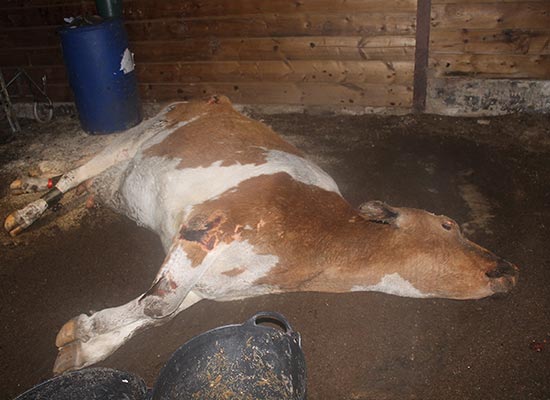
The dairy cow is arguably the hardest worked of all farmed animals, forced into a perpetual cycle of dual pregnancy and lactation, confined to live more than half the year in barren sheds and fed unnatural mixtures of silage. It has produced a situation where she simply cannot consume enough food to keep pace with what is demanded of her – nurturing an unborn calf while still lactating from a previous pregnancy. Whatever the system, the result is the same – ‘metabolic starvation’. Cows have to draw on their body reserves to meet these unnatural demands, resulting in a ‘coat rack’ appearance where her bones and spine protrude through her skin. It is extremely common and a sure indication of malnourishment.
Mastitis is an infection that causes inflammation of a cow’s udder. It is the most frequent and costly illness impacting dairy herds worldwide. Previous estimates of mastitis incidence in UK dairy herds range widely, with studies reporting 30 to over 70 cases per 100 cows per year.27National Animal Disease Information Service (NADIS). 2010. Mastitis Part 1 – the importance of mastitis. Available at: https://www.nadis.org.uk/disease-a-z/cattle/mastitis/mastitis-part-1-the-importance-of-mastitis/ More recently, the AHDB estimate rates at around 26 to 30 cases per 100 cows per year, but higher rates are still seen in some herds.28AHDB (no date). Mastitis in dairy cows: what do records tell us? Available at: https://ahdb.org.uk/knowledge-library/mastitis-in-dairy-cows-what-do-records-tell-us
Mastitis is usually caused by bacteria entering through the teat canal, leading to infection and inflammation of the udder tissue. The immune system responds by sending white blood cells into the milk, increasing somatic cell counts – a measure of the number of cells present in milk, mainly consisting of white blood cells (immune cells) and some udder lining cells; together, these are used as an indicator of infection. The industry prefers to describe this in technical terms, but in layman’s terms it can be argued that milk contains ‘pus’, since it includes the immune cells associated with infection and, in more severe cases, bacterial debris.
Mastitis can be treated with antibiotics and milk from treated cows is withheld from the food supply. Cows with undiagnosed or subclinical mastitis may still be milked and their milk is monitored using a somatic cell count limit of 400,000 cells per millilitre under UK/EU standards – that’s two million cells in just one teaspoonful!
The widespread nature of mastitis in British farming is directly due to the ruthless demand for high output, whether within intensive, free range or organic systems.
Lameness, due to injury or disease in the foot or leg, is also one of the most important welfare problems facing dairy cows. Lame dairy cows may experience pain and discomfort; disturbed resting, feeding and social patterns; reduced fertility; lower milk yields and an increased likelihood of being culled.29Universities Federation for Animal Welfare. 2020. Lameness in dairy cattle. Available at: https://www.ufaw.org.uk/why-ufaws-work-is-important/lameness The AHDB estimates that just under one third of all dairy cows might be experiencing some degree of lameness at any one time.30AHDB (no date). Lameness in dairy cows. Available at: https://ahdb.org.uk/knowledge-library/lameness-in-dairy-cows
However, virtually all cows’ hooves show past or present damage when they are inspected at slaughter.29Universities Federation for Animal Welfare. 2020. Lameness in dairy cattle. Available at: https://www.ufaw.org.uk/why-ufaws-work-is-important/lameness The general causes of lameness are poor quality floors, poor cow tracks, forcing cows to stand for too long on hard surfaces, poorly-designed cubicles, ineffective foot trimming, infectious diseases and malnutrition – all of which stem from poor management and mistreatment of cattle by farmers.30AHDB (no date). Lameness in dairy cows. Available at: https://ahdb.org.uk/knowledge-library/lameness-in-dairy-cows
The list of potential diseases affecting dairy cows is almost endless, with some diseases more significant than others.31AHDB. 2023a. Diseases affecting dairy cows. Available at: https://ahdb.org.uk/diseases-affecting-dairy-cows There are a number of complex factors leading to disease in dairy cows but generally they occur because of the excessive demands farmers place on their herds to produce high milk yields. Abnormally large udders push the cow’s hind legs apart and force her to adopt an irregular gait, putting extra pressure on the outer claws of her hooves; nutritionally deficient feed concentrates absorbed by the bloodstream irritate the soft tissues in her soles; and the accumulation of bacteria-ridden, highly acidic slurry in sheds and on which the cows are forced to stand, are breeding grounds for infection.
Culling
The most common reasons for which a dairy cow is culled (removed from the herd and usually killed) include infertility, mastitis, lameness and poor milk production, which are clear indicators of poor welfare standards. Farmers usually cull cows as soon as they become unprofitable. The current oversupply of milk in the UK dairy market is placing downward pressure on prices and farmgate returns.8AHDB. 2026b. Milk prices under pressure. Available at: https://ahdb.org.uk/news/milk-prices-under-pressure In a similar situation, it was previously stated by the AHDB that “one way of decreasing milk production is to cull less profitable, or ‘passenger’ cows”, reflecting how cows are treated as economically replaceable units rather than sentient beings.32AHDB. 2020a. What could an increase in dairy cow culling mean for the markets? Available at: https://ahdb.org.uk/news/what-could-an-increase-in-dairy-cow-culling-mean-for-the-markets
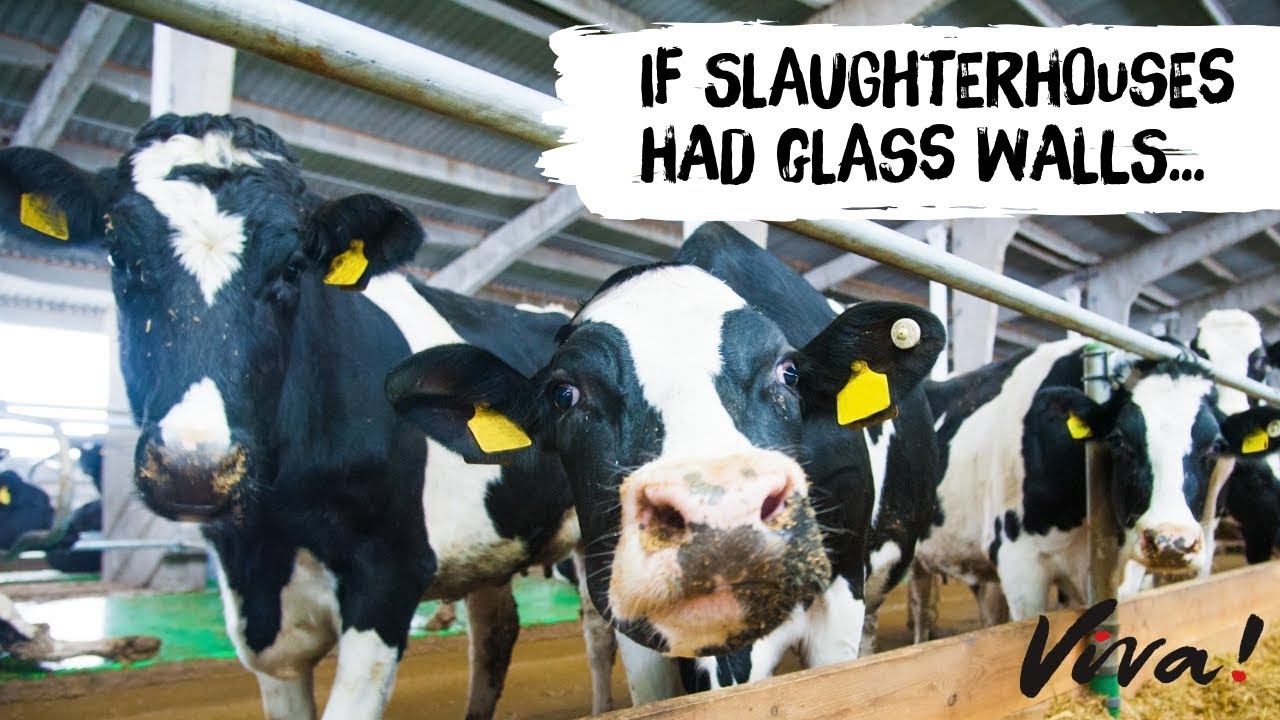
Calves
The industry’s GB Calf Strategy 2025-2030 states that it “aims to ensure that every calf is reared with care and purpose, whether in the dairy or beef supply chain.”1AHDB. 2025. GB Calf Strategy 2025-2030. Available at: https://ahdb.org.uk/gb-calf-strategy-2025-2030 This strategy arose in response to public outcry over revelations that large numbers of male dairy calves were being killed on farms shortly after birth. Because they have no economic value for milk production, these newborn calves were routinely treated as waste and often shot on farm.
So how much has actually changed? Not as much as the industry suggests. According to Rural Payments Agency data obtained by a Freedom of Information request from Viva!, tens of thousands of young male calves are still being slaughtered – many of them on farm.
In 2025, 60,745 male dairy calves under eight months old were killed. Of these, 29,719 were slaughtered in abattoirs, a lower number than in previous years (49,204 in 2024 and 57,435 in 2023). The total also includes 31,026 male calves under two months old who were killed on farm in 2024, a figure similar to earlier years (32,540 in 2024 and 33,727 in 2023).2Rural Payments Agency. 2026. FOI release RFI 7881 number of male calves killed in slaughterhouses and on-farm.
Method
In slaughterhouses: 94 per cent of calves less than eight months old were stunned prior to slaughter (85 per cent by captive bolt, six per cent by electronarcosis and the rest by halal stun methods). Six per cent were slaughtered by non-stun methods, mainly halal non stun (see the Religious Slaughter section of How Animals are Killed).3Food Standards Agency. 2024. Results of the 2024 FSA Slaughter Sector Survey in England and Wales. Available at: at: https://www.gov.uk/government/publications/farm-animals-slaughter-sector-survey-2024 After being stunned, the calves were ‘bled out’ (knifed in the neck to sever major blood vessels and bled to death).
On farm: legal methods to kill the unwanted male dairy calves on farm include a shot to the head with a free bullet from a shotgun, pistol or rifle; or a penetrative captive bolt device, followed by pithing or bleeding. (It is unknown what percentage of each are used.) Male calves killed on farm don’t enter the human food chain, but may be sent to a knackers yard, processed for pet food or fed to hunting dogs, burnt (incineration), buried or sent for rendering to be used in a wide range of products. By law, people who kill animals on farm must have either a Welfare of Animals at the Time of Killing (WATOK) licence or a Certificate of Competence (CoC).
Dairy cows
After suffering their whole lives, worn out dairy cows often endure gruelling journeys to market, where they are likely to be bought and sent to fattening (finishing) farms before being slaughtered and ending up in low-quality beef products, such as pies, burgers, soups and baby food. After only a fraction of their natural 15 to 20-year life expectancy – mostly being slaughtered, when exhausted, at around six and a half years old.44. RSPCA (no date). Dairy cows – farming. Available at: https://www.rspca.org.uk/adviceandwelfare/farm/dairy/farming
Most cattle in the UK are stunned with a captive-bolt device.5Humane Slaughter Association. 2025. Frequently asked questions. Available at: https://www.hsa.org.uk/faqs/slaughter A penetrative captive bolt (it remains attached to the gun) is shot into the forehead of a cow, its percussive impact intended to render the cow immediately unconscious. She is then shackled by a hind leg and hoisted up when the slaughter worker will ‘stick’ her and sever both veins and arteries. The cow is then bled to death.6Royal Society for the Prevention of Cruelty to Animals (RSPCA). 2025. Animal slaughter fact file. Available at: https://www.rspca.org.uk/adviceandwelfare/farm/slaughter/factfile
Although it is argued that the death is painless because the cow is stunned, the moments leading up to stunning and slaughter are often terrifying for the animal; she can hear the anxious bellows and smell the fear of other cows in the slaughterhouse and often cows will do their utmost to escape. Transportation, slaughterhouse and stunning are all barbaric and traumatic.
The stunning process does not guarantee that the cow will lose consciousness before being killed and there may be frequent failures. A cow’s skull is hard to penetrate, the shot may fail and there is also the risk of human error. The cow may suddenly move and the shot hit the wrong place, even her cheek or face, and the process must be repeated. Cows may also regain consciousness while they are hanging up and have their throats slit while conscious. The suffering must be immense.
Some members of certain religious groups will only eat the meat of animals that were conscious when their throat was cut. The latest Food Standards Agency figures estimate that around 30 million animals, including 26.7 million chickens, 3.1 million sheep and 35,000 cattle, were slaughtered without pre-stunning in 2024.7Royal Society for the Prevention of Cruelty to Animals (RSPCA). 2025. End non-stun slaughter for farm animals. Available at: https://www.rspca.org.uk/getinvolved/campaign/slaughter Some ritually slaughtered meat finds its way onto mainstream markets without proper labelling so many British consumers are unknowingly eating animal products that have come from non-stunned animals. It is estimated that in 2022, over half of all cattle religiously slaughtered for kosher meat was sold on the general market unlabelled and that there are even schools where non-stun meat is served up as standard.8National Secular Society. 2024. Ritual slaughter: is the government about to renege on its commitment to consult? Available at: https://www.secularism.org.uk/opinion/2024/01/ritual-slaughter-is-the-government-about-to-renege-on-commitment-to-consult
Why Dairy Damages the Environment
Plant-based milks have a much lower impact on the environment than cow’s milk but did you realise just how harmful dairy is?
Why Dairy Harms our Health
Cow’s milk and dairy products are not natural foods for us – we are best suited to drinking breastmilk as babies only.
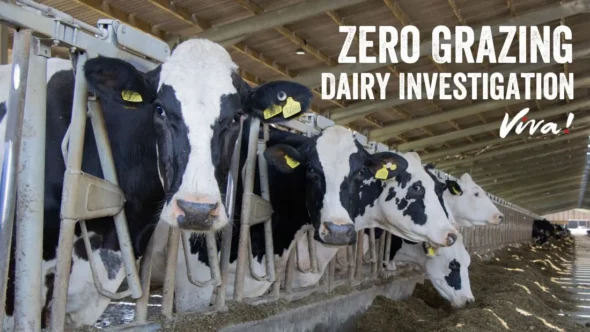
Investigation: Zero Grazing
Callous conditions documented at three of the largest zero grazing dairy farms in the UK expose the reality of intensive mega-farms.
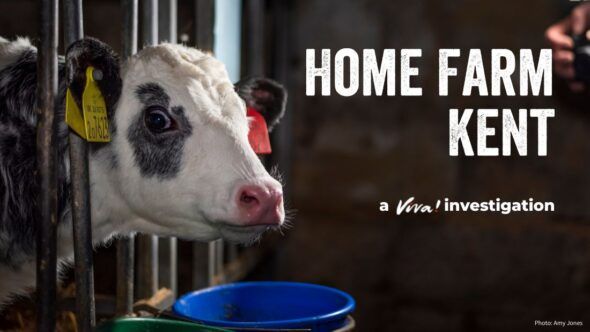
Investigation: Home Farm
An undercover investigation by Viva! Campaigns has exposed multiple incidents of animal cruelty at a dairy farm in Kent supplying Freshways.
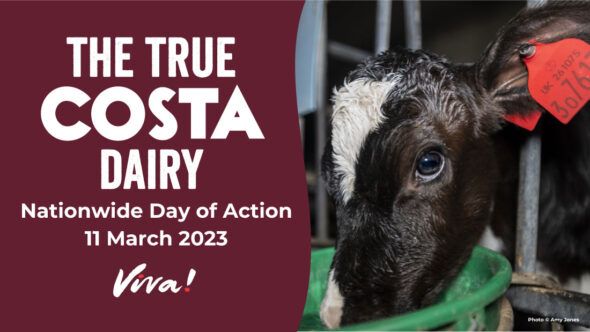
The True Costa Dairy
Viva! found shocking cruelty at a Kent dairy farm that supplies Freshways, Costa’s milk provider. We need your help to make a difference.
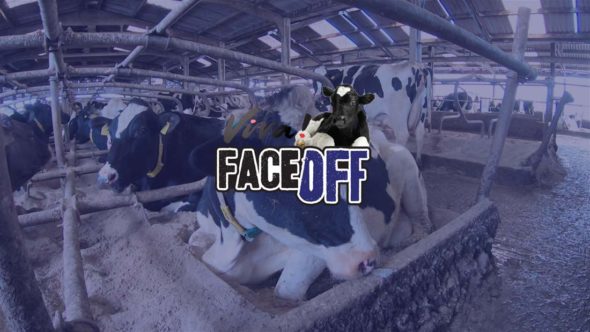
Face Off: Dairy
You won’t believe what is going on in our country’s factory farms! Will you take this challenge too? Can you face off against the British dairy industry?

Viva!shake
Viva! took an all-vegan milkshake bar across the country, giving out free vegan milkshakes at university fresher fairs!
Door-Dropper Leaflets
Spread awareness about the plight of dairy cows by becoming a ‘door-dropper’ for Viva!. One of the biggest problems we face in getting our message to people is that a lot of the information they need to know just doesn’t reach them. Door-dropping is the easiest form of outreach!
Door-dropping means distributing leaflets by putting them through people’s letterboxes. It’s a gentle but effective form of outreach and it’s also time-efficient – you can cover a street in just a few minutes.

Everyone’s Going Dairy-Free Guide
Perfect for anyone who wants to cut dairy out of their diet and explore the amazingly tasty world of dairy-free alternatives.
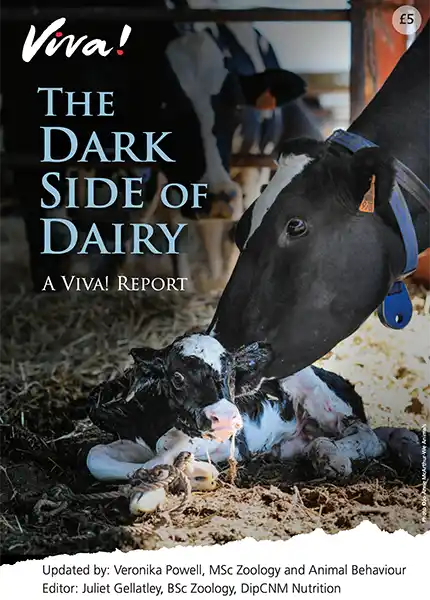
The Dark Side Of Dairy Report
Everything you need to know about the dairy industry, life of dairy cattle and other issues such as goat farming.
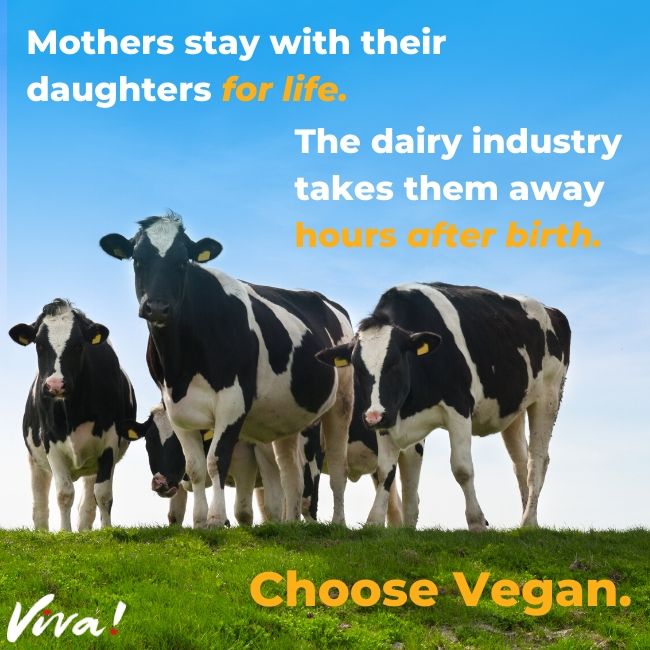
Dairy Takes Babies Away
Suggested caption: Mothers and their female offspring naturally stay in the same herd for life. The dairy industry takes babies away a few hours after birth just so humans can have her milk. This is traumatic for both the mother and the baby, who will never see each other again. Choose vegan.
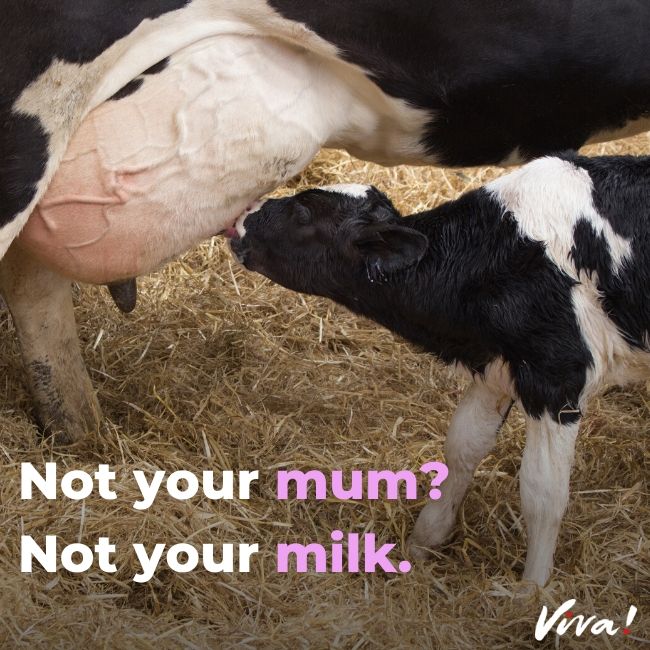
Not your mum? Not your milk.
Suggested caption: Like us, cows only produce milk when they have a child to feed. Mothers have their baby stolen within hours of giving birth, all so humans can drink her milk made for her baby. Not your mum? Not your milk! Choose vegan.
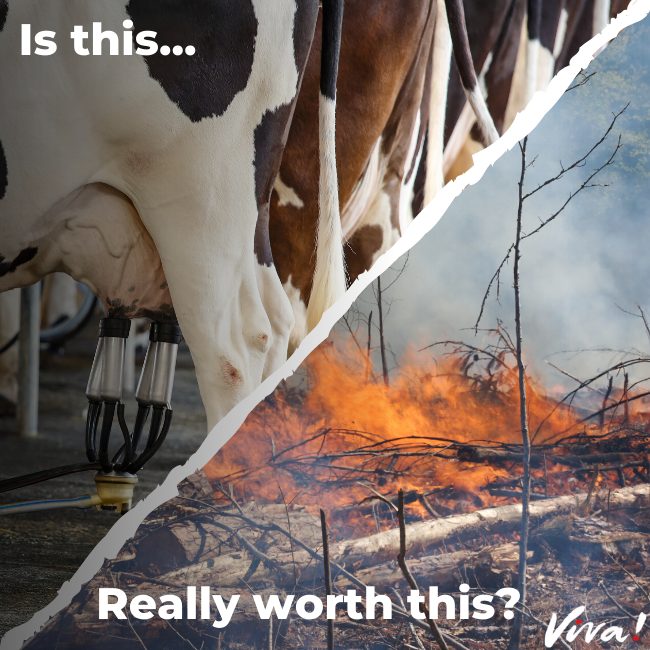
Is Dairy Really Worth It?
Suggested caption: Dairy is the biggest greenhouse gas emitter in the EU food system and a leading cause of global warming. Next time you buy dairy, ask yourself: is it really worth it?
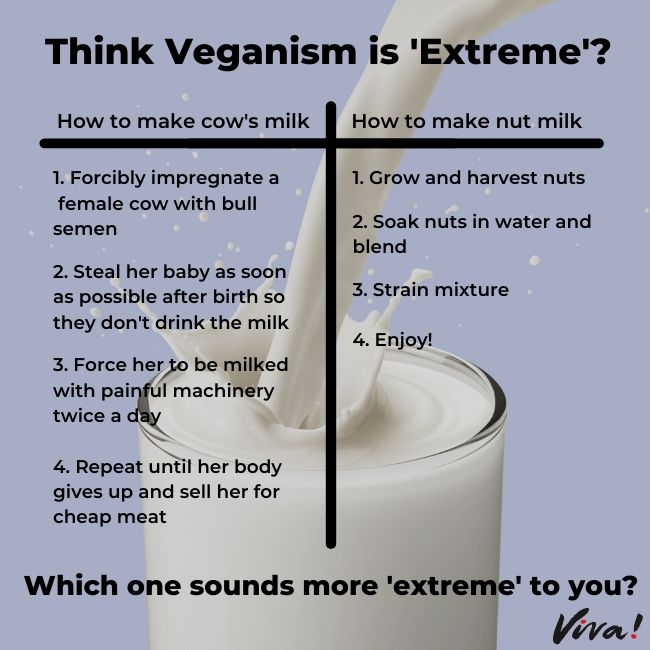
Think Veganism Is Extreme?
Suggested caption: Which one sounds more extreme to you?
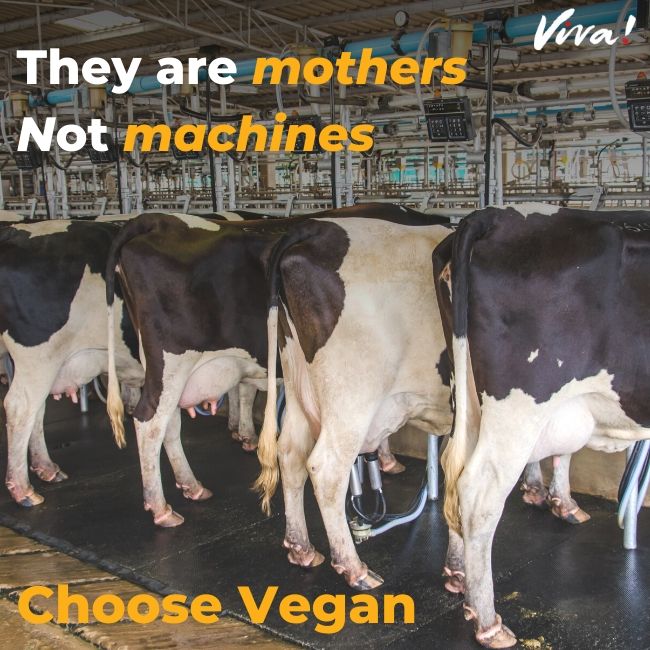
They Are Mothers, Not Machines
Suggested caption: Cows are socially complex animals who form bonds for life. Mothers stay with their female offspring for life in the wild, but the dairy industry takes this away. Mothers are treated like milk machines, routinely impregnated and separated from their babies just so humans can have her milk. Choose vegan!
Coming soon
Summary — Quick overview
SUMMARY
Cows are intelligent, socially complex animals with strong maternal instincts, lifelong bonds and clear individual personalities. In natural and semi-wild herds, mothers and daughters remain close for life, calves form lasting friendships and herd stability matters deeply. Studies and observations show that cows recognise individuals, communicate in distinct ways, enjoy problem-solving and can suffer anxiety, depression and grief when separated from their young.
Dairy farming ignores these needs. To produce milk, cows must be made pregnant, usually for the first time in their mid-teens in months, and then made to give birth every year. In the UK, around 1.6 million cows are in the milking herd and roughly 2.5 million female cows are tied to the dairy industry overall. Most cows are impregnated by artificial insemination, calves are usually removed within hours or days of birth and female calves may be confined alone in hutches for weeks before being reared as replacements.
The physical cost is severe. Modern dairy cows are bred and managed for unnaturally high yields, averaging about 8,000 litres a year in the UK. They are commonly impregnated again while still milking, forcing their bodies to sustain both pregnancy and lactation. This contributes to metabolic strain, mastitis, lameness and a wide range of other illnesses. Some are kept indoors for half the year or longer, while others in zero-grazing systems never go out to pasture at all.
When their productivity falls, cows are culled and sent to slaughter at around six and a half years old, despite a natural life expectancy of about 20 years. Male dairy calves, deemed of little value to the industry, are still killed in huge numbers. In 2024, 81,744 male dairy calves under eight months old were killed, including 32,540 killed on farm under two months of age. Behind the image of milk lies a system built on repeated impregnation, loss, disease and early death.
KEY FACTS
- Cows are highly social, intelligent mammals who form lifelong bonds, maintain matriarchal family structures and show strong maternal behaviour.
- Modern domestic cattle descend from the auroch and were domesticated around 10,000 years ago.
- In the UK, around 1.6 million cows are in the milking herd and roughly 2.5 million female cows are tied to the dairy industry overall.
- Dairy cows must be made pregnant to produce milk and are typically expected to give birth every year.
- Between 90 and 95 per cent of dairy cows in the UK are impregnated by artificial insemination.
- The vast majority of calves are separated from their mothers within hours or a few days of birth.
- The average UK dairy cow produces around 8,000 litres of milk a year and is typically considered spent by around six and a half years old, despite a natural life expectancy of about 20 years.
- Around 20 per cent of dairy farms are estimated to use zero-grazing systems, where cows never graze outside.
- Mastitis is one of the most common dairy cow diseases, with around 50 to 70 cases per 100 cows per year in the UK, and around one-quarter of dairy cows may be experiencing some degree of lameness at any one time.
- In 2024, 81,744 male dairy calves under eight months old were killed, including 49,204 in slaughterhouses and 32,540 on farm under two months of age.
FAQ
Why do dairy cows produce milk?
Like humans, cows only produce milk after pregnancy and birth. Dairy farming depends on repeated impregnation so that cows continue lactating and producing milk for sale.
What happens to calves born into the dairy industry?
Most calves are taken from their mothers within hours or a few days of birth. Female calves are usually reared to replace older cows in the milking herd, while male dairy calves are often treated as surplus and many are killed or diverted into beef or veal supply chains.
How long do dairy cows live?
Cattle can naturally live for about 20 years, and some live into their 30s at sanctuaries. In the dairy industry, cows are typically slaughtered at around six and a half years old when their milk yield falls or health and fertility problems make them less profitable.
What health problems do dairy cows face?
Dairy cows commonly suffer from mastitis, lameness and other diseases linked to high milk yields, repeated pregnancies, hard flooring, confinement and poor management. The strain of producing large volumes of milk while often carrying another calf can leave cows in severe physical decline.
How are dairy cows and male calves killed?
Most cattle in the UK are stunned, usually with a captive-bolt pistol, then shackled and bled to death. Male calves may be killed in slaughterhouses after stunning and bleeding, or on farm by shooting or captive bolt followed by pithing or bleeding. Failures in stunning can occur, and the process can be terrifying and traumatic for the animals.
You might also like...