
Peas please! Growing without manure
As a vegan and passionate advocate for animals, my aim has been to give a voice to those who have none. But I wanted to do more than argue from compassion. I wanted facts, data and science to back me up.
So, after seven years studying with the Open University, completing my Open Honours degree with a final-year focus on Environmental Science, I decided to tackle a subject close to my heart: legumes, soil health and sustainable food production.
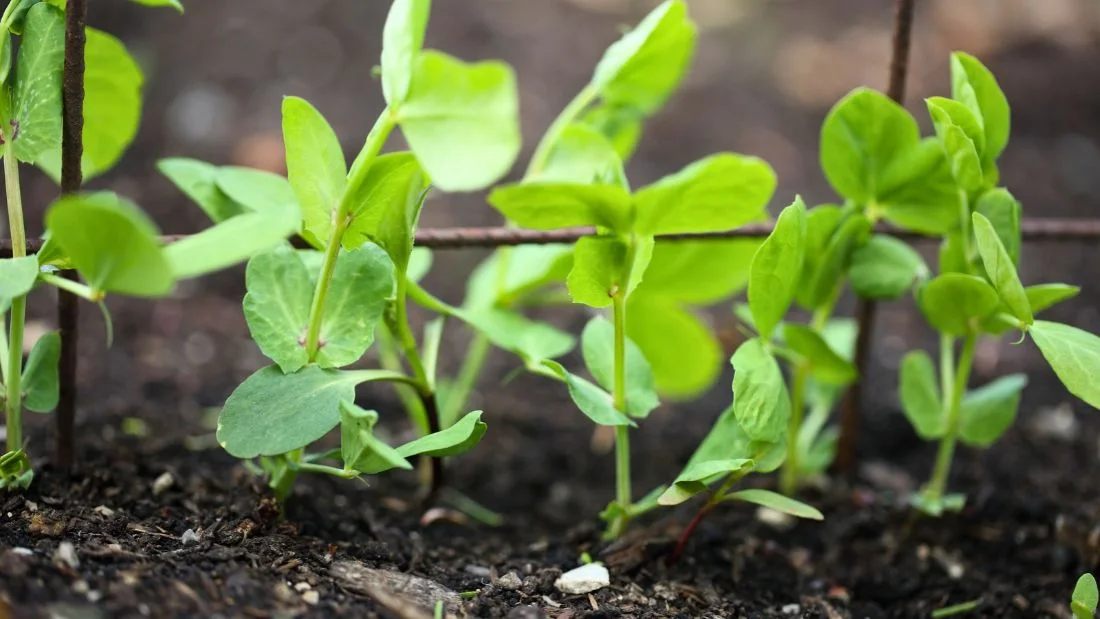
And what better place to start than with the humble pea?
Legumes have a remarkable superpower. Through a partnership with bacteria called Rhizobium, which live in nodules on their roots, they can convert atmospheric nitrogen into a form plants can use. Known as biological nitrogen fixation, this is one of nature’s rather brilliant fertiliser factories. The plant receives nitrogen, the bacteria receive energy, and nitrogen can eventually return to the
soil through decomposing roots and plant material.
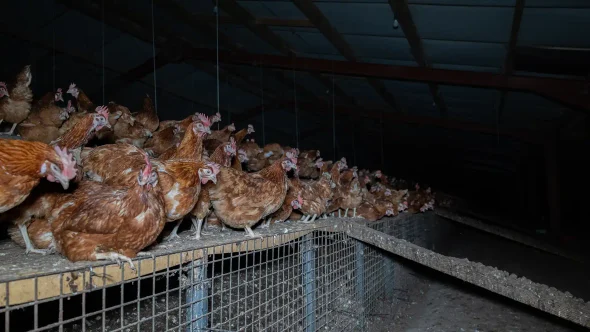
For centuries, farmers have relied on animal manure to replenish soil nutrients. But manure isn’t a magic solution. Its nutrients take time to become available, and when applied in excess or at the wrong time, nitrogen can escape into our waterways through runoff and leaching.
The consequences can be devastating. Excess nitrogen stimulates algal blooms, depletes oxygen
and contributes to eutrophication, effectively suffocating aquatic life and creating ecological dead
zones.
So, can we replace the manure with peas?
I designed a growing experiment in Bristol using pots divided into three groups. One grew radishes alongside peas, another grew radishes with cattle-manure pellets, and the third grew radishes alone as a control.
Over nine weeks, I measured soil nitrogen, nitrate runoff and radish growth.
The results were encouraging. As expected, manure produced the highest soil nitrate levels, but the pea treatment came
remarkably close. Crucially, there was no statistically significant difference between the two. When it came to radish growth, the peas actually came out on top! Radishes grown alongside peas produced the greatest average growth, performing comparably to those grown with manure.
I also noticed something unexpected, and something I hadn’t even set out to investigate. The pea-containing pots appeared to retain considerably more moisture. In fact, when collecting runoff water for nitrate testing, I had to apply approximately twice as much water to the legume treatment to generate sufficient runoff to collect and analyse.
This raised two intriguing questions.
Firstly, could legume companion planting improve soil moisture retention, helping crops withstand increasingly frequent periods of drought? Secondly, if the pea treatment required substantially more irrigation to produce enough runoff for sampling, could legume-based planting systems also help reduce excess surface runoff and nutrient loss in real agricultural settings, compared with manure-based systems?
These are observations and hypotheses rather than proven findings from my experiment. Establishing whether legumes genuinely reduce runoff would require further controlled testing, measuring both the volume of water applied and the volume and nitrate content of the resulting runoff. However, there is already encouraging scientific evidence that plant root systems and cover cropping can improve soil structure, water infiltration and, in some circumstances, water retention. Research has also demonstrated the potential for cover crops to reduce nitrate leaching. With climate change bringing more extreme patterns of rainfall and drought, and our waterways already suffering from nutrient pollution and eutrophication, these benefits from using legumes deserve considerably more attention.
Of course, a small Bristol greenhouse experiment won’t revolutionise global agriculture overnight! But my findings add to growing evidence that legumes could help reduce our reliance on animal-derived fertilisers.
Then there’s the bigger picture
According to Our World in Data, approximately 77% of global agricultural land is devoted to livestock, including grazing and growing animal feed, yet animal products provide just 18% of global calories.
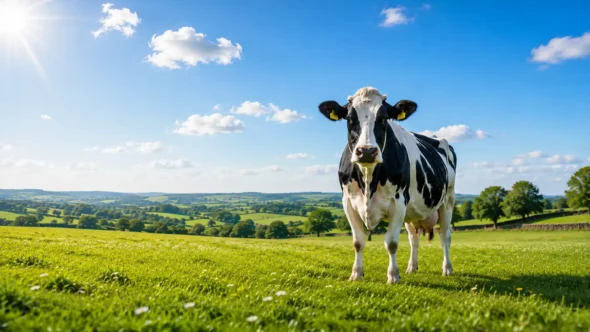
Imagine reclaiming even a fraction of that land for growing food directly for humans, restoring forests, re-wilding landscapes and giving nature room to breathe.
We’re often told that animal agriculture is an age-old tradition, as though thousands of years of doing something automatically makes it right. Yet archaeological evidence of dairy production and consumption dates back around 9,000 years. Homo sapiens have existed for approximately 300,000 years. That’s just 3% of our species’ history. So perhaps animal agriculture isn’t quite the timeless, indispensable tradition we’re sometimes led to believe.
We’ve spent 97% of our existence without consuming the mammary secretions (and pus) of another species, put that way it doesn’t sound that appealing or essential I think.
My experiment doesn’t claim to have all the answers. But the study challenges a deeply entrenched assumption: that we need farm animals to maintain productive soils and grow our food.
Perhaps it’s time we gave peas a chance. And if we can grow food while giving animals their freedom, improving our waterways and making more room for nature, that’s a harvest worth celebrating.
Nina Sebastiane BSc (Open)
Environmental scientist, vegan and animal advocate.

About the author
Viva! Guest