
Wearing Fur to a Party Doesn’t Make Jeff Goldblum Wicked
The beloved Hollywood actor has recently taken impressive strides for animal welfare; a small misstep at this year’s Vanity Fair Oscar Party needn’t overshadow any of it.
Bristol, UK – 24 March 2026
Oh, Jeff Goldblum. I see you, I love you – and I’d like a quiet word.
Earlier this year, it was all looking so good for animal-loving fans of the Hollywood star. Having appeared in the movie adaptation of Wicked as the Wizard of Oz, alongside long-term vegans Ariana Grande and Cynthia Erivo, Goldblum – arguably best known for his iconic performance as Dr Ian Malcolm in the Jurassic Park franchise – announced he was giving up meat. Appearing on the British breakfast talkshow This Morning in November 2025, he revealed to the audience that he was planning a vegetarian Christmas, stating: “You know, after doing this movie, we talked about the animal cruelty. I stopped eating meat and poultry.”
Vegans and vegetarians across the world (including all of us at vegan campaigning charity Viva!) rejoiced. Goldblum has a huge platform. On Instagram, he shares with his 3.2 million followers his delightfully eccentric takes on life, including his ‘Jeffirmations’ – little nuggets of positivity designed to uplift and entertain. Eschewing meat and poultry seemed like a natural evolution for the actor, one that sent a simple yet powerful message to his loyal fans – the same one that underpins the premise of Wicked – that animal cruelty is wrong. It was, and remains, a genuinely big deal.
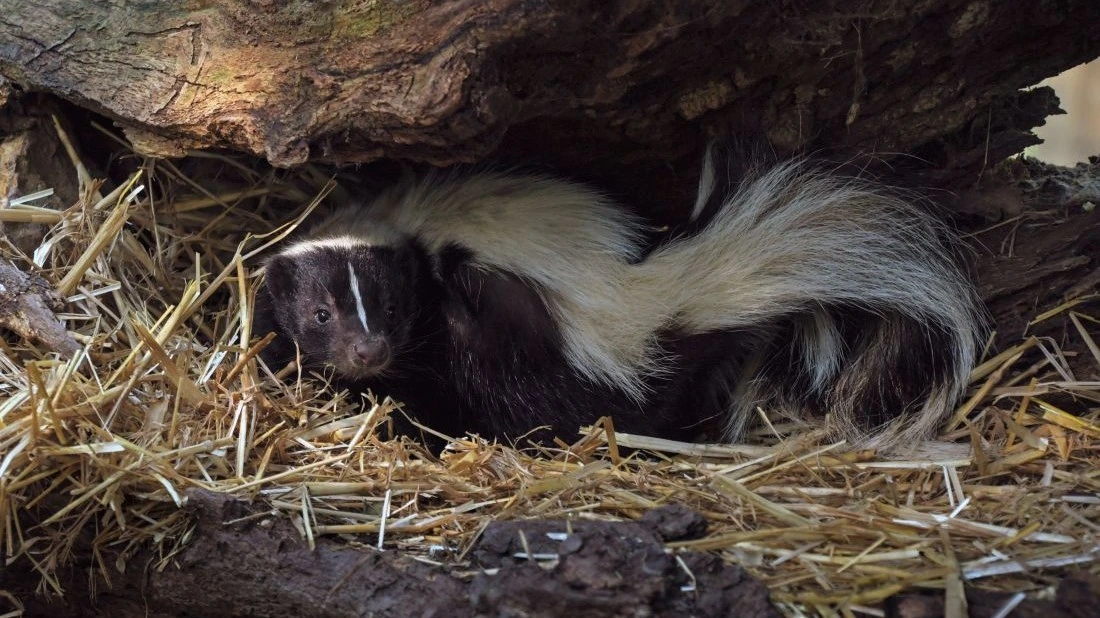
Which is why, when Goldblum and his wife Emilie stepped out in vintage skunk fur at the 2026 Vanity Fair Oscar Party on Sunday 15 March, styled by American fashion designer Eli Russell Linnetz, the reaction was sharp – and perhaps understandable, given how recently and how publicly he’d spoken about the cruelty of exploiting animals.
(You can see the Instagram post featuring Jeff and his wife, and read the comments under it, slightly further down this page.)
What vintage fur actually means
The vintage fur defence is, on the surface, a reasonable one. The animal is already dead. No new pelt is being purchased. No fresh demand is being created. When faced with a fur coat inherited or sourced second-hand, the logic of “wear it rather than waste it” feels, instinctively, like the more ethical call.
The trouble is that the ethics of fur don’t begin and end with the transaction. There are more than two options for a vintage fur coat beyond wearing it or sending it to landfill, despite what online commentators would have us believe.
Vintage fur can be donated to wildlife rescue centres, where it provides comfort and warmth to orphaned, ill or injured animals. It can go to museums for use in thought-provoking displays on the history of animal exploitation. It can be taken into schools and universities for hands-on talks and debates, helping the next generation think critically about how fashion and ethics intersect. It can be donated to animal advocacy organisations such as Viva! for use in public outreach. And, of course, it can simply stay on a hanger at the back of the wardrobe, where it bothers absolutely no one.
The other consideration is one that Goldblum, of all people – a man who understands the weight of a cultural moment – will surely appreciate. When a globally recognised star wears fur on one of the most photographed nights in Hollywood’s calendar, the context of how it was sourced doesn’t travel with the image. What travels is the image itself: glamorous, celebratory, aspirational. For the millions of people who will see that photograph without reading the caption, the message isn’t “this is a thoughtful act of waste reduction”. It’s simply: fur, at the Oscars, on someone we admire. That signal, however unintentionally sent, does reach people – and it matters.
None of which makes Goldblum wicked. It makes him human.
An opportunity, not a crisis
Everyone who cares about animals has, at some point, got something wrong. Navigating the ethics of food and fashion is genuinely complex and the learning curve is steep. What matters, and what separates the people who make a lasting difference from those who don’t, is what happens next.
Goldblum has already demonstrated that he’s willing to change. Going vegetarian after a movie role prompted him to think differently about animal cruelty isn’t a small thing; it’s exactly the kind of quiet, values-led shift that influences the people around you in a big way. That matters.
This moment, then, is less a misstep than an opportunity. A response from Goldblum – not a grovelling apology, but a simple, honest acknowledgement that he’s learned something new about vintage fur and what it communicates – could be genuinely powerful. It would reach his 3.2 million Instagram followers. It would model something rare and valuable – the willingness to say: “I thought I was doing the right thing, but now I know better.”
Which would be a very Goldblum thing to do.
And, for the sake of my temporarily-in-storage Ian Malcolm poster as well as all the animals out there still bred for fur, I really hope he does it.
ENDS
Notes for Editors
- Viva! is a registered charity (number 1037486) and the UK’s leading vegan campaigning organisation
- For additional assets and information, contact Rachael Simpson-Jones, PR manager at Viva! – rachael@viva.org.uk