Animal factories – fuelling the rise of harmful bacteria
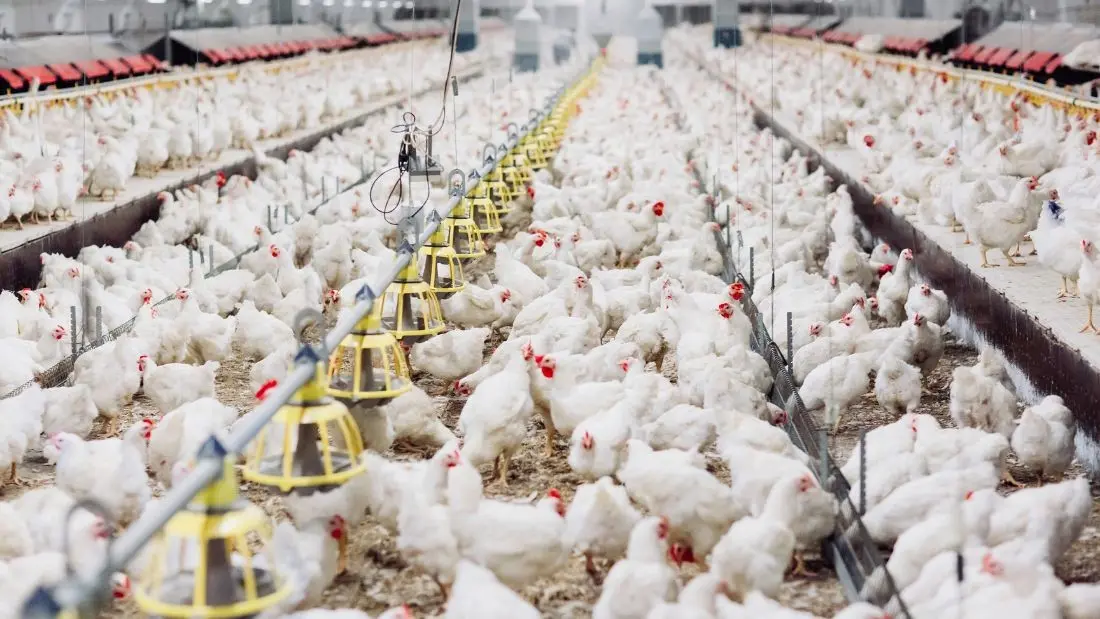
Modern poultry farming has changed not only how chickens are raised, but also how diseases can spread between birds and humans.
Billions of chickens now live in large, crowded farms, creating a worrying new environment where bacteria can thrive, spread and evolve.
To understand how intensive animal farming influences the evolution of harmful bacteria, researchers examined how modern, densely populated chicken farms have shaped Campylobacter jejuni (C. jejuni) strains. This bacterium is a leading cause of food poisoning, often causing gut illness and diarrhoea in people who eat contaminated chicken.
Published in the peer-reviewed journal Proceedings of the National Academy of Sciences, researchers from the universities of Oxford and Sheffield analysed the DNA of Campylobacter bacteria isolated from 2,747 birds – 1,892 chickens and 855 wild birds – sampled across 27 countries between 1979 and 2024. Using these genomes to reconstruct the bacteria’s evolutionary history, they estimated that since around 1900, Campylobacter has been moving from chickens into wild birds at a rate roughly 100 times higher than it did before chickens were domesticated.
Since the 1960s, strains of Campylobacter associated with chicken have also grown rapidly, creating a larger and more diverse population of bacteria with greater opportunities to evolve and spread.
Pathogen sponges
The researchers suggest that large chicken populations can act like ‘pathogen sponges,’ picking up many different strains of bacteria and giving them plenty of opportunities to multiply and spread.
The authors said: “The rise of intensive livestock production has led to the emergence of a vast host niche in which members of the microbiome [bacteria] can proliferate and spread through global food production networks”.
Some of these chicken-adapted strains have also developed genes that may help them cope with stress, metals and antibiotics, as well as being able to move more effectively. The metals include traces of copper and zinc in animal feed and resistance to them increases their chances of survival.
Overall, this study shows how factory farming doesn’t just increase the number of pathogens, it can also help them evolve and spread. Large numbers of farmed animals confined in crowded sheds create ideal conditions for bacteria to multiply, adapt and spread – jumping between species, reaching wild birds and humans, and travelling around the world. The study authors warn: “For pathogens such as C. jejuni this represents an infection risk to humans”.
Kyne OJ, Penman BS, Kelly DJ and Sheppard SK. 2026. Accelerating Campylobacter zoonosis in the Anthropocene. Proceedings of the National Academy of Sciences USA. 123 (32) e2609969123.

About the author
Dr. Justine Butler
Justine joined Viva! in 2005 after graduating from Bristol University with a PhD in molecular biology. After working as a campaigner, then researcher and writer, she is now Viva!’s head of research and her work focuses on animals, the environment and health. Justine’s scientific training helps her research and write both in-depth scientific reports, such as White Lies and the Meat Report, as well as easy-to-read factsheets and myth-busting articles for consumer magazines and updates on the latest research. Justine also recently wrote the Vegan for the Planet guide for Viva!’s Vegan Now campaign.
View author page | View staff profile