
B12 Deficiency lead to suicide? Behave!

News reports have turned the tragic death of a 21-year-old university student into a sensational warning about veganism, even though the real issue is preventable B12 deficiency rather than plant-based diets.
The reports are heavily framed as ‘veganism is dangerous’, but B12 deficiency is not uncommon in the UK, regardless of diet. Deficiency occurs in many groups and is strongly associated with age and absorption problems more than inadequate supplementation.
B12 deficiency is not uncommon in the UK
According to the NHS:
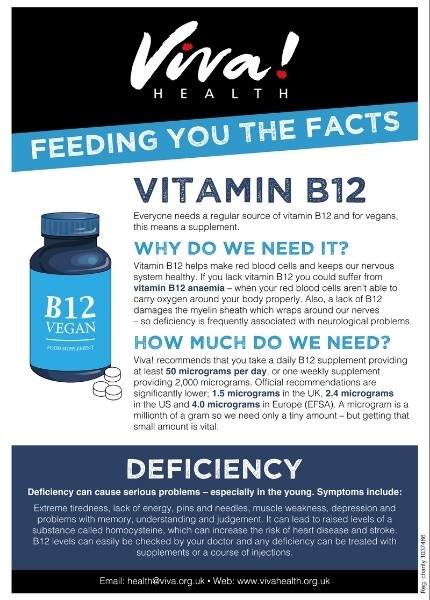
Importantly, the most common cause of severe B12 deficiency in the UK is not veganism but malabsorption conditions such as pernicious anaemia – where your immune system attacks healthy cells in your stomach, preventing your body absorbing vitamin B12 from the food you eat.
Certain medicines, including anticonvulsants and proton pump inhibitors (PPIs), can also affect how much B12 your body absorbs.
Most cases of vitamin B12 deficiency can be easily treated with injections or tablets to replace the missing vitamin.
Reports from the inquest say the woman who died adopted a vegan diet in 2016 and died in September 2019, so she had reportedly been vegan for about three years. Some reports also say her family believed she stopped taking B12 supplements for at least six months before her death.
Vitamin B12 deficiency usually develops very slowly because the body stores several years’ worth of B12 in the liver. The NHS states: “Stores of vitamin B12 in the body can last around two to five years without being replenished, so it can take a long time for any problems to develop after a dietary change.”
The US National Institutes of Health similarly notes that: “Your body stores 1,000 to 2,000 times as much vitamin B12 as you’d typically eat in a day, so the symptoms of vitamin B12 deficiency can take several years to appear.”
It’s unclear why this young woman had such profound B12 deficiency; the coroner’s suggestion that her vegan diet was responsible appears to be speculation that was jumped on like catnip by the tabloid press.
The reports blur the line between association and causation. The inquest findings described a B12 deficiency linked to psychiatric symptoms, but that does not mean veganism was the cause – it means severe deficiency can have serious consequences if missed. This tragic case is newsworthy, but using it to imply that veganism leads to depression or psychosis is not a balanced public-health summary – it is misleading and disingenuous.
These stories should have focused on B12 deficiency prevention, not on weaponising a tragedy against veganism.

About the author
Dr. Justine Butler
Justine joined Viva! in 2005 after graduating from Bristol University with a PhD in molecular biology. After working as a campaigner, then researcher and writer, she is now Viva!’s head of research and her work focuses on animals, the environment and health. Justine’s scientific training helps her research and write both in-depth scientific reports, such as White Lies and the Meat Report, as well as easy-to-read factsheets and myth-busting articles for consumer magazines and updates on the latest research. Justine also recently wrote the Vegan for the Planet guide for Viva!’s Vegan Now campaign.
View author page | View staff profile