


Evolution and the Paleo Myth – our ancient ancestors were plant-based
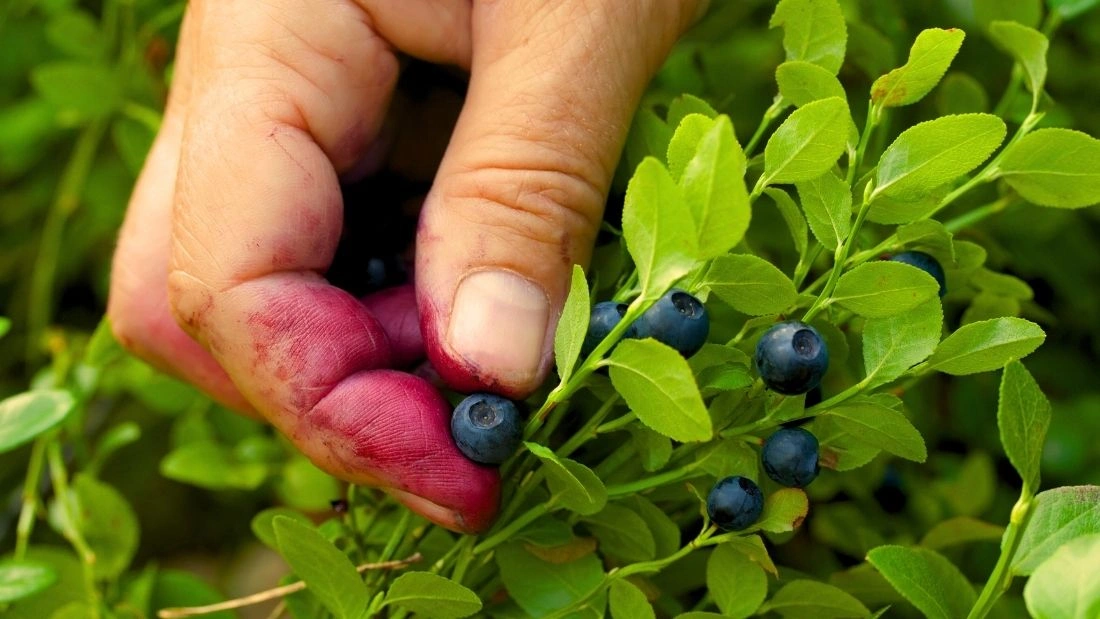
The idea that ‘real men eat meat’ is probably rooted in the constantly repeated claim that our ancient ancestors did little else but hunt and chomp down on meat from wild animals. Not true, research suggests the diets of our hunter-gatherer ancestors were plant-based with limited amounts of meat. It also appears that it wasn’t meat that helped our brains increase in size but more likely carb-rich plant foods, such as roots and tubers. It seems that the ‘meat equals masculinity’ stereotype is a modern cultural construct linking red meat to power and male identity rather than historical fact.
The much-vaunted paleo diet focuses on foods thought to have been available to our hunter-gatherer ancestors during the Palaeolithic era around 2.5 million to 10,000 years ago. It emphasises lean meats, fish, fruit, vegetables, nuts and seeds, while excluding grains, pulses, dairy products, refined sugars and processed foods – so basically, a high-meat, low-carb diet. Proponents say this is what we are ‘designed’ to eat and that it offers health benefits such as improved blood sugar control and weight loss.
Paleo diet damage
By focusing on a diet high in protein and fat, while severely limiting carbohydrates, the body is forced to burn fat for energy which reduces hunger and causes short-term weight loss. While this bit of the myth may be true, your body can only do this for a while as it’s not a natural way for your metabolism to work and, over time, it may cause side effects such as constipation, headaches, kidney strain, bad breath, high cholesterol while increasing the risk of heart disease and cancer. The theory that our ancient ancestors ate this type of low-carb ‘paleo diet’ is flawed on many levels and evidence shows that early humans ate a much more plant-based diet.
Plant food remains
A tiny grape pip left on the ground some 780,000 years ago is just one of more than 9,000 remains of edible plants discovered over years of excavation in an old Stone Age site in Israel on the shoreline of Lake Hula in the northern Jordan valley.1 This collection provides evidence of the plant-based diet of our prehistoric ancestors. Of the remains found on site, Professor Goren-Inbar and Dr Yoel Melamed of the Faculty of Life Sciences at Bar Ilan University identified 55 different species of edible plants, including root vegetables, leafy veg, celery, figs, nuts, chenopodium seeds – similar to quinoa – and other seeds.
“This region is known for its wealth of plants but what surprised us were the sources of plant food coming from the lake itself. We found more than 10 species that existed here in prehistoric times but no longer today, such as two species of water nuts, from which seven [varieties] were edible,” said Dr Melamed.2
Ancient ancestors dug potatoes!
A 2020 study reported that the earliest direct evidence of cooking the starchy, underground storage parts of plants (rhizomes) dates back to around 170,000 years ago and was found in a cave near the Swaziland border in South Africa. Charred whole rhizomes of Hypoxis plants were found in fireplaces.3 “They can be as rich in carbs as potatoes although they taste more like yams”, said lead author, Professor Lyn Wadley of the University of the Witwatersrand in South Africa.
This study suggests that Middle Stone Age humans roasted these underground tubers and shared food at their home base. It reveals complex food processing and early use of carbohydrates long before agriculture. Writing in New Scientist, Wadley said: “I’m afraid the paleo diet is really a misnomer”.4
Last year, a study published in Nature Ecology and Evolution, using advanced isotope analysis of 15,000- to 13,000-year-old human remains from Taforalt in Morocco, revealed that these Late Stone Age hunter-gatherers consumed a diet rich in plant-based foods, including acorns, pine nuts and wild pulses.5 The researchers also found evidence that weaning began before the age of one, potentially with plant-based foods. As the authors note, “Our results unequivocally demonstrate a substantial plant-based component in the diets of these hunter-gatherers.”
These ancient remains hint at what our ancestors may have eaten while the charred remains of what may be the world’s oldest cooked meal were discovered in caves in northern Iraq provide more evidence.6 Thought to be about 70,000 years old, these food remnants were recovered from a Neanderthal dwelling 500 miles north of Baghdad in the Zagros Mountains.
Microscopic examination revealed the use of pounded pulses as a common ingredient in cooked plant foods. The research adds to mounting evidence of plant consumption by both early modern humans and Neanderthals. Wild nuts and grasses were often combined with pulses such as lentils, along with tubers and wild mustard.
Professor Chris Hunt, who coordinated the excavation, together with his colleagues, recreated one of the recipes using seeds gathered near the caves. “It made a sort of pancake-cum-flatbread which was really very palatable – a sort of nutty taste,” Hunt said.
Linda Geddes, Guardian science correspondent, put the recipe to the test and said: “It was good enough that I finished the entire patty and contemplated cooking a second.”7
Another 2024 study used human bone isotope chemistry to model the diets of early Holocene-era humans who lived in the Andean highlands in Peru 9,000 to 6,500 years ago.3 They found that plant foods made up 70 to 95 per cent of these foragers’ diet, with tubers similar to potatoes probably dominating. The authors said: “The current study arrives at a similar place to the earlier ethnographic findings – plant foods were central to early human economies.”
The bigger brain picture
Dr Karen Hardy from the Catalan Institution for Research and Advanced Studies, along with an international team of experts on human evolution, genetics and environment, pulled together a wealth of data for their theory that – carbohydrate consumption, particularly in the form of cooked starch, was critical for the development of the human brain over the last million years.8
Up to 25 per cent of the energy we produce, and up to 60 per cent of our glucose, is used by our brain. Glucose is the brain’s preferred source of energy and low carbohydrate diets make it difficult to supply a sufficient amount.9 Starches, an important source of glucose, were widely available to our ancestors in the form of tubers, fruit, nuts and seeds. Raw starches are not digested as well as cooked ones, in which the plant’s structure is changed. During our last one million years of evolution, we developed a significantly higher amount of the enzyme amylase in our saliva which increases our ability to digest starch.
According to the theory, amylase genes increased once cooking became widespread and glucose for the brain became more available, which in turn enabled an increase in brain size. Humans also need plant nutrients to survive – vitamin C and fibre, for example – but we don’t need meat. These studies provide compelling evidence that our ancient ancestors enjoyed a varied, plant-based diet, including root vegetables, leafy veg, fruit, nuts and seeds.
This all makes sense when you examine our physiology. We are built much like herbivores and grind food with flat molars, chew side-to-side rather than up-and-down, secrete starch-digesting saliva and have long, fibre-processing colons. These are all clear signs that our bodies are more suited to thrive on plants, not meat.
Taken together, the research challenges long-standing assumptions about the heavy reliance on animal protein in pre-agricultural societies and contributes to a growing body of evidence suggesting that plant-based foods were not only common but likely the primary energy source for most ancient humans.
If you want to follow an authentic ancestral diet, consider a wholefood plant-based diet rather than a meat-heavy ‘caveman’ diet!
References
- Melamed Y, Kislev ME, Geffen E et al. 2016. The plant component of an Acheulian diet at Gesher Benot Ya’aqov, Israel. Proceedings of the National Academy of Sciences of the USA. 113 (51) 14674-14679.
- Hebrew University of Jerusalem. 2016. Secrets of the Paleo diet: archeological discovery reveals plant-based menu of prehistoric humans. ScienceDaily. https://www.sciencedaily.com/releases/2016/12/161205164935.htm
- Chen JC, Aldenderfer MS, Eerkens JW et al. 2024. Stable isotope chemistry reveals plant-dominant diet among early foragers on the Andean Altiplano, 9.0-6.5 cal. ka. PLoS One. 19 (1) e0296420.
- Le Page M. 2020. Earliest roasted root vegetables found in 170,000-year-old cave dirt. New Scientist: https://www.newscientist.com/article/2228880-earliest-roasted-root-vegetables-found-in-170000-year-old-cave-dirt/
- Moubtahij Z, McCormack J, Bourgon N et al. 2024. Isotopic evidence of high reliance on plant food among Later Stone Age hunter-gatherers at Taforalt, Morocco. Nature Ecology and Evolution. 8 (5) 1035-1045.
- Kabukcu C, Hunt C, Hill E et al. 2023. Cooking in caves: Palaeolithic carbonised plant food remains from Franchthi and Shanidar. Antiquity. 97 (391) 12-28.
- Geddes L. 2022. ‘Surprisingly tasty’: putting Neanderthal cooking to the test. The Guardian: https://www.theguardian.com/science/2022/nov/26/surprisingly-tasty-putting-neanderthal-cooking-to-the-test-recipe
- Hardy K, Brand-Miller J, Brown KD, Thomas MG, Copeland L. 2015. The importance of dietary carbohydrate in human evolution. The Quarterly Review of Biology. 90 (3) 251-68.
- University of Sydney. 2015. Starchy carbs, not a Paleo diet, advanced the human race. https://www.sydney.edu.au/news-opinion/news/2015/08/10/starchy-carbs–not-a-paleo-diet–advanced-the-human-race.html

About the author
Dr. Justine Butler
Justine joined Viva! in 2005 after graduating from Bristol University with a PhD in molecular biology. After working as a campaigner, then researcher and writer, she is now Viva!’s head of research and her work focuses on animals, the environment and health. Justine’s scientific training helps her research and write both in-depth scientific reports, such as White Lies and the Meat Report, as well as easy-to-read factsheets and myth-busting articles for consumer magazines and updates on the latest research. Justine also recently wrote the Vegan for the Planet guide for Viva!’s Vegan Now campaign.
View author page | View staff profile