
Plant-based diets protect your health
Exciting new evidence confirms that plant-powered diets are your strongest defence against cancer. A landmark study from Oxford researchers, analysing data from 1.8 million people across three continents and published in the British Journal of Cancer, reveals that vegetarians slash their risk of five major cancers – breast, prostate, kidney, pancreatic, and multiple myeloma – compared to meat-eaters.
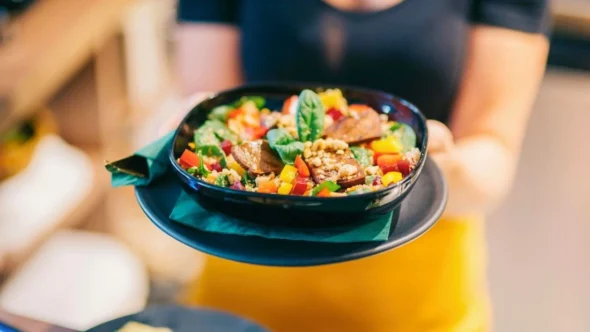
This research compared five diet groups, showing once again that filling your plate with fruits, vegetables, wholegrains, beans, nuts and seeds isn’t just healthy – it’s a gamechanger for reducing your risk of cancer.
Embracing vegetarian or vegan eating isn’t a trend; it’s science-backed protection that empowers you to take control of your health today.
The study, led by researchers at Oxford Population Health’s Cancer Epidemiology Unit, pooled data from more than 1.8 million people from three continents and compared the risk of 17 different cancers across five diet groups: meat-eaters, poultry-eaters, fish-eaters, vegetarians and vegans.
Compared with meat-eaters, vegetarians had:
| 21% lower risk of pancreatic cancer |
| 9% lower risk of breast cancer |
| 12% lower risk of prostate cancer |
| 28% lower risk of kidney cancer |
| 31% lower risk of multiple myeloma |
Why this is good news
- Pancreatic cancer is one of the most aggressive and difficult-to-treat cancers, often diagnosed at a late stage and associated with low survival rates. A 21 per cent reduction in risk is particularly striking because even modest decreases in pancreatic cancer incidence can translate into meaningful public health benefits. For vegetarians, this suggests that avoiding meat may help reduce exposure to dietary factors linked to inflammation and cancer development, offering a potentially protective effect against one of the deadliest cancers
- Breast cancer is one of the most common cancers worldwide, so a nine per cent reduction in risk is highly significant at a population level. This finding is good news for vegetarian women, as it suggests that plant-based diets – often higher in fibre, antioxidants and phytonutrients – may support hormonal balance and reduce cancer-promoting processes. Small percentage differences in common cancers can prevent thousands of cases when applied across large populations
- Prostate cancer is the second most frequently diagnosed cancer in men, coming behind lung cancer. A 12 per cent lower risk represents a meaningful protective association for vegetarian men. Diets rich in plant foods and lower in red and processed meats may reduce exposure to compounds linked to cancer growth. For men concerned about long-term health, this finding reinforces the importance of a healthy plant-based diet
- A 28 per cent reduction in kidney cancer risk is a substantial difference. Kidney cancer has been linked to factors such as obesity and high blood pressure, both of which can be influenced by diet. Vegetarian diets are often associated with healthier body weight and improved blood pressure control, which may help explain this strong protective association. This large reduction highlights how dietary patterns can meaningfully affect cancer risk
- Multiple myeloma is a serious cancer of plasma cells in the bone marrow. A 31 per cent lower risk is the largest reduction reported in the study and represents particularly encouraging news. Because multiple myeloma is relatively rare but often challenging to treat, a substantial risk reduction suggests that plant-based diets may influence immune function or inflammation in ways that lower susceptibility. For vegetarians, this finding stands out as especially promising evidence of long-term health benefits
Together, these results provide strong support for the idea that vegetarian diets are not only nutritionally adequate but may also offer meaningful protection against several major cancers.
Unexpected findings
Unexpectedly, vegetarians were found to have nearly double the risk of squamous cell carcinoma of the oesophagus compared to meat-eaters. Oesophageal cancer has two main types: adenocarcinoma and squamous cell carcinoma. In the UK, adenocarcinoma is more common, accounting for six out of 10 cases, whereas regions such as northeastern Iran and Linxian and Cixian in China report extremely high rates of squamous cell carcinoma, largely due to dietary habits, smoking, alcohol use and chronic oesophageal irritation. The authors also suggest that lower levels of riboflavin (vitamin B2) and zinc may contribute.
However, it should be noted that the UK findings for squamous cell carcinoma among vegetarians were based on only 31 cases across three studies.
A further surprise was a 40 per cent higher risk of bowel cancer seen in vegans. Again, this was very unexpected and does not fit well with other studies comparing bowel cancer risk in vegans with meat-eaters. The authors suggest a number of possible reasons for these unexpected results.
Firstly, the authors caution that this finding should be interpreted carefully, as it was based on just 93 cases among 8,849 vegans in a study of 1.8 million people, with some studies reporting fewer than 10 vegan cases in each.
Secondly, the meat-eaters in this study were generally healthier than the average UK meat-eaters and ate less than half the typical amount of processed meat, which is classified as a Group 1 carcinogen. Compared to average UK meat-eaters, the risk of bowel cancer in vegans would likely be lower than this study suggests.
The authors also speculate that lower calcium intake could explain the higher bowel cancer risk in vegans. This is plausible because the study collected data between 1980 and 2010, before widespread fortification of plant-based milks and foods with calcium became standard in the UK. The UK FEED study found no difference in calcium intake between vegans, vegetarians and meat-eaters, suggesting the observed problem may no longer exist. It’s like looking at stars in the night sky; this study may be seeing a problem that no longer exists.
Finally, when the first four years of follow-up are excluded, the higher risk for vegans disappears, raising the possibility of reverse causality – people may have switched to a vegan diet after health issues arose, rather than veganism causing harm.
Even if the increased risk were real, a 40 per cent higher relative risk sounds alarming but is actually small: the UK lifetime risk of bowel cancer is five to six per cent, so a 40 per cent increase would raise it to six to seven per cent, equivalent to only one to two extra cases per 100 people over a lifetime.
Plant-based diets protect against cancer
There was no suggestion of increased overall cancer risk for vegans in this latest study, in fact, recent studies (here, here and here) show vegans have a 16 to 19 per cent lower risk of all cancers combined compared to meat-eaters – along with a lower risk of obesity, diabetes and heart disease. Studies looking at meat and disease also consistently report how meat increases the risk. In early 2026, for example, the largest study of its kind, published in The Lancet Oncology, found that more than a quarter of healthy years lost to breast cancer are attributable to diet or lifestyle factors, with red meat topping the table.
The weight of evidence continues to favour plant-based diets – and the authors of this new study do not recommend changing current dietary guidelines. In respect of the unexpected findings, they say: “The generalisability of the findings should be considered cautiously.”
In short, despite two unexpected findings, the overwhelming evidence confirms that plant-based diets remain one of the most effective ways to protect your health. Filling your plate with fruits, vegetables, pulses, wholegrains, nuts and seeds continues to lower the risk of several major cancers, support healthy weight and reduce the likelihood of chronic disease. Choosing a vegetarian or vegan lifestyle isn’t just a personal preference – it’s a science-backed strategy for long-term wellbeing. The overall picture for plant-based diets and cancer remains strongly positive.

About the author
Dr. Justine Butler
Justine joined Viva! in 2005 after graduating from Bristol University with a PhD in molecular biology. After working as a campaigner, then researcher and writer, she is now Viva!’s head of research and her work focuses on animals, the environment and health. Justine’s scientific training helps her research and write both in-depth scientific reports, such as White Lies and the Meat Report, as well as easy-to-read factsheets and myth-busting articles for consumer magazines and updates on the latest research. Justine also recently wrote the Vegan for the Planet guide for Viva!’s Vegan Now campaign.
View author page | View staff profile