


Fibre: the vegan diet’s hidden superpower
Quick overview
SUMMARY
Most people in the UK are falling far short of the recommended 30 grams of fibre a day, with average intake at just 16.5 grams. That matters because fibre is essential to digestive health, gut function, immune support and overall wellbeing. Low fibre intake is linked to constipation, diverticular disease, heart disease, type 2 diabetes and bowel cancer, and concern is growing as bowel cancer rates rise in younger adults.
Fibre is found only in plant foods. It passes through the stomach undigested and reaches the large intestine, where gut bacteria ferment it into short-chain fatty acids that help protect the gut, reduce inflammation and support regular bowel movements. Soluble fibre helps with fullness, blood sugar control and lowering LDL cholesterol, while insoluble fibre adds bulk to stools and speeds transit. Fermentable fibre helps feed the microbiome and may help cut bowel cancer risk.
A healthy vegan diet has a clear advantage because vegans consistently consume more fibre than other diet groups. Wholegrains, beans, lentils, fruit, vegetables, nuts and seeds make it far easier to meet fibre targets, while animal foods contain no fibre at all. Plant foods also bring a wider package of vitamins, minerals, antioxidants and phytochemicals, alongside less saturated fat and cholesterol and a much lighter environmental footprint, all without the cruelty inherent in animal farming.
Reaching 30 grams a day is practical with everyday meals such as porridge with berries and flaxseed, lentil soup with a wholemeal roll, chickpea salads, bean chilli with brown rice or tofu stir-fries packed with vegetables. Choosing wholegrain versions, adding nuts and seeds and snacking on fruit, oatcakes or hummus with vegetables can make a big difference. Fibre should be increased gradually, with plenty of water, and people with gut conditions or on certain medicines may need individual advice.
KEY FACTS
- UK adults are advised to eat 30 grams of fibre a day, but average intake is only 16.5 grams.
- Animal foods contain no fibre whatsoever.
- Vegans have the highest fibre intakes of all diet groups in studies including EPIC-Oxford.
- Fibre feeds gut bacteria, which ferment it into short-chain fatty acids such as butyrate, acetate and propionate.
- Higher fibre intake is linked to lower risks of cardiovascular disease, coronary heart disease, type 2 diabetes and bowel cancer.
- The Lancet pooled 243 studies and found high fibre intake was strongly linked to better health outcomes, with benefits seen at 25 grams or more a day and further gains above 30 grams.
- Insoluble fibre adds bulk to stools, helps prevent constipation and can shorten whole-gut transit time.
- Soluble fibre helps slow glucose absorption, supports satiety and lowers LDL cholesterol.
- Bowel cancer is rising in younger adults, and unhealthy diets high in ultra-processed foods and red or processed meat and low in fibre are linked to increased risk.
- A varied vegan diet based on fruit, vegetables, wholegrains, pulses, nuts and seeds can provide all the fibre needed without supplements.
FAQ
Why is fibre so important for health?
Fibre supports regular bowel movements, feeds beneficial gut bacteria, helps reduce inflammation, lowers cholesterol and blood sugar levels, aids weight management and reduces the risks of heart disease, type 2 diabetes and bowel cancer.
Why does a vegan diet make it easier to get enough fibre?
Because fibre is found only in plant foods. Vegans typically eat more wholegrains, pulses, fruit, vegetables, nuts and seeds, while meat, fish, dairy and eggs contain no fibre at all.
What are the main types of fibre?
Soluble fibre dissolves in water and helps with fullness, blood sugar control and lowering LDL cholesterol. Insoluble fibre does not dissolve and adds bulk to stools, helping prevent constipation. Fermentable fibre, including resistant starch, is fermented by gut bacteria into protective short-chain fatty acids.
How can people increase fibre intake day to day?
Choose wholegrain versions of bread, rice and pasta, eat more beans and lentils, add nuts and seeds to meals, snack on fruit, vegetables, oatcakes or hummus, and build meals around fibre-rich foods such as porridge, soups, salads, chillies, dahls and stir-fries.
Should fibre be increased quickly?
No. Fibre should be increased gradually and with plenty of water to reduce bloating and discomfort. People with gut conditions or those taking certain medications may need personalised advice from a doctor or dietitian.
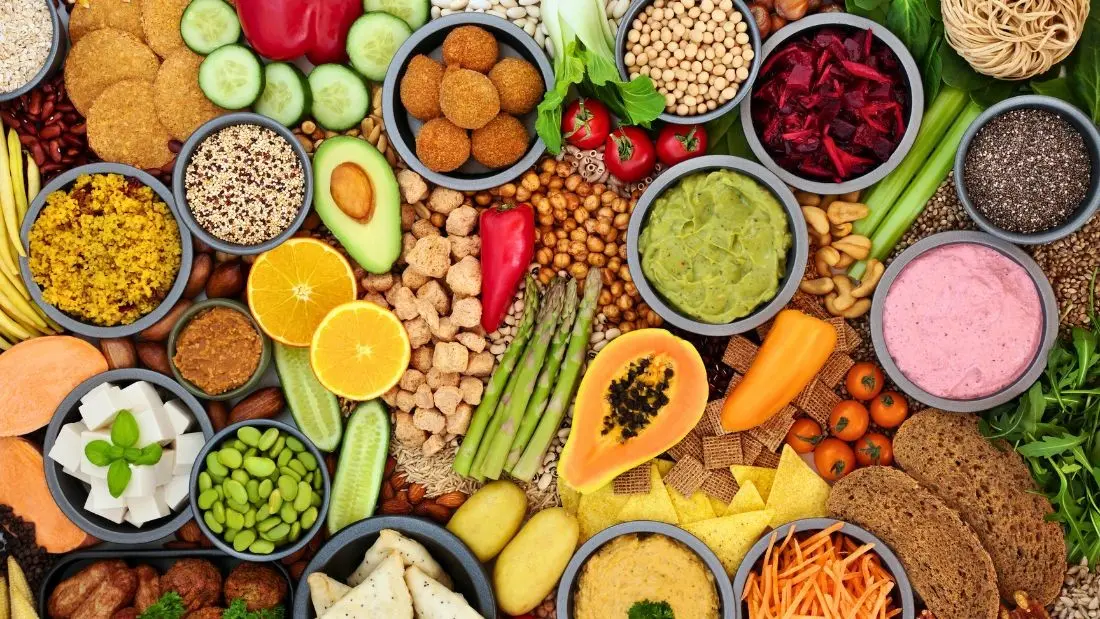
Most people in the UK consume only half the fibre needed for good health, but a healthy vegan diet can help you easily meet this target.
Fibre is the name for the group of diverse carbohydrates that pass through your stomach undigested. They reach your large intestine, where trillions of beneficial gut bacteria ferment them into health-promoting compounds. Though we can’t digest fibre ourselves, it’s essential for our digestive health, immune function, brain wellbeing and overall vitality. From top to toe, fibre is an essential component of a healthy diet.
Target 30 grams a day – most only manage 16.5 grams
THE GREAT FIBRE SHORTFALL
UK adults are advised to eat 30 grams of fibre a day, but the latest National Diet and Nutrition Survey (NDNS) suggests the average adult intake is only 16.5 grams – just over half of the goal. This shortfall is linked to a higher risk of heart disease, type 2 diabetes and a range of bowel problems from constipation to colorectal (bowel) cancer. Bowel cancer cases are rising among young people and growing evidence suggests that poor diets lacking in fibre may be a key driver.
Why fibre is a health powerhouse
- Ancestral fibre intake – humans evolved eating high-fibre plant-based diets
- Gut health – fibre strengthens your digestion and colon
- Feeding your other half – fibre nourishes your gut microbes
- Second brain – gut-brain communication supports digestion and mood
- Healthy poo/transit time – fibre keeps bowel movements regular
- Farts – more or less smelly? – plant-based farts are usually less smelly
- Blood sugar and weight – soluble fibre stabilises glucose and aids satiety
- Heart and circulation – fibre lowers cholesterol and blood pressure
- Chronic diseases – fibre reduces risk of diabetes, heart disease and bowel cancer
- Overall health – high fibre linked to better health outcomes globally
- Bowel cancer, rates surging in younger adults – fibre fights the rising early-onset cases
Including plenty of fibre-rich foods such as fruits, vegetables, wholegrains, pulses, nuts and seeds is an easy way to give your body a daily boost from the inside out.
THE VEGAN FIBRE ADVANTAGE
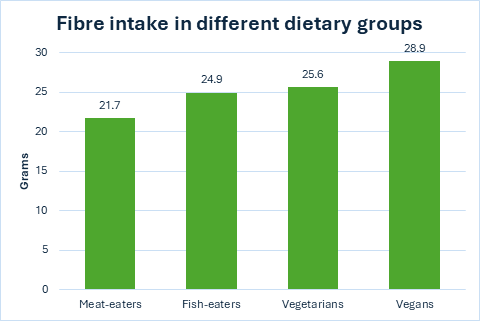
Studies consistently find that vegans have the highest fibre intakes of all diet groups, thanks to eating more wholegrains, beans, lentils, fruit, veg, nuts and seeds.
The EPIC-Oxford study, for example, found that compared to meat-eaters, fish-eaters and vegetarians, daily fibre intake was highest in vegans (see graph below). These values were higher than the 16.5 gram average reported in the NDNS because EPIC‑Oxford participants are a relatively health-conscious volunteer group, rather than a representative sample of the UK population.
Not low fibre, but no fibre
The popularity of low-carb diets, such as the Paleo, ketogenic and Atkins diets, has not helped the lack of fibre in UK diets, as animal foods contain no fibre whatsoever. So, diets centred on meat, fish, dairy and eggs are likely to struggle to reach anywhere near the 30-gram goal without major plant upgrades.
Fibre plus – the plant package deal
High‑fibre plant foods come bundled with vitamins, minerals, antioxidants and phytochemicals, which together lower inflammation and support heart and gut health. There are even wider benefits from shifting from animal to plant sources: less saturated fat and cholesterol, better weight management and a considerably lighter environmental footprint. Plus, of course, a vegan diet avoids the inherent animal cruelty.
TYPES OF DIETARY FIBRE
Fibre comes in different forms, each with distinct health benefits. Most plant foods contain a mix, so variety is key. A varied wholefood vegan diet delivers them all effortlessly, no supplements needed.
Three types of fibre
Soluble fibre
Dissolves in water to form a gel-like substance. Helps you feel full longer, softens stools, slows glucose absorption to blunt blood sugar spikes (reducing long-term diabetes risk) and lowers LDL ‘bad’ cholesterol.
Top sources: oats, pulses (peas, beans, lentils), bananas, berries, apples, pears, sweet potatoes and carrots.
Insoluble fibre
Doesn’t dissolve but absorbs water to add bulk. Speeds food transit, preventing constipation and diverticular disease and easing IBS for many (though some with IBS may need more soluble types).
Top sources: wholegrains, bran cereals, vegetable skins and stalks, dried fruit, nuts and seeds.
Fermentable fibre (including resistant starch)
Reaches the large intestine undigested, where gut bacteria ferment it into protective short-chain fatty acids (SCFAs) that may cut bowel cancer risk.
Top sources: green bananas and plantain, oats, barley, pulses and cooled cooked rice and pasta.
Tricks and tips
Choose wholegrain (brown) varieties over refined: wholemeal bread, brown rice, wholewheat pasta etc. For example, a large portion of cooked wholewheat pasta provides around six grams of fibre, more than double the fibre found in white pasta.
Nuts (almonds, pecans, walnuts) and seeds (pumpkin, sesame, sunflower) pack fibre alongside healthy fats – sprinkle seeds on soup, add them to stir-fries, salads, fruit dishes and more. If you start the day with cereal or muesli, add a sliced banana or a handful of berries and some chopped nuts. If you make homemade smoothies, add a small handful of almonds or a spoonful of ground flaxseed for a full on fibre boost.
A quick lunch of beans on toast can supply 15 grams of fibre – half the recommended daily amount – if you swap your usual white bread for wholemeal (two slices supply six grams), half a can of baked beans (eight grams) and a generous sprinkle of nutritional yeast (one gram).
Snack smart – eating fruit throughout the day will help; a banana and apple both supply two grams each. Swap processed snacks for oatcakes, vegetables sticks, dried fruit and nuts – a small handful of unsalted nuts provides around three grams of fibre.
If you eat a varied vegan diet with plenty of fruit, vegetables, wholegrain foods, pulses, nuts and seeds, you will get all the fibre you need!
EVERYDAY WAYS TO HIT 30 GRAMS AND BEYOND
| Meal | Dish | Typical serving | Fibre (g) per serving |
|---|---|---|---|
| Breakfast: | Porridge with soya milk, berries and ground flaxseed | 1 bowl (350g) | 9–11 |
| Smashed avocado on wholemeal toast | 1 slice + 1 avocado | 8–10 | |
| Scrambled tofu with wilted kale and cherry tomatoes on wholemeal toast | 2 slices toast + 150g tofu + veg | 7–9 | |
| Muesli with banana and soya milk | 60g muesli + 1 banana + 200ml milk | 9–11 | |
| Lunch: | Lentil or bean soup with a wholemeal roll | 1 bowl (400ml) + 1 roll | 13–20 |
| Hummus and falafel in a wholemeal pitta with rocket and tomatoes | 1 pitta + 5 falafel + 5 tbsp hummus | 10–16 | |
| Chickpea salad with leafy greens, grated carrots and sliced peppers | 1 large bowl (350g) | 12–18 | |
| Jacket potato loaded with smoky chipotle beans | 1 medium potato (200g) + half a tin of beans | 11–15 | |
| Dinner: | Black bean chilli with brown rice and red cabbage slaw | 1 plate (450g) | 15–22 |
| Wholewheat pasta with a veg-packed sauce | 80g dry pasta + sauce | 8–14 | |
| Tofu or tempeh stir-fry with plenty of veg, edamame, cashew nuts and seeds | 1 large plate (400g) | 10–14 | |
| Lentil dahl with spinach and brown rice | 1 bowl (400g) | 12–17 | |
| Dessert: | Apple crumble with raisins and an oaty topping | 1 portion (150g) | 4–7 |
| Vegan yoghurt with fruit | 125g yoghurt + handful of fruit | 3–6 | |
| Fresh fruit salad with dates and pistachios | 1 bowl (200g) | 4–8 | |
| Chia pudding with almond butter and chopped pecans | 1 jar (200g) | 10–16 | |
| Snacks: | Fresh fruit (banana, orange, peach, kiwi, apple) | 1 piece of fruit | 2–4 |
| Dried fruit (raisins, sultanas, dates, figs) | Small handful (30g) | 2–6 | |
| Small handful of nuts | Small handful (30g) | 2–4 | |
| Carrot sticks with hummus | 2 carrots + 3 tbsp hummus | 5–8 | |
| Oatcakes with peanut butter | 3 oatcakes + 1 tbsp peanut butter | 3–5 | |
| Popcorn | 1 large bowl (30g popped) | 4–7 |
Increase fibre gradually and drink plenty of water to avoid bloating and discomfort. People with gut conditions or on certain medications may need personalised advice from a dietitian or doctor.
WHY FILLING THE FIBRE GAP MATTERS – HERE’S THE SCIENCE!
From your head to your toes, your overall health depends on a good supply of fibre. Here are just a few reasons why:
ANCESTRAL FIBRE INTAKE – shows humans evolved eating high-fibre diets
Archaeological evidence shows that many of our ancient ancestors relied largely on plants rather than a meat-heavy fare. Plant remains – including root vegetables, leafy greens, nuts, seeds and tubers – have been found at ancient sites dating back hundreds of thousands of years, and isotope analysis of human bones indicates a substantial plant-based component in their diets.
The Hadza hunter‑gatherers of Tanzania naturally consume around 100 grams of fibre a day from tubers, berries and other plant foods, illustrating how traditional human diets are extremely high in fibre compared with modern Western diets. These findings challenge the idea that early humans ate mostly meat and suggest that high-fibre, carbohydrate-rich plant foods were the major source of energy long before farming began.
FRUIT AND VEGETABLES – practical modern guidance and optimal intake
The 5-A-Day campaign encourages us to eat five portions of fruit and veg each day to lower the risk of heart disease, stroke and some cancers. Five portions equate to around 400 grams. A landmark Imperial College meta-analysis of 95 studies found peak benefits at double that – 800 grams a day – around 10 portions. The authors estimated that around eight million deaths could be prevented globally simply by eating more fruit and vegetables.
GUT HEALTH – introducing the microbiome and SCFAs
Fibre is found in all plant foods and travels through your digestive system largely unchanged, because our own enzymes cannot break it down. By the time it reaches the large intestine, fibre acts as a prebiotic – essentially food for your gut bacteria. These microbes ferment the fibre, producing short-chain fatty acids (SCFAs) such as butyrate, acetate and propionate, which are key signalling molecules in the gut. SCFAs help strengthen your gut barrier, reduce inflammation and support regular bowel movements by softening poo and speeding up transit time. Higher fibre intake is linked to a lower risk of diverticular disease and bowel cancer, partly because SCFAs help protect colon cells and calm inflammatory processes in the gut.
FEEDING YOUR OTHER HALF – emphasising microbes’ reliance on fibre
In a typical 70-kilogram adult, there are about 30 trillion human cells and roughly 38 trillion bacterial cells, meaning that, cell-wise, we’re slightly more microbial than human! Most of these bacteria live in the gut, especially the colon, and they depend on fermentable dietary fibre for energy. This means that when you eat fibre-rich plant foods, you are directly feeding a microbial community that makes up a large share of the cells in your body – making fibre a cornerstone of both gut health and overall wellbeing.
SECOND BRAIN – the enteric nervous system and gut-brain axis
Your gut is often called your ‘second brain’ because it has its own nerve network, the enteric nervous system, which contains around 500 million neurons – more than the spinal cord – running through your gut walls. This network communicates with your brain along the gut-brain axis, a two-way system of nerves, hormones and chemical messengers influencing digestion, mood and overall wellbeing. Keeping your gut healthy is important because the trillions of microbes living there interact with this nervous system to support both gut and brain health. Fibre is key to this, it feeds your beneficial gut bacteria and boosts the production of these helpful compounds – all of which support better digestion, a balanced microbiome and a happier, calmer mood.
HEALTHY POO/TRANSIT TIME – fibre’s role in digestion and bowel movements
Fibre has been recommended for good bowel health since the 1970s. Insoluble fibre (from wholegrains, vegetables, nuts, etc) isn’t digested, so it adds volume to your poo. This makes it easier to pass and helps prevent constipation. The time it takes for food to pass from your mouth to your anus (whole-gut transit time) varies between people, with a typical value of around 28 hours but sometimes exceeding three days. Pooing fewer than three times a week may indicate constipation, often caused by low fibre intake. Chronic constipation can lead to pain, haemorrhoids, faecal impaction, urinary problems and lower quality of life and affects about one in seven adults and up to one in three children in the UK. Increasing fibre helps your poo move faster – one study found each extra gram per day shortens transit time by around 14 minutes. Another study found for people who pooed every two to four days, each gram of wheat bran shortened transit time by 45 minutes, a highly significant speedup!
FARTS – MORE OR LESS SMELLY? – normalising flatulence on a plant-based diet
Let’s talk about the elephant in the room – or rather, the sound it makes. Switching to a high-fibre, plant-based diet may bring a little more wind at first, but that’s actually a good sign: your gut bacteria are busy fermenting all that fibre, producing hydrogen, methane and carbon dioxide as they thrive.
And here’s the bonus – plant-powered farts are usually less smelly than those fuelled by meat and other animal proteins, because those foods are rich in sulphur, which gut bacteria turn into hydrogen sulphide with that notorious rotten-egg smell.
Over time, your gut adapts, digestion becomes smoother and your microbiome flourishes even more. So those extra farts? They’re proof your gut is happy, healthy and thriving on plants!
BLOOD SUGAR AND WEIGHT – soluble fibre effects on glucose and satiety
Higher fibre (especially soluble fibre) intake slows glucose absorption by forming a viscous gel in the gut, which delays gastric emptying and carbohydrate digestion, leading to more stable postprandial (after food) blood sugar levels.
This improves insulin sensitivity by reducing insulin demand. By supporting weight management through increased satiety (feeling full for longer) and modest calorie displacement, it also cuts type 2 diabetes risk.
HEART AND CIRCULATION – cardiovascular benefits of fibre
Soluble fibre offers well-established cardiovascular benefits, primarily by binding to bile acids and cholesterol in the gut to reduce LDL ‘bad’ cholesterol absorption.
It also modestly lowers blood pressure through improved endothelial function and reduced systemic inflammation, contributing to an overall lower risk of cardiovascular disease
CHRONIC DISEASES – broader disease prevention via fibre
An umbrella review of 37 studies found strong evidence that a higher fibre intake lowers the risks of cardiovascular disease, coronary heart disease, type 2 diabetes and bowel cancer.
Suggested mechanisms include reducing inflammation, modifying gut bacteria and increasing the intake of vitamins, minerals and phytonutrients. Fibre was also implicated in reducing cholesterol, promoting weight loss and increasing insulin sensitivity.
OVERALL HEALTH – global evidence for high-fibre benefits
A study published inThe Lancet pooled the results from 243 studies and found a very strong relationship between a high fibre intake and better health outcomes.
They found that 25 grams or more of fibre a day was linked to lower weight, blood pressure, blood sugars and cholesterol and a lower risk of developing (or dying from) diabetes, heart disease, stroke and breast or bowel cancer.
They said that intakes in the range of 25 to 29 grams daily are adequate but suggested that amounts greater than 30 grams a day confer even more benefits.
BOWEL CANCER RATES SURGING IN YOUNGER ADULTS – an alarming health trend
In the UK, 90 per cent of all bowel cancer cases are diagnosed in people aged 50 and over, and the risk rises sharply with age. While rates among older adults have remained fairly stable, cases in younger people are increasing. A major international study of cancer trends across 50 countries found that bowel cancer is rising in adults under 50 in more than half of the populations studied – with England showing one of the steepest increases worldwide.
Supporting this, UK data show that rates have almost doubled among those under 24 and risen 62 per cent in people aged 25 to 49 since the early 1990s. One factor thought to be driving the rise in early-onset bowel cancer is an unhealthy diet – higher consumption of ultra-processed foods and red or processed meats, coupled with lower fibre intake, are all linked to increased risk.
Summary
Fibre is crucial for health as it promotes regular bowel movements, feeds beneficial gut bacteria, lowers cholesterol and blood sugar levels, helps control weight and reduces the risk of diseases such as bowel cancer, heart disease and type 2 diabetes.
Healthy vegan diets are naturally filled with fibre-rich foods, making it easy to eat the recommended 30 grams daily.