Why headlines claiming pork “helps you live longer” get the science wrong
The Daily Mail has done it again. “Adding lean pork to your diet could help you live longer, with minimally processed cuts boasting the same health benefits as chickpeas, lentils and beans, scientists say.” It’s a catchy headline – but it isn’t what the science shows.
The claim rests on a small, short-term nutrition study in older adults that simply cannot tell us whether pork helps people live longer or matches the health benefits of pulses. Stretching these findings into promises of longevity and “health benefits equivalent to beans” is pure spin.
What the study actually did
The trial followed 36 older adults who completed two eight‑week diet phases: one included lean pork, the other included pulses (lentils and chickpeas), both in so-called ‘plant‑forward’ meals containing fruit, veg and grains. Researchers measured blood markers, body composition and some functional outcomes. They did not track heart attacks, strokes, dementia, cancer or how long people lived.
After eight weeks on the lean pork diet, the study did not detect evidence of harm in the markers measured. That’s all. Not finding short‑term damage over two months is very different from saying that pork benefits long‑term health; ‘no harm’ is not the same as ‘health benefit’.
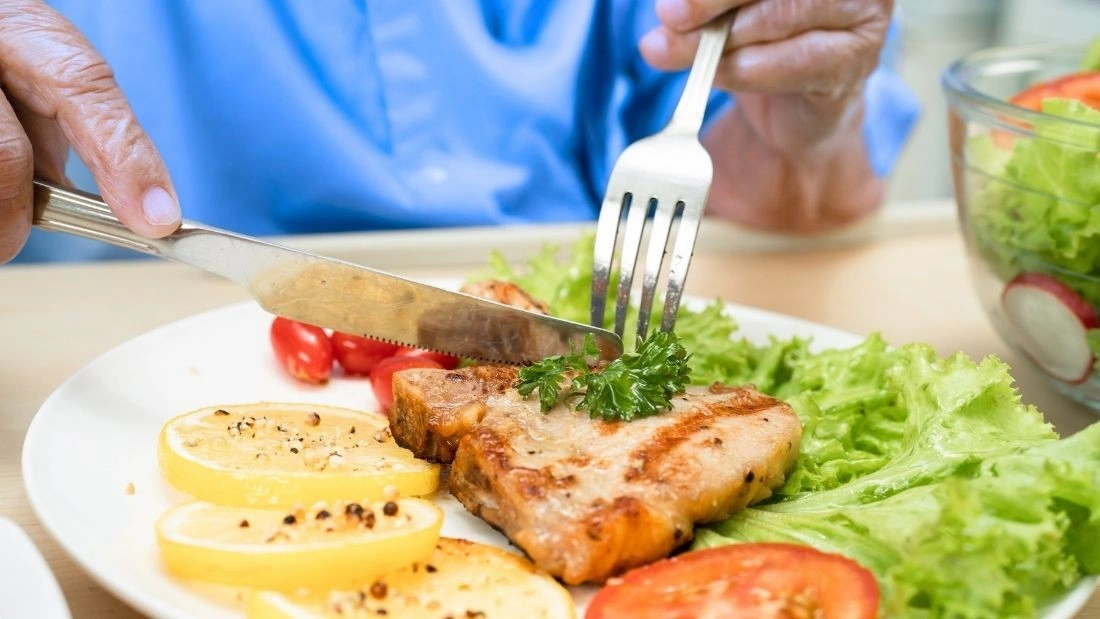
The pork was also unusually handled: lean cuts were trimmed of fat and cooked in a rotisserie oven using olive oil. That’s a world away from how pork is typically eaten in real life – think bacon, sausages, pies – high in salt and saturated fat.
Improvements were about the overall diet
Both the pork‑based and pulse‑based diets improved several markers compared with the participants’ usual eating patterns. The most plausible explanation – everyone was eating more fruit, vegetables and grains and fewer unhealthy foods than they normally did.
Crucially, the lack of a difference between the pork and pulse diets does not mean they are equally healthy. ‘No significant difference’ in science often just means a study was too small or too short to detect one. It does not magically prove that lean pork delivers the same long‑term health benefits as pulses.
Muscle, strength and cholesterol – oversold
Media coverage also hyped claims around muscle strength. Participants lost some weight on both diets while maintaining simple measures of strength such as grip strength and chair‑rise performance – they did not become stronger; they just didn’t get weaker.
On cholesterol, the pork diet was reported to raise HDL ‘good’ cholesterol. But experts increasingly caution that HDL changes are not a reliable guide to heart disease risk; large studies show that simply having higher HDL is not consistently protective. Meanwhile, total cholesterol fell in both diets, again suggesting the overall dietary pattern – not pork itself – was doing the heavy lifting.
Cognitive benefits and reassurance about cancer risk were also implied, despite the study not directly measuring cognitive performance or tracking cancer outcomes. That kind of leap in health claims is speculative at best.
Funding and framing
The study was funded by meat industry and farming groups and that influence shows. Instead of asking whether red meat benefits health or could be replaced, it tested whether eating pork causes short‑term harm – not causing harm does not equal healthy.
The research also overlooked environmental and animal welfare issues, which are now increasingly central to public health discussions.
What the evidence actually shows
You don’t need animal products for good health – in fact decades of research show how vegan diets built around whole, minimally processed plant foods – fruit, vegetables, wholegrains, pulses, nuts and seeds – are the key to better health. A healthy vegan diet lowers the risk of obesity, diabetes, heart disease and cancer – all the big killers. No study ever said pork can achieve similar results.

About the author
Dr. Justine Butler
Justine joined Viva! in 2005 after graduating from Bristol University with a PhD in molecular biology. After working as a campaigner, then researcher and writer, she is now Viva!’s head of research and her work focuses on animals, the environment and health. Justine’s scientific training helps her research and write both in-depth scientific reports, such as White Lies and the Meat Report, as well as easy-to-read factsheets and myth-busting articles for consumer magazines and updates on the latest research. Justine also recently wrote the Vegan for the Planet guide for Viva!’s Vegan Now campaign.
View author page | View staff profile