
THE POLLINATION DEBATE
Are avocados vegan? And should we avoid almonds?
In 2018, Sandi Toksvig, host of TV’s QI, asked panellists which of the following plant foods – avocados, almonds, melon, kiwis and squash – were NOT vegan. She then claimed that none of them were, arguing their cultivation depends on the commercial use of honeybees. The challenge quickly became a popular ‘gotcha’ aimed at vegans, even though not all almonds and avocados are grown this way – more on that later.
Although a vegan diet is widely recognised as best for animals, the environment and our health, this type of misdirection persists. It’s a familiar pattern: a kernel of truth is amplified while the bigger picture is ignored.
British journalist and broadcaster Piers Morgan, for instance, tried this ploy in 2023 when interviewing Viva!’s founder and director Juliet Gellatley – of course, she wasn’t having any of it! If you too are wondering how to respond to this argument, or are concerned about bees and how best to protect them, read on…
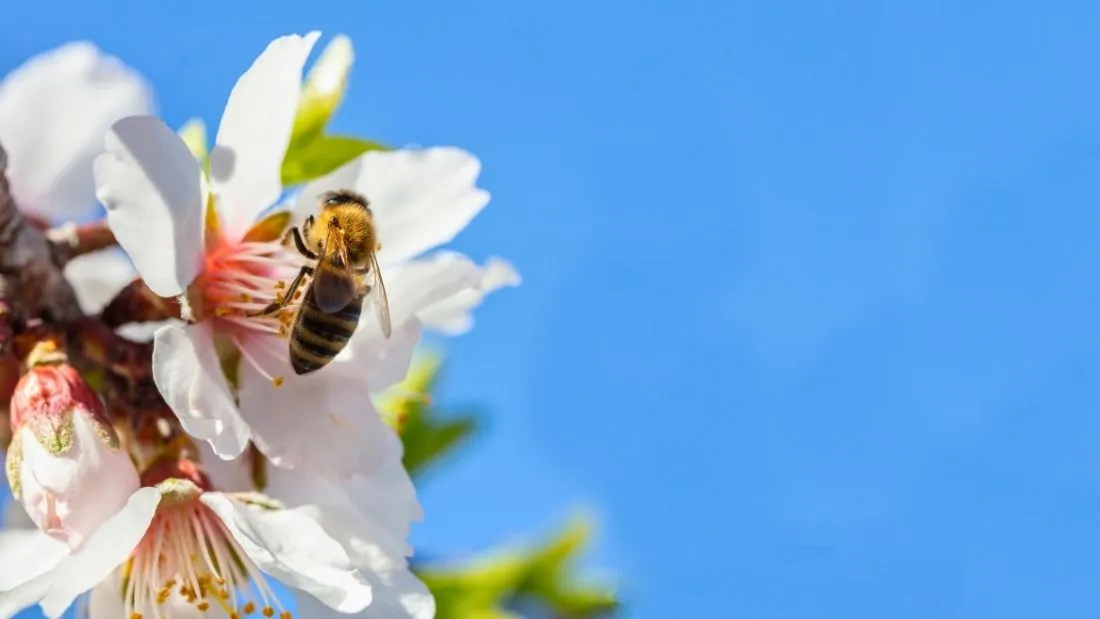
About three‑quarters of global crops depend on pollinators, such as bees and butterflies. While most staples such as wheat, rice and maize do not, many fruits, vegetables, nuts and avocados do, and some crops – such as cocoa – are almost entirely reliant on pollination. A world without pollinators would be a world without chocolate.
In the US, honeybees are used to pollinate over 90 different crops, collectively worth around $15 to 20 billion annually, including almonds, apples, melons, cucumbers, squash and avocados – contributing to roughly one‑third of the food supply. While many of these crops are visited by wild bees, large monocultures often rely heavily on rented honeybee colonies transported around the country, due to limited local pollinators during bloom.
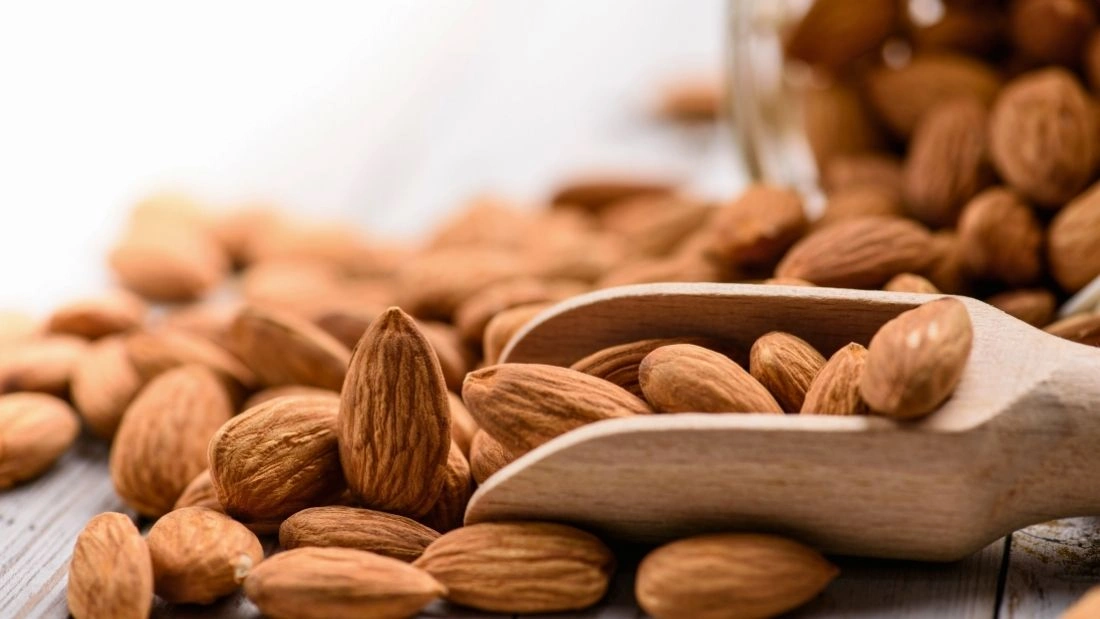
Almonds and bees
Each year, over a million honeybee colonies from commercial beekeepers are moved into California for almond pollination – the largest annual managed pollination event in the world, according to bee research organisation, the Bee Informed Partnership.
Honeybee colonies transported into vast almond orchards face long journeys, a cocktail of pesticides and a restricted diet that weakens their immunity and drives mass colony collapse. Neonicotinoid insecticides, for example, are still widely used in American agriculture and are linked not only to bee deaths but also to wider biodiversity loss. A Guardian report estimated that 50 billion bees died in the US during the winter of 2018-2019 – more than one-third of commercial bee colonies. They had been weakened by mites, viruses, pesticides and poor nutrition and then pushed over the edge by the intensity of industrial agriculture and long-distance pollination demands.
The use of commercial honeybee colonies as pollinators has developed alongside industrial farming and echoes the same exploitative logic used for pigs, cows and chickens. It places a strain on bee health and local biodiversity. The issue is not that almonds or avocados are inherently non-vegan, but that the way they are often grown, through vast monocultures, pesticide-intensive management and rented out bee colonies, clashes with the ethos most vegans advocate.
Spain is the world’s second‑largest almond producer, with 365,210 tonnes (in shell) in 2020, far below the US’s 2.2 million but notable for relying heavily on organic, rainfed, non‑irrigated systems rather than the industrial model of California. While honeybees are still used for pollination, their role is smaller and more integrated with native biodiversity.
The Spanish Almond Board Almendrave and companies such as Importaco Terra, promote low-impact, ‘bee-respecting’ practices and habitat protection, while projects such as AlVelAl are turning almond monocultures into regenerative, biodiverse systems that support both honeybees and wild pollinators. For vegans worried about bee exploitation, this offers a less industrial model, with ‘bee-friendly’ certifications and brands such as Alpro sourcing Mediterranean, largely rainfed almonds, alongside lower-impact plant milks such as oat and soya.
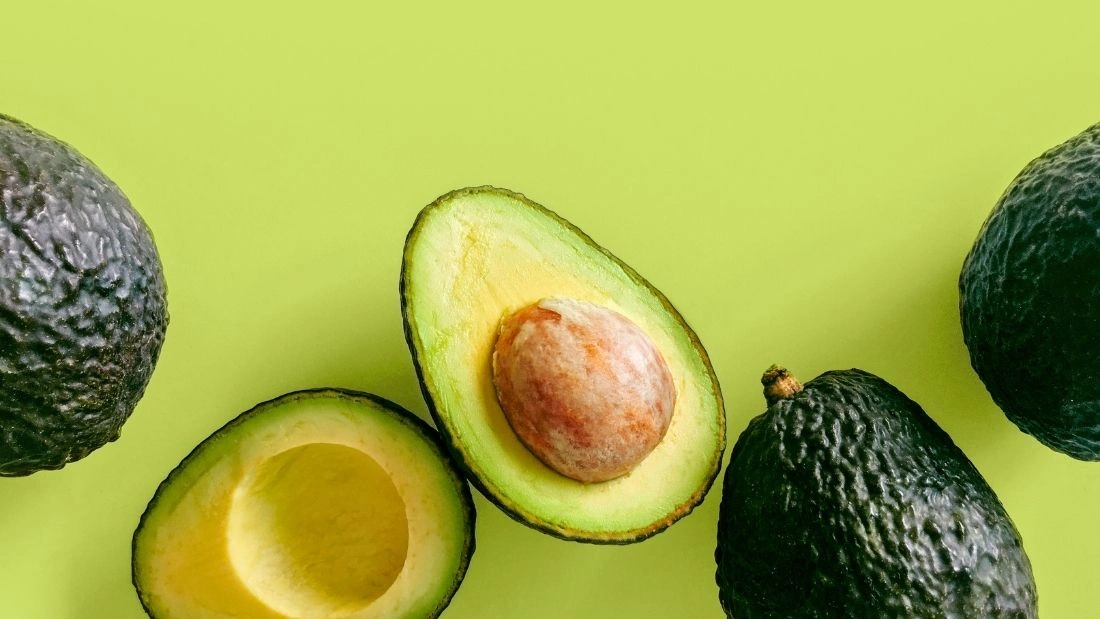
Avocados and bees
Mexico is the world’s largest avocado producer, with about 28 per cent of global output, followed by Colombia, Peru, Indonesia and the Dominican Republic; the US accounts for less than two per cent. In these countries, many insects visit avocado flowers and wild pollinators are often the most abundant. In Mexico and Cuba, wild pollinator numbers are especially high, with native species such as stingless bees and flies as effective as honeybees, though land-use change and deforestation in regions such as Michoacán’s ‘Avocado Belt’ remain serious concerns.
About 90 per cent of US avocados are grown in California, where around 60 different insect species visit the flowers, roughly half of them native bees, alongside flies and wasps. However, as native bee populations decline, many avocado farmers now rely on migratory honeybee hives, even though avocado flowers are not especially attractive to the bees but they have little choice on vast monocultures.
On the other hand, some avocado producers in Spain, which is not far behind the US in terms of production, report that in well‑sustained, non‑specialised rural areas, the naturally occurring population of wild bees and other pollinators can be sufficient to pollinate crops. So, the picture appears to vary widely from country to country.
In the UK
The UK largely sidesteps this model, with most agricultural pollination done by wild pollinators with only a small share of hives managed specifically for commercial services.
Water use
People often single out Californian almonds for using a lot of water. But when you zoom out, dairy and beef production use far more water through irrigation and for growing animal feed crops. Compared to dairy, all plant milks, including almond, have lower impacts on land and water use and produce less greenhouse gases.
Food miles
It’s better to eat local meat and dairy than imported avocados and almonds, isn’t it? This argument collapses when you consider how avocados and almonds are mostly shipped by sea and that transport makes up only a small fraction of their total carbon footprint. Generally, it’s what you eat that matters far more than where it’s from. Scientific studies consistently show that even the highest-impact plant-based foods have a substantially lower environmental footprint than the lowest-impact animal-based foods.
Insect apocalypse
Have you noticed how few insects are splattered on your windscreen after a long drive compared to when you were a child? Flying insect numbers have declined by around 60 per cent in the UK since the early 2000s and by roughly a quarter to more than a third globally over recent decades. It is driven by habitat loss, intensive farming and pesticide use – with animal agriculture adding pressure through its reliance on large-scale pollinated feed crops such as alfalfa. Collapsing insect populations threaten food security, destabilise entire ecosystems and undermine the natural systems that we depend on. If we ignore it, we risk widespread crop failures, vanishing wildlife and a less resilient planet for future generations.
In that context, veganism emerges not as part of the problem for bees but as one of the most powerful levers to reduce the industrial farming and land use that is pushing pollinators to the brink of extinction.
The ethical takeaway may be to choose European‑sourced, organic and bee‑friendly avocados and almonds when possible and treat them as occasional luxuries rather than staples. Focusing on a diet that shifts demand away from intensive monoculture systems, gives all wild pollinators – and therefore us – a better chance of survival.
Summary — Quick overview
SUMMARY
Claims that avocados, almonds and similar crops are simply ‘not vegan’ because some producers use commercial honeybees distort the real issue. Pollinators are essential to many foods, but the serious threat comes from industrial agriculture: vast monocultures, pesticide use, habitat loss and the transport of rented bee colonies. Veganism does not drive that crisis; reducing demand for animal agriculture is one of the clearest ways to challenge it.
In the US, large-scale almond and some avocado production often depends on migratory honeybees, exposing colonies to stress, poor nutrition and pesticides. Yet this is not the only model. Spain’s almond sector includes more organic, rainfed and biodiversity-conscious systems, while avocado pollination varies widely by country and often involves abundant wild pollinators. In the UK, most agricultural pollination is still carried out by wild species.
The wider environmental case remains clear. Animal agriculture uses far more land and water, including through feed crops, and adds pressure to already declining insect populations. Even imported plant foods such as avocados and almonds generally have a lower environmental footprint than animal products. Choosing bee-friendly, organic and lower-impact plant foods where possible helps shift demand away from the intensive farming pushing pollinators towards collapse.
KEY FACTS
- Around three-quarters of global crops depend on pollinators such as bees and butterflies, although staple crops including wheat, rice and maize do not.
- In the US, honeybees are used to pollinate more than 90 crops worth roughly $15 to 20 billion annually, contributing to about one-third of the food supply.
- More than a million honeybee colonies are moved into California each year for almond pollination, the largest annual managed pollination event in the world.
- A Guardian report estimated that 50 billion bees died in the US during the winter of 2018-2019, after being weakened by mites, viruses, pesticides, poor nutrition and industrial farming pressures.
- Spain produced 365,210 tonnes of almonds in shell in 2020 and relies more heavily than California on organic, rainfed, non-irrigated systems with stronger links to native biodiversity.
- Mexico produces about 28 per cent of the world’s avocados, and in several producing countries wild pollinators are often the most abundant visitors to avocado flowers.
- Flying insect numbers have declined by around 60 per cent in the UK since the early 2000s and by roughly a quarter to more than a third globally over recent decades.
FAQ
Are avocados and almonds non-vegan because bees are used to pollinate them?
No. The problem is not that these foods are inherently non-vegan, but that some are produced within industrial systems that exploit managed honeybees, rely on monocultures and use intensive pesticides. Pollination practices vary widely by crop and country.
Does eating local meat and dairy make more environmental sense than imported avocados or almonds?
No. Transport is usually only a small part of the total carbon footprint of these foods, especially when they are shipped by sea. Scientific studies consistently show that even higher-impact plant foods have a substantially lower environmental footprint than lower-impact animal-based foods.
What is the most ethical response for people concerned about bees?
Shift demand away from intensive animal agriculture and industrial monocultures, and choose European-sourced, organic and bee-friendly avocados and almonds where possible. Treating them as occasional luxuries rather than staples can further reduce pressure on pollinators.

About the author
Dr. Justine Butler
Justine joined Viva! in 2005 after graduating from Bristol University with a PhD in molecular biology. After working as a campaigner, then researcher and writer, she is now Viva!’s head of research and her work focuses on animals, the environment and health. Justine’s scientific training helps her research and write both in-depth scientific reports, such as White Lies and the Meat Report, as well as easy-to-read factsheets and myth-busting articles for consumer magazines and updates on the latest research. Justine also recently wrote the Vegan for the Planet guide for Viva!’s Vegan Now campaign.
View author page | View staff profile