The Marvel of Rainforests
I could tell you that rainforests are vital to all life, that they’re still being felled and that they’re central to controlling global heating. On the other hand, I could start by describing what wondrous, awe-inspiring visions of beauty they are.
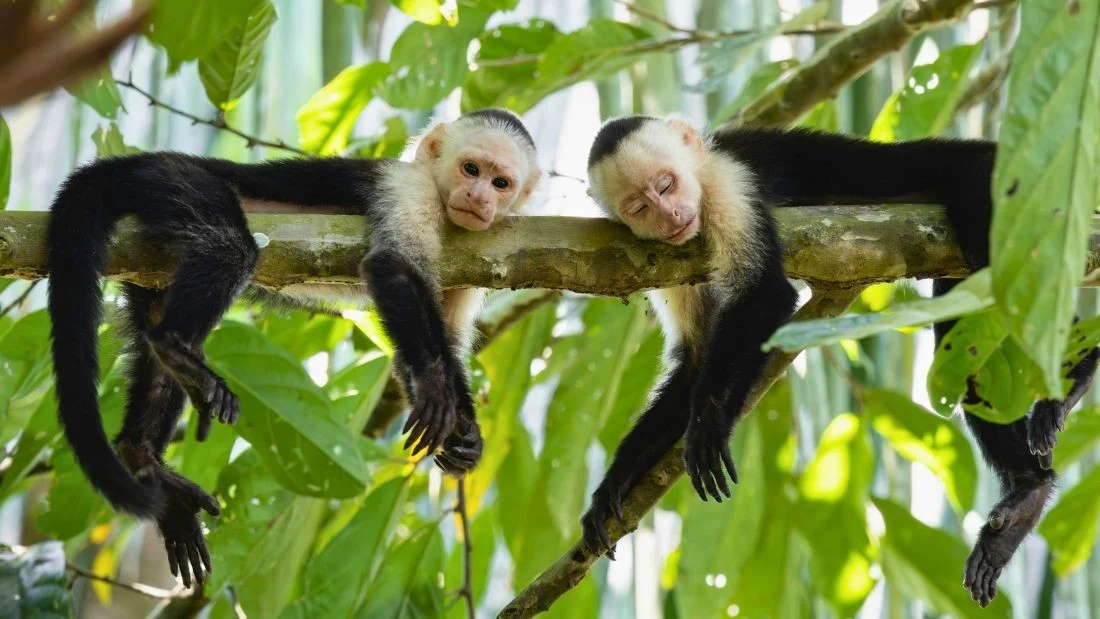
I’ve visited several in different parts of the world but my six months in Costa Rica allowed me to get up close and intimate – very close and very intimate. Sitting in a little, organic café on the edge of the forest, a magnificent blue jay swirled beneath the awning and landed on my head, demanding some of my breakfast, while a troop of capuchin monkeys ordered theirs by loudly rattling the loose corrugated roof sheets.
Walking into a rain forest can be very deceptive as nothing much seems to be happening beneath its soaring canopy – a cloud of midges perhaps, the tinkling of a stream, the distant call of a bird. And then a blood-curdling howl of an animal that sounds like a cross between the Lion King and King Kong – the loudest animal on the planet. Terrifying unless you know that it is a little creature weighing no more than 11 kilograms at its heaviest. The howler monkeys’ calls can travel for miles but get too close and they’ll hurl sticks at you from the upper branches, urinate on you or poo into their hands and throw it at you – and believe me, their aim is unerring.
Then you dislodge a stone on the path to reveal what looks like a little worm but is in fact is the highly-venomous, banded coral snake. But fear not, its mouth is so small and its fangs set back so far back that the only way you could be bitten is if you thrust your little finger down its throat.
Move some leaves on a tree trunk to reveal a bright-green dart frog with brilliant red eyes or scan the tree canopy carefully to see a motionless sloth suspended beneath a branch with her baby clinging to her fur. Proceed slowly and quietly and you’ll certainly see white-nosed coatis, related to racoons, and black iguanas galore. You’re unlikely to see a tapir or a jaguar but they’re there.
And then the silence is suddenly rent by a raucous, high-pitched gaggle of noise as a flock of scarlet macaws hurtle through the tee tops like a gang of teenagers looking for mischief, the beauty of their plumage almost breathtaking. And like me, you might be lucky enough to walk out of the forest onto a golden Pacific beach at twilight and see tiny baby turtles digging their way out of their nest and scuttling towards the tide line – the timing dictated by their DNA to avoid the worst predation of vultures and gulls.
It’s hardly surprising that an estimated 50 per cent of the world’s plant and animal species (biodiversity) reside in rainforests that demand just six per cent of the planet’s surface. In the 1950’s, in order to obtain a loan from the World Bank, Costa Rica acceded to its demand to slash down its forests and graze cattle instead. It quickly realised its mistake and placed forest preservation and reforestation at the heart of its development programme. It has now created 30 national parks and 25 per cent of its land area is devoted to forests – cloud forests, dry forests but tropical rainforests predominate.
Sadly, no other Central and South American countries have followed its example, although Brazil is now dedicated to ending the wholesale destruction of the Amazon. That destruction was, and still is, driven by the demands of animal agriculture. It’s usually initiated by the creation of roads to allow useful felled timber to be extracted while smaller trees and undergrowth are slashed and burnt. Big agriculture then takes over and develops grazing, mostly for cattle or to sow vast areas of soya crops. Deforestation does not happen by accident but by design.
Don’t let anyone try to embarrass you because you eat soya! Some 80 per cent of all the soya produced is used as fodder for farmed animals that provide meat, dairy and eggs and much of the remainder is used as padding in meat pies, pasties and pet food. The soya in most vegan products largely comes from Europe so it isn’t you who’s the problem, it’s meat eaters!
The destruction of rainforests is not just about the extermination of plant and animal species; its impact is much wider. Yes, they do produce some of our oxygen – although about 16 per cent from the Amazon is much less than people believe, the great majority coming from phytoplankton in the oceans; as much as 80 per cent (and yes, we’re trashing them as well).
All forests are carbon sinks, soaking up carbon dioxide from the atmosphere and locking it away and rainforests are nature in perfect harmony. Every bough, every tree and every leaf that falls to the forest floor is naturally composted to provide food for the shallow roots of even the greatest trees and is joined by the excreta of forest animals. Every creature that dies is either eaten by others or forms part of this extraordinary, never-ending recycling scheme.
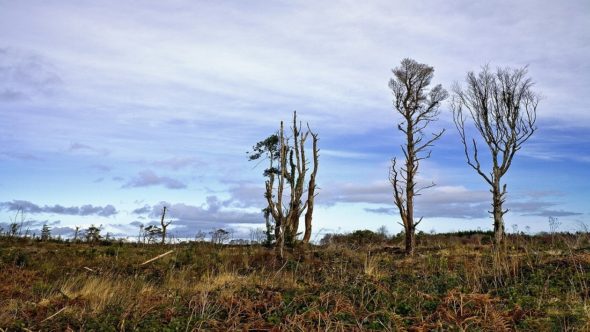
When forests are destroyed, centuries of carbon is released into the atmosphere in a matter of hours and a vital carbon sink ceases to exist. The forest litter is shallow and when turned to agriculture it quickly requires a battery of chemicals to keep it productive until eventually even that fails and what was a vibrant, thriving ecosystem is well on the way to becoming desert.
The problem seems intractable so what on Earth is the solution? You are!
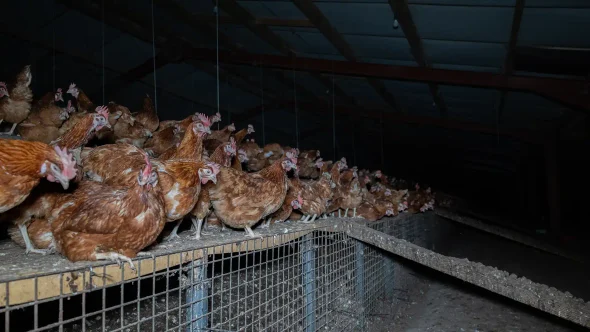
In 2006, the Food and Agriculture Organising (part of the UN) published a massive report entitled Livestocks’ Long Shadow which, in apocalyptical language, identified that livestock for meat and dairy were either the (or a) leading cause of almost all the planet’s catastrophic environmental problems, form biodiversity loss to deforestation, the spreading of deserts to the loss of soil fertility and nitrogen pollution. It identified livestock’s contribution to global heating gases at 18 per cent but later research has increased that figure to 20 per cent.
What was extraordinary was that the UN Food and Agriculture Organisation (FAO) had spent almost its entire existence encouraging farmers to produce more, bigger, better animals. The gamekeeper had turned poacher.
As a vegan, you play no part in this devastation of a planet’s life support systems and you should be rightly proud of that. Governments and producers talk about all kinds of half-hearted interventions to slow the rot and they simply don’t work. There is one intervention that is guaranteed to work and you’ve already identified it – and hooray for that.

About the author
Tony Wardle
I have been with Viva! since its launch, helping Juliet with precious few resources – staff or money! My title is associate director and I can turn my hand to most things that Viva! does, and can talk on almost all the subject areas we cover. But my time is consumed mostly with words, writing for and editing our supporters magazine, Viva!life, checking, editing a large output of written material as well as conceiving and writing much of it.