The cruelty of dairy farming from a vet student’s perspective
Studying veterinary medicine has opened my eyes to the distressing realities of animal farming – especially within the dairy industry. Like most others who pursue this career, my journey began with a love for animals and a desire to relieve their suffering. But when it comes to farmed animals, this is far from easy to achieve.
The role of a farm vet often feels contradictory. For example, I struggle to see how ultrasound scanning hundreds of dairy cows every day to check if they’re in calf improves their quality of life. Much of a vet’s work focuses on treating illnesses and injuries caused by routine dairy-farming practices and poor conditions. It’s like sticking plasters on systemic wounds.
Vets work closely with farmers to promote animal health and welfare, as well as public health, but economic pressures or public safety concerns can also conflict with animal welfare, leading to difficult trade-offs. For those who believe in the individual rights of animals, these compromises can be deeply distressing. Given society’s high demand for animal products, farmers and vets are constrained by a system that prioritises productivity and efficiency.
The realities of dairy farming
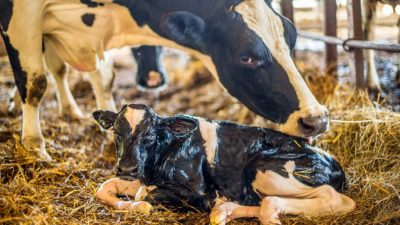
The distressing truths begin with the very foundations of the dairy industry itself. Like any mammal, a cow must give birth to produce milk – a fact many milk-consuming adults are unaware of. A dairy cow’s life is a continuous cycle of pregnancy, childbirth and separation. Male calves are either killed within 48 hours of birth, or raised for veal or beef. Female dairy calves are destined to enter the same cycle of exploitation. On my placements, I hated moving calves from their mothers’ sides and into trucks while they were still wobbly on their legs. They were put into pens and given milk replacer from buckets so their mothers’ milk could be collected for humans. I felt especially sad for the smaller, weaker calves, who would only grow weaker following their separation.
This relentless cycle takes a massive toll on the bodies of cows and leads to ‘production diseases’ such as mastitis, lameness and metabolic disorders. These are what farm vets are most often called out to deal with on dairy farms. Sadly, they’re also a common reason for early slaughter. Most dairy cows are just five and a half years old on average when they’re killed – a harsh reality of this profit-driven industry.
Ethical and welfare dilemmas
Vets are expected to care for animals according to how society uses them. Dogs are valued for their companionship, while farmed animals are typically valued for the milk, meat or eggs they produce. On one of my dairy placements, I witnessed a young farmer casually point out the cow she planned to have made into a rug after she was slaughtered. It made me feel sick – and highlighted the normalised commodification of sentient life.
During milking sessions, I sometimes witnessed heifers being roughly handled by frustrated workers because they wouldn’t comply with the milking routine. For some, it was their first time in an unfamiliar, noisy parlour, having a bulky suction machine attached to their udders. Any animal would be stressed under these circumstances, yet there was a lack of patience or understanding.
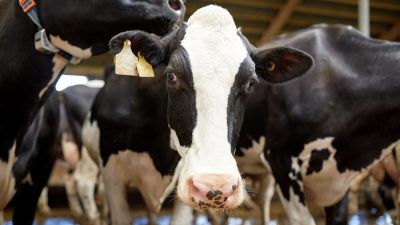
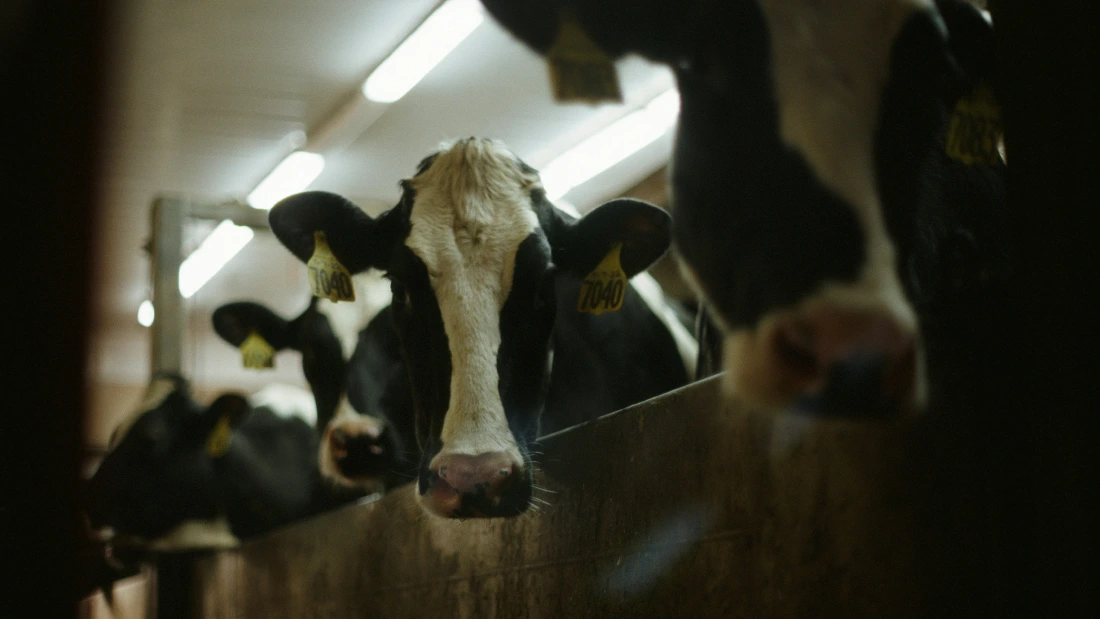
Another time, I was tasked with sorting through a box of ear tags removed from cows slaughtered the night before. Looking at those tags, I couldn’t stop thinking about what their last moments were like – how scared they must have been. These tags were the only real proof of their existence, yet I was erasing the data so the numbers could be reused for the next group of incoming cows, destined for the same fate. It was a stark reflection of how quickly a life can be ended and replaced by the next.
The lack of veterinary care in the farming industry is a growing issue, worsened by an ongoing shortage of farm vets. Vets end up responsible for an overwhelming number of animals, making it difficult to provide proper attention and care to herds, let alone individual animals. Furthermore, current animal-welfare laws don’t always adequately protect animals, often permitting painful procedures to be performed without pain relief. One example is disbudding – the removal of horn-producing tissue from a calf using a hot iron, resulting in third-degree burns. While pain relief is mandatory during disbudding itself, there’s currently no legal requirement for follow-up pain relief, despite research showing that calves experience pain for at least three weeks and that the burn wounds can take up to nine weeks to fully heal. This legal loophole allows calves to suffer, though the veterinary community and animal-welfare groups are advocating for this to be addressed.
The vet’s recommendation
When people talk about ‘ethical’ dairy and meat, they often point to assurance schemes such as Red Tractor or RSPCA Assured. I used to find comfort in these labels too. However, they often exist more to reassure consumers than to meaningfully protect animals. Enforcement is lacking, and inspections are rare. There are numerous instances of approved farms being exposed for severe animal neglect and abuse (see Viva!’s Hogwood campaign). While having these schemes is arguably better than having no standards at all, consumers shouldn’t rely on them to ease their consciences.
Dairy cows and other farmed animals are intelligent, gentle creatures with a desire to live free from suffering, just as we do. They deserve so much more than to become products for temporary enjoyment. By raising awareness and encouraging critical thinking about where our food comes from, rather than accepting what we’ve been conditioned to believe, we can encourage more compassionate choices.
Opting for plant-based products helps reduce animal suffering by easing pressure on industrial farming systems and can benefit farmers, too. With the right support, they can diversify their income, transition to plant-based agriculture and become part of a more ethical and sustainable food system.
Small changes made by individuals can collectively create massive change – for animals, for people and for the planet.
By Rhiannon, Vet Student.

About the author
Guest Blogger