
Natural History GCSE Consultation – Template Response
The UK Government is consulting on a new Natural History GCSE, offering a chance to shape how future generations learn about wildlife, biodiversity and environmental challenges.
They are asking for comments from secondary teachers, head teachers and principals, awarding organisations, students, parents and carers and initial teacher training providers.
You can find the consultation here.
Viva! have prepared a guide below designed to help you write your own response to the consultation, with a focus on the important detrimental impacts of animal agriculture on wildlife, the use of resources and climate change. Please adapt it in your own words before submitting. Personal responses are more effective than identical submissions and help show support for stronger environmental education.
Responses need to be submitted by 4 September 2026.
Question 10: Subject aims
- Are the subject aims easy to understand, clear and unambiguous?
Yes. We think the subject aims are generally clear and easy to understand. However, we recommend explaining that the aims would be stronger if they explicitly recognised animal agriculture as a major driver of biodiversity loss, habitat destruction, deforestation, freshwater pollution and climate change. We also think the aims should ensure students understand both the impacts of current food systems and the opportunities to reduce them through more sustainable land use.
For more information see: viva.org.uk/planet/the-issues/
Question 11 to 14: Subject content
- Paragraphs 7 – 12 of the proposed subject content detail the requirements for the study of habitats and wildlife in the UK. Do you agree with these requirements?
Yes. We think these requirements are appropriate and provide a strong foundation for the study of UK habitats, species, ecological relationships, succession and change over time. We also think the emphasis on indicator species and biodiversity as measures of habitat quality is particularly valuable.
However, we recommend making the relationship between habitat loss and farming systems more explicit. In particular, you may wish to note that land-intensive agriculture can contribute to habitat degradation and biodiversity loss through the large areas of land required for grazing and animal feed production.
We think the requirements should help students understand not only the importance of conserving habitats, but also the pressures that lead to their loss, so that they can better appreciate the underlying causes of biodiversity loss.
For more information see: viva.org.uk/planet/nature-in-danger/uk-biodiversity/
- Paragraph 13 of the proposed subject content details the requirements for the study of human influence on the natural world. Do you agree with these requirements?
Yes, but with reservations. We think the range of human activities listed is relevant and appropriate, particularly farming, fishing, deforestation, urbanisation and conservation management, as these are central to understanding how human behaviour affects habitats and wildlife.
However, we think the section should be clearer about the environmental impacts of animal agriculture. While farming is included, it should explicitly address how animal farming can contribute to habitat loss, biodiversity decline, greenhouse gas emissions, freshwater pollution and land-use pressure, including through feed crop production, grazing, fertiliser use and manure management.
We also think students should be supported to understand a range of responses to these challenges, including habitat restoration, rewilding and lower-impact food production systems, to give a more complete picture of environmental change and potential solutions.
For more information see: viva.org.uk/planet/nature-in-danger/the-link-with-livestock/
- Paragraphs 14 – 20 of the proposed subject content detail the requirements for fieldwork. Do you agree with these requirements?
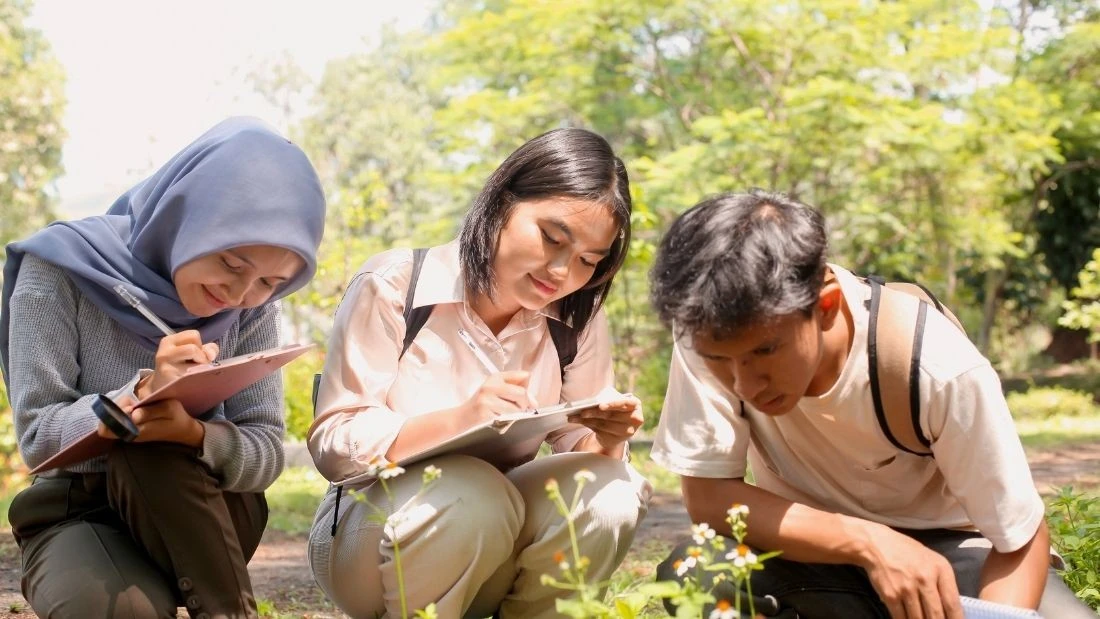
Yes. We think fieldwork is one of the strongest elements of the proposed content. We support the requirement for outdoor learning, observation, record-keeping and reflection on connectedness with nature, as this helps make the qualification practical and engaging. We also think the flexibility for schools to choose local fieldwork settings is appropriate, as it allows the subject to reflect local biodiversity and remain accessible in different contexts.
We think schools could also be encouraged to compare a range of habitats shaped by different land management approaches. This could include restored habitats, woodland, urban green spaces and different types of agricultural systems. This would help students observe how land use affects soil health, biodiversity, water quality and ecosystem resilience.
For more information see: viva.org.uk/planet/nature-in-danger/
- Paragraphs 18 and 19 of the proposed subject content set the fieldwork requirement using a metric of ‘hours’, differing from the metrics used in some other GCSE subjects. This is to support schools to structure fieldwork flexibly across the duration of the course, including during regular timetabled lessons, if they wish. Do you agree with using a metric of ‘hours’ for the fieldwork requirement?
Yes. We think using hours is a sensible and flexible approach, as it allows schools to organise fieldwork in ways that suit their timetable, staffing and local context. We also think this is particularly appropriate for natural history, as it gives students opportunities to observe seasonal change, compare habitats and build their understanding of nature over time.
Question 15: Appendix 1
- Are the proposed range and extent of mathematical and statistical techniques, set out in Appendix 1, easy to understand, clear and unambiguous?
Yes. We think Appendix 1 is clear and appropriate for GCSE level. We also think the mathematical and data analysis skills are relevant to natural history and fieldwork.
We recommend including examples of data relating to land use, greenhouse gas emissions, biodiversity, freshwater use and food production, to help students understand how ecological evidence is used to assess environmental impacts and inform conservation and land management.
Question 16 to 17: Appendix 2
- Appendix 2 provides a list of different types of species within each of the following 6 habitats (Urban, Freshwater, Woodland, Grassland, Farmland and Marine). The department has proposed this is an advisory list from which awarding organisations can use to create their own, equivalently sized list for each habitat, when writing GCSE specifications. Do you agree the list set out in the subject content should be advisory?
Yes. We think the species list should remain advisory, as this gives awarding organisations and schools the flexibility to reflect local habitats, biodiversity and seasonal opportunities. We also think this flexibility will encourage students to engage with the natural world through local observation rather than memorising a fixed list of species.
For more information see: viva.org.uk/planet/nature-in-danger/
- Are the requirements, set out in Appendix 2, easy to understand, clear and unambiguous?
Yes. We think the requirements are clear and easy to understand. We also recommend ensuring that the examples reflect ecological importance as well as familiarity, with appropriate emphasis on fungi, lichens, invertebrates and soil organisms because of their essential roles in ecosystems.
Question 18: Appendix 3
- Appendix 3 provides a list of illustrative options for focus of study for each habitat. Are the requirements, set out in Appendix 3, easy to understand, clear and unambiguous?
Yes. We think Appendix 3 is clear, practical and gives schools appropriate flexibility to choose locally relevant examples. We also think the guidance could encourage case studies that compare different land management approaches, including livestock farming, habitat restoration, woodland creation and rewilding, to help students understand their effects on biodiversity, ecosystems and climate resilience.
For more information see: viva.org.uk/planet/nature-in-danger/
Question 19: General
- Is there anything you would like to feed back that is not covered in the questions above?
Yes. We think the most important improvement would be to ensure that the environmental impacts of food systems are explicitly addressed throughout the specification. We recommend explaining that scientific evidence consistently identifies animal agriculture as a major driver of biodiversity loss, habitat destruction, deforestation, freshwater pollution and greenhouse gas emissions, while also placing significant demands on land and water resources. We also think students should learn how these pressures arise through livestock production, feed crop cultivation and land conversion, alongside evidence-based solutions such as plant-based diets, habitat restoration and rewilding. In our view, a Natural History GCSE should reflect the best available environmental evidence and equip students with an accurate understanding of both the causes of ecological decline and the practical solutions available. For more information see: viva.org.uk/planet/the-solutions/farming-for-a-vegan-future-why/
Question 20 to 21: Equalities
- Do any of the proposals have the potential to have a disproportionate impact, positive or negative, on specific groups, in particular those who share a ‘protected characteristic’ (age, disability, gender reassignment, marriage and civil partnership, pregnancy and maternity, race, religion or belief, sex and sexual orientation)?
No. We think the proposals are broadly inclusive and should benefit students from a wide range of backgrounds by increasing access to outdoor learning and ecological knowledge. However, we think it is important that fieldwork can be adapted to ensure it is accessible for all students, including those with disabilities or health conditions. With appropriate adaptation, the qualification should be accessible and beneficial to all students. - How could the proposed subject content of the GCSE be altered to: better eliminate unlawful discrimination, harassment and victimisation and other conduct prohibited by the Equality Act 2010; better advance equality of opportunity between persons who share a protected characteristic and those who do not; better foster good relations between people who share a protected characteristic and those who do not?
We think the subject content could better support equality by encouraging inclusive fieldwork and making it clear that outdoor learning should be adapted so all students can participate, including through the use of school grounds, urban green spaces and other accessible local habitats where needed.
We also think teaching about the environmental impacts of food systems should be evidence-based and presented in a way that respects people’s different cultural, religious and dietary backgrounds. Students should be encouraged to understand the scientific evidence about the environmental impacts of different food production systems, while recognising that individuals’ food choices are influenced by a range of personal, cultural and practical factors. This supports informed discussion without presenting environmental issues as a judgement of people’s beliefs or lifestyles.
Question 22: Environmental principles
- Do any of the proposals have the potential to have an effect, positive or negative, on: the use or management of land in the UK; the atmosphere; any type of inland, coastal or marine water body; wildlife; the supply of raw materials from natural sources; opportunities for outdoor recreation?
Yes. We think the proposals have the potential to improve students’ understanding of how human activities affect land, water, wildlife and climate. We recommend strengthening the specification by explicitly addressing the environmental impacts of food production, including animal agriculture, alongside evidence-based approaches such as habitat restoration, rewilding and more sustainable land management. A qualification grounded in these principles would support better-informed future decisions affecting wildlife, natural resources and climate resilience. For more information see: viva.org.uk/planet/the-solutions/farming-for-a-vegan-future-why/
Just a reminder, please put all your answers in your own words – this will likely have more impact of informing the outcome than if we all simply copied and pasted the same responses. Thanks for your support!

About the author
Dr. Justine Butler
Justine joined Viva! in 2005 after graduating from Bristol University with a PhD in molecular biology. After working as a campaigner, then researcher and writer, she is now Viva!’s head of research and her work focuses on animals, the environment and health. Justine’s scientific training helps her research and write both in-depth scientific reports, such as White Lies and the Meat Report, as well as easy-to-read factsheets and myth-busting articles for consumer magazines and updates on the latest research. Justine also recently wrote the Vegan for the Planet guide for Viva!’s Vegan Now campaign.
View author page | View staff profile