If Everyone Went Vegan: What Happens to the Animals?
It’s the question people like to lob in as a supposed clincher! The conversational trump card. “Ah, but what would happen to all the animals if we all went vegan?”
Sometimes it’s sincere. Sometimes it’s a conversational smoke bomb – an attempt to make veganism sound impractical, even cruel. Either way, it’s a question worth welcoming, because beneath it sits a surprisingly simple truth: the animals people are worrying about have been brought into existence for us, by design, in numbers that would never exist without constant human intervention. The modern population of farmed animals isn’t a natural phenomenon, it’s a gargantuan industrialised production system.
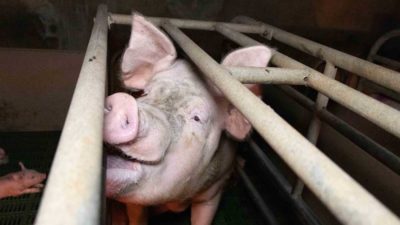
That’s the first thing to make clear, especially if you’re speaking with someone who imagines a world suddenly flooded with cows and chickens needing somewhere to go. The reality is far less dramatic and far more manageable. Farmed animals are bred because there is demand, and when demand falls, breeding falls with it. This is already how agriculture works; it expands and contracts like any other industry. If the world moved steadily towards veganism, there wouldn’t be a single apocalyptic moment when billions of animals were ‘left over’. There would be a wind-down. Fewer pregnancies, fewer hatchings, fewer animals born into a life that, for the vast majority, has been engineered around confinement and early death. The numbers would decline quickly simply because so many farmed animals have short lives and are continually replaced.
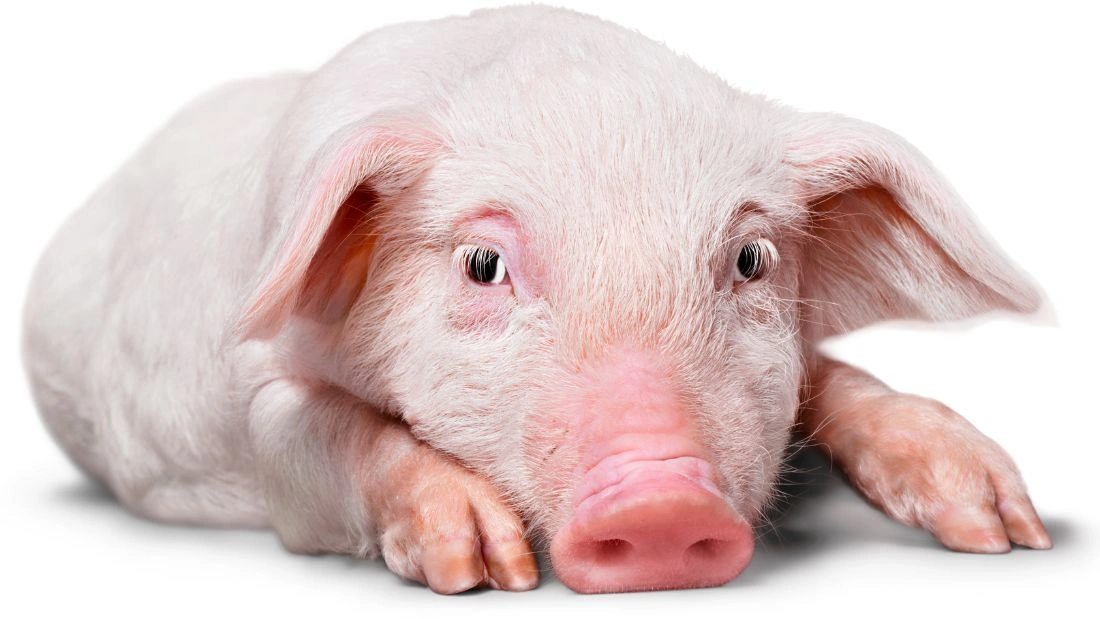
And then there’s the detail people rarely mention when they ask the question – the awkward truth that many of these animals have been selectively bred so that they struggle to function. Humans have not merely domesticated them, we have remodelled them. The turkey is a particularly stark example. Certain commercial strains have been bred so large, so unnaturally heavy in the breast, that natural mating can be difficult or impossible, with reproduction managed and mechanised by humans. Broiler chickens, bred for rapid growth, acutely suffer under the strain of their own accelerated bodies. Dairy cows have been pushed towards extraordinary milk yields, a biological demand that takes a deep toll. When someone asks what happens to all the animals, it can be quietly helpful to point out that the more compassionate question might be – why keep breeding animals into bodies built for profit rather than wellbeing?
This is where the idea of extinction sometimes enters the conversation, usually as a final flourish: “So you’re saying they should just… disappear?” But it’s worth noticing what that claim implies. If a population exists only because humans keep manufacturing it, and if that population is structured around exploitation – pregnancy, separation, confinement, slaughter – then arguing for its preservation is not, in any meaningful sense, an argument for animals. It’s an argument for keeping the system going. A managed end to mass breeding is not abandonment, it’s a refusal to bring animals into the world for lives that are abused, controlled and cut short.
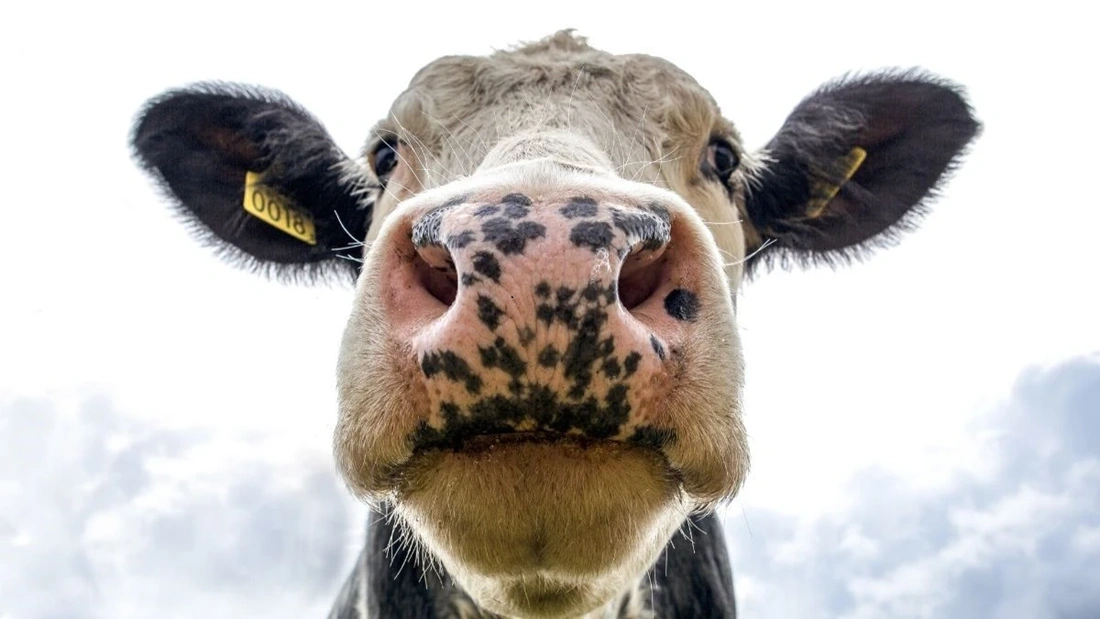
In practice, any real transition would have a human pace. The animals who already exist would not vanish. Many would be cared for in sanctuaries, rehoming projects, smallholdings and genuinely protective settings. Some breeds that have been pushed to extremes would be phased out precisely because their bodies have been shaped into suffering. And the rest – the world would simply stop producing so many animals. Fewer would be brought into harm. That is not a tragedy. It is the point.
Yet the most hopeful part of the story is the one people least expect – the world wouldn’t become emptier of animals. It would become less crowded with suffering and more spacious for wild lives. Many domesticated animals have wild ancestors or close relatives still living: pigs are descended from wild boar, chickens from red junglefowl, sheep from wild mouflon. When animal agriculture shrinks, so does the land required to feed it as there is less pressure to clear forests and drain wetlands, less demand for vast monocultures of feed crops, and less water pulled from stressed ecosystems. We often talk about veganism as a moral choice for farmed animals, and it is. But it is also, plainly, a land-use decision, an ecological decision, a decision that makes room.
Which brings us to the slightly slippery subtext of the original question: the suggestion that eating animals is somehow what keeps them safe, that meat-eaters are the true caretakers because they ensure these animals ‘exist’. You don’t need to respond with anger to undo that logic. You can simply hold it up and let it be seen. Creating beings in order to kill them is not care; it is use. You cannot love someone into a slaughterhouse! Most people do feel tenderness towards animals in a general sense, and it’s good to acknowledge that. But tenderness is not the same as entitlement. If the animals exist only because we breed them for profit, their existence isn’t a gift, it is a business model.
If you’re vegan and you want a way through this conversation that stays warm, the most effective tone is often calm clarity. You can say that this isn’t about flinging barn doors open and hoping for the best. It’s about allowing the numbers to fall because we stop demanding that more animals are made. And it’s about recognising that the so-called problem people fear – what to do with all the animals – only exists because we have normalised producing living beings as if they were products.
If the question is being asked in good faith, you can end somewhere generous and true – a vegan world would not be a world where animals lose out. It would be one where far fewer are bred into exploitation, where those already here can be cared for rather than consumed, and where land once swallowed by animal agriculture can return, piece by piece, to woods, wetlands and wildlife.
So the answer to “What would happen to all the animals?” is quietly transformative – fewer animals engineered for suffering and far more room for wildlife to flourish freely.

About the author
Juliet Gellatley
Juliet Gellatley is founder & director of Viva! – the biggest vegan campaigning charity in Europe. Viva! launched in 1994, joined by Viva! Poland in 2002.
Juliet has created and launched numerous campaigns on the impact of what we eat on animals, the planet and our health. She has also investigated many farms – often the big names - and exposed the devastating cruelty. She is the author of several reports, guides and books and producer of the award-winning HOGWOOD: a modern horror story documentary on Amazon Prime. Juliet has given many hundreds of talks, radio, Podcast and TV interviews.
Juliet has a degree in Zoology & Psychology and is a qualified nutritional therapist.
View staff profile | View author page