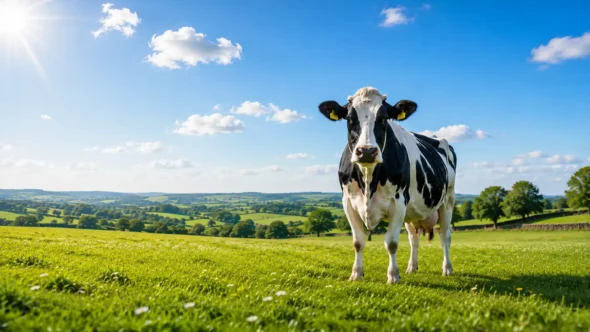
‘Free range’ no longer means what you think
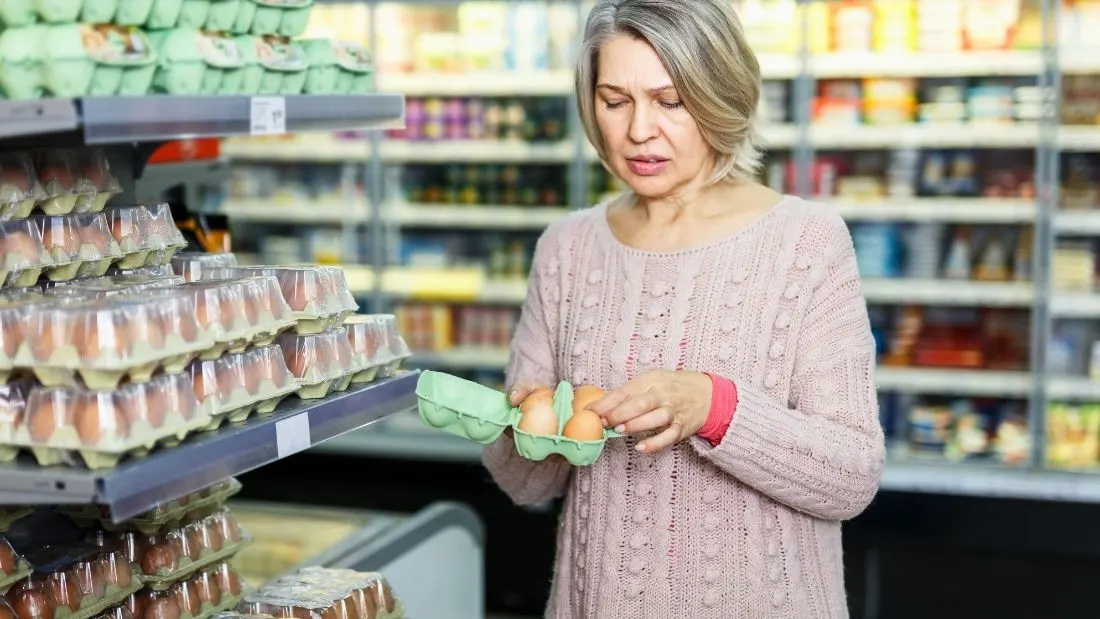
If you buy free-range eggs because you want the eggs you eat to come from hens that have access to the outdoors, it’s time to ditch eggs. Under current UK bird-flu rules, eggs can be sold as ‘free range’ even when the hens that laid them are confined indoors – and may never have gone outside at all.
This is not a technicality. It is a calculated betrayal of shoppers’ trust: the ‘free range’ label remains on the box while the hens behind it may be locked away. It shows a complete disregard for your right to know what you are buying.
What changed?
Previously, when a compulsory housing order was imposed to protect poultry from avian influenza (bird flu), producers could keep using the ‘free range’ label for up to 16 weeks. After that, eggs were meant to be sold as ‘barn eggs’.
In 2025, the 16-week limit was scrapped, allowing eggs from hens kept indoors to be marketed as ‘free range’ for the entire duration of a housing order – which can last months.
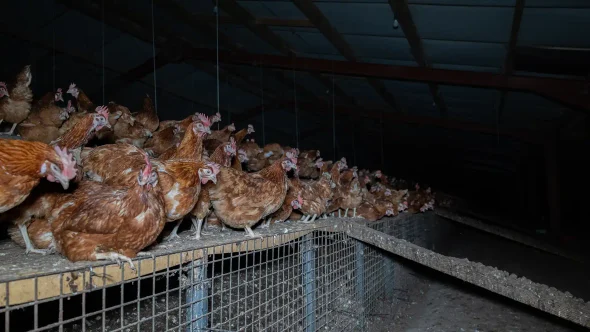
So, shoppers may buy eggs labelled ‘free range’ without knowing whether the hens ever had the chance to scratch in grass, dust-bathe in daylight, stretch their wings outdoors or simply feel the weather on their feathers.
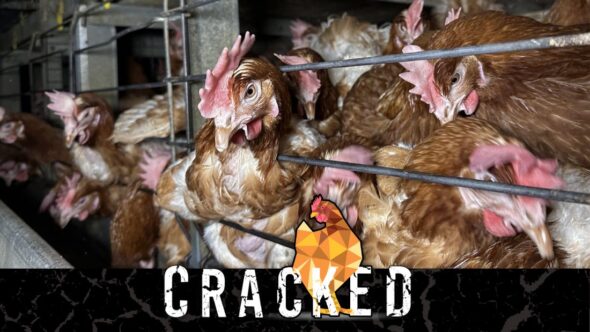
Viva!’s Cracked campaign exposes how, even in normal circumstances, many ‘free range’ hens never go outside anyway. During a housing order, every single bird is guaranteed to be denied outdoor access.
The current situation
The UK Chief Veterinary Officer has declared a mandatory housing order across England, effective from Friday 13 November 2026. Keepers with 50 or more birds must house all poultry and captive birds indoors.
The order follows an increased risk and rising number of confirmed cases of highly pathogenic bird flu in captive birds, alongside cases in wild birds. An England-wide Avian Influenza Prevention Zone also imposes stronger biosecurity requirements.
How long could this last?
Bird-flu housing orders are not brief disruptions. Last winter’s housing order in England and Wales ran from 6 November 2025 to 9 April 2026 – roughly five months. That means hens could spend most of the winter indoors while their eggs continue to be sold as ‘free range’.
A hen may be housed before she has ever been outside, then remain indoors for months as outbreaks and restrictions continue. To shoppers, the carton looks familiar. To the hen, ‘free range’ describes a life she may never have experienced.
A kinder choice
The simplest way to avoid this deception is to leave eggs off your plate. You don’t need eggs for a healthy diet and plant-based alternatives work brilliantly – choose scrambled tofu, aquafaba meringues and flax egg in baking. See more in our Easy Vegan Swaps for Eggs and you can even make a vegan fried egg now too!
Choosing vegan alternatives means no hen has to be confined, no bird flu order changes what your breakfast means and no misleading label has to be deciphered at the supermarket shelf.
The clearest way to protect hens is to choose vegan. Share this with friends and family who buy free range on welfare grounds – many will be shocked to learn how misleading the label has become.

About the author
Dr. Justine Butler
Justine joined Viva! in 2005 after graduating from Bristol University with a PhD in molecular biology. After working as a campaigner, then researcher and writer, she is now Viva!’s head of research and her work focuses on animals, the environment and health. Justine’s scientific training helps her research and write both in-depth scientific reports, such as White Lies and the Meat Report, as well as easy-to-read factsheets and myth-busting articles for consumer magazines and updates on the latest research. Justine also recently wrote the Vegan for the Planet guide for Viva!’s Vegan Now campaign.
View author page | View staff profile