
Cow intelligence
Cows are smart, caring, social and cheeky
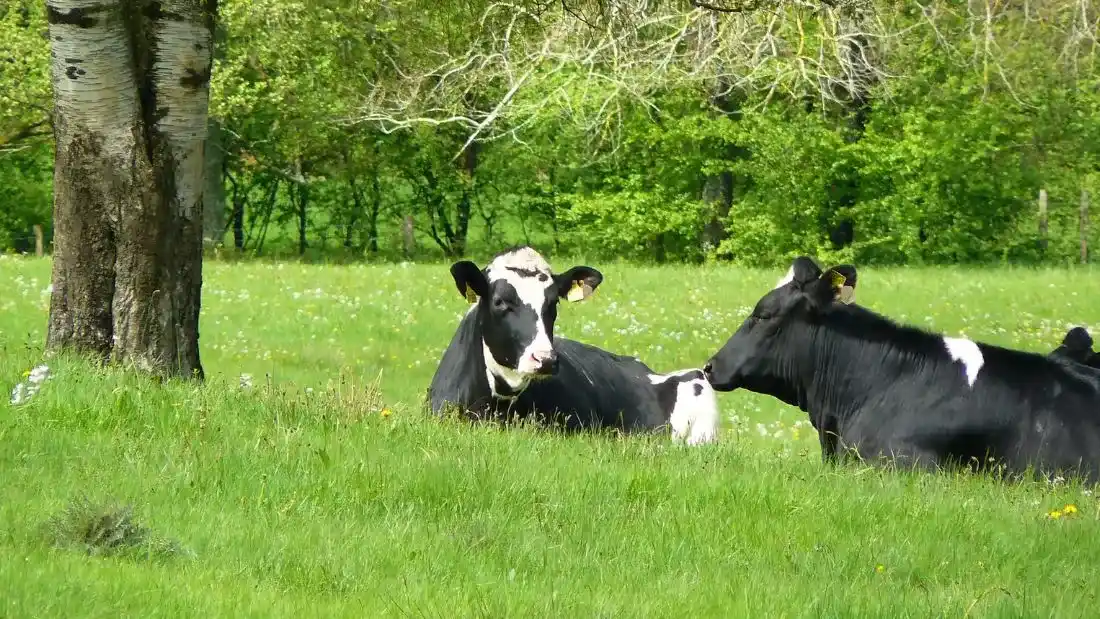
Cows are remarkable – smart animals capable of deep feelings and yet many people never stop to think about their inner lives. Appreciating who cows truly are would make using and abusing them utterly unacceptable so maybe that’s why most people prefer to stay in the dark about cow sentience.
Smart problem solvers
Cows are much smarter than most people realise. They are quick learners, especially when it comes to accessing food and water – they learn how to push a button, press or lift a lever or find an alternative way to a desired food source. They learn feeding times and recognise the sound of a feed bucket.
Scientists also discovered that cows get excited when they find solutions to problems, just as humans do. They can learn how to open gates and some have even figured out how to open cow headlocks – bars they put their head through to feed but which can be used to lock them in place. Not only does this show their intelligence bur also their desire to be free of confinement.
Excellent memory
Cows, and even small calves, remember human faces and how they’ve been treated. They may show fear around someone who handled them roughly or excitement when they recognise someone who treated them kindly.
Remembering the locations of water sources, grazing areas and shelter is second nature to cows but they also learn from past mistakes, which can help them avoid dangerous situations. On top of that, they watch other cows and learn from their mistakes!
Unique tool use
Recently, a 13-year-old cow from Austria named Veronika, who was a companion animal, became a media star after she started using a broom to scratch herself – using the rough bristles for her back and the smooth handle for her belly. There’s no doubt she’s smart but cows have also been using mounted brushes to scratch their itchy backs and sides for years. Veronika took it a step further by using a specific grip on the brush and turning it to suit her needs.
Social experts
Cows are very social by nature – living in herds makes survival easier and, in turn, cows’ social intelligence improves life within their herd. They establish a hierarchy and remember everyone’s place in it, which helps them navigate the complex social dynamics. Within the herd, cows form close-knit groups and have lifelong friends.
The herd leader is not the strongest or largest animal as studies reveal that cows actually choose leaders who are smart, have good social skills and are experienced, while sheer size, pushiness and selfishness are neither desired nor rewarded.
When cows are kept in unnatural conditions such as factory farms, it makes them stressed because (besides other reasons) it upsets their social hierarchy and they may have to fight for dominance.
Another social aspect of cows’ inner lives is emotional contagion. They can smell when other cows are stressed and they too become stressed as a result, which manifests as decreased feeding and increased cortisol (stress hormone) release.
Unique personalities
Cows, just like us, have vastly different personalities – some are bold, some shy, some are very social while others keep more to themselves; some are calm and others more temperamental. If you’ve ever spent time with cows, you probably know this already but too many people think that cows are just carbon copies of each other.
Beyond the moo
Even though cows don’t have an elaborate language, their mooing has a distinctive meaning, depending upon the exact sound made – it can signal distress, hunger, calling to establish another cow’s location or asking them to come back.
Their body language then complements the vocalisations and expresses their emotional state. If, for example, the cow’s ears and tail are in a relaxed position, she’s feeling fine and if you don’t see any eye white, it means she’s okay. On the other hand, the more eye white you see, the more scared and anxious the cow is, while tail swishing (if not swatting flies) and ears pulled back means she is annoyed or stressed.
Another way cows communicate is by jumping and shaking their heads when they’re happy – if you’ve ever seen cows being released onto a pasture after the winter months indoors, you’ve seen pure joy.
Loving mums
Mother cows and their calves share a strong bond that may last a lifetime. Cows are very caring mums who protect and defend their babies. When calves are taken away from a cow on dairy farms, she will often try to stop it and then endlessly call for their calf who also calls back. Many people assume that cows just moo but if you hear incessant mooing and particularly at night, it’s likely a mother cow calling for her baby.
Rescued pregnant dairy cows are known to hide their newborns because of their previous experience. After a few days, they carefully introduce them to the herd. It’s also common for cows to adopt an orphaned calf and form a lifelong bond with them.
Curious minds
You may have experienced cows approaching you when you walk through their field. They may simply be curious or hoping for food and they often move together – when one cow heads in a particular direction, others follow to see what’s going on.
If cattle approach you, stay calm and give them as much space as possible. Don’t run! If you run, they run, too! Instead, walk calmly and, if necessary, change your route to go around the herd rather than through it. Avoid getting between cows and their calves and don’t wait until you’re completely surrounded before moving towards a safe exit. Once you’re safely behind a fence or other barrier, you can take your photos.
Cows are gentle souls with complex needs and deserve our respect. The way they are treated at farms and slaughterhouses is inexcusable and violates every aspect of their lives. If you’d like to visit some happy cows, there are many farmed animal sanctuaries in the UK where you can see them express their natural behaviour and show their lovable personalities.

About the author
Veronika Prošek Charvátová
Veronika Prošek Charvátová MSc is a biologist and Viva! Health researcher. Veronika has spent years uncovering the links between nutrition and good health and is an expert on plant-based diets.