
Beyond leather … the five animals exploited by the fashion industry
Fashion is an undeniably powerful force – it shapes trends, defines identities and sets the tone for societal values. Despite the current economic climate, we continue to witness the staggering growth of the ultra-rich, with social media fuelling a desire for luxury fashion and beauty items.
Although I’ve never considered myself particularly fashion-driven, I recently found myself scrolling through TikTok, watching people review the latest 2025 Met Gala looks and reflecting on some of the most memorable outfits from years gone by. One that particularly stood out was Rihanna’s 2015 Guo Pei dress which became infamous for its morbid weight – 55 pounds – making it almost impossible for the singer to walk without the help of chaperones. But it was also lined with the furs of over a hundred foxes.
While the dress was hailed as iconic by some, the public outcry was deafening, with many horrified by the thought that over a hundred foxes were likely skinned alive for the gown. The consensus was clear: fur, once considered a symbol of luxury, was now undeniably on its way out.
This got me thinking about the lesser-known animals that continue to be exploited in the fashion industry – not just for high-profile events like the Met Gala, but also by high-street brands, fashion labels, and even cosmetics. Most people are aware that leather, fur and exotic skins such as crocodile and snake are inherently cruel. There is, however, no shortage of lesser-known yet victims of the fashion world that are forced to suffer for people’s vanity.
Here are five victims of fashion who may surprise you.
Angora Rabbits
The soft, luxurious feel of Angora wool may seem like the ultimate in comfort and indulgence for some but their fluffy coats hide a much darker reality. Angoras are prized for their long, silky coats which are ‘harvested’ by an excruciating process known as ‘live plucking.’ Workers restrain the rabbits and rip the fur from their sensitive skin by hand, sometimes up to four times a year, leaving the animals in a constant state of distress.
These intelligent, social creatures are confined to small, filthy cages where they can barely move, surrounded by their own waste. When their coats are sufficiently long, they endure the trauma of plucking but that isn’t the end of their suffering. Many rabbits die from stress-related complications, with some farms admitting that up to 60 per cent die within just one to two years and the remainder are slaughtered long before they reach their natural lifespan of up to 10 years.
There is no cruelty-free way of producing Angora wool so it is better avoided in favour of more ethical, animal-free alternatives.
Ostriches
Ostriches are native to Africa and these magnificent birds are often seen as symbols of grace and strength. Farmed for their feathers, these majestic creatures are subjected to horrific treatment and despite claims of being cruelty-free, the reality of ostrich feathers is far bleaker.
Ostriches can run at incredible speeds, roam across vast distances in the wild and have been around for some 21 million years. When farmed, they are confined in cramped conditions that lead to severe psychological distress. They are often restrained and plucked while alive, a practice documented even on farms supplying luxury brands.
Feathers may also be cut off the living birds, a process no less barbaric than those obtained from birds slaughtered for their skins. Birds that should live for up to 40 years in their natural habitat are typically killed at just one year old.
The industry is riddled with secrecy, and undercover investigations into farms supplying brands such as Hermès and Prada reveal some gruesome practices. Before slaughter, ostriches are often denied food for days to empty their digestive tracts and may also be killed in front of other birds. And all of this for feathers used in inessential fashion accessories and top-end garments that perpetrate the myth that ostrich feathers are a luxury product.
Kangaroos
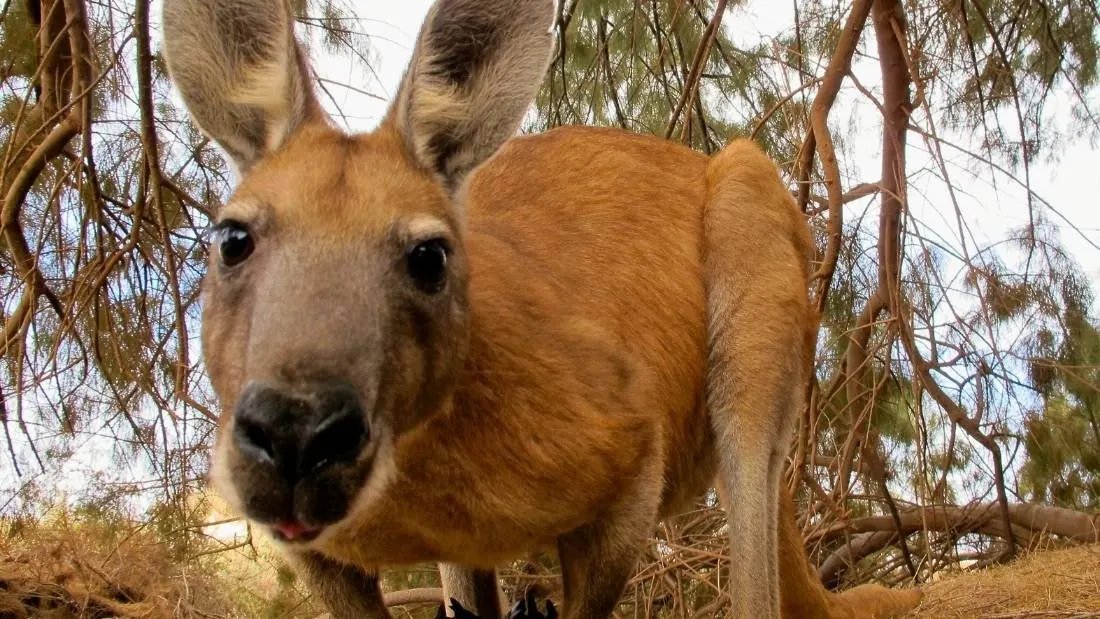
In the Australian outback, kangaroos are more than just an iconic symbol of the country’s wildlife, they are also victims of the largest mass slaughter of land-based wildlife on the planet. Each year, millions of kangaroos are killed mostly for companion animal food, their leather sold for luxury fashion items such as shoes, sports shoes, belts and bags.
Despite claims that kangaroo leather is ‘sustainable’ and ‘ethical’, the reality is far more sinister. Kangaroos are slow-breeding, social animals that live in family groups known as mobs. Females give birth to minuscule joeys, who remain in their mothers’ pouches for months before maturing and venturing out. Mothers will often have two joeys, one in the pouch and one ‘at foot’ When their mothers are shot in the dead of night, joeys also face a brutal death themselves. Pouched joeys are bludgeoned to death by shooters while at foot joeys are likely to escape, only to be predated upon or starve to death.
The kangaroo leather industry justifies its slaughter with claims of overpopulation despite scientists repeatedly debunking this claim. The mass slaughter of kangaroos is done by solitary shooters at night where they cannot be witnessed or regulated and the Australian government allows this devastation to continue for the votes of rural communities and for the currency earned from overseas sales.
Twice Australia has targeted the UK as an outlet for kangaroo meat and twice Viva! has stopped it. We have also persuaded some major sportswear manufacturers to stop using kangaroo leather in their football boots.
Roosters
The fashion industry is riddled with cruelty but skincare might not immediately come to mind as a culprit. Yet, many cosmetics contain ingredients derived from animals – one of the most surprising being the supposedly highly coveted ‘hyaluronic acid’.
First discovered in the 1930s and then extracted from rooster combs in the 1940s, by scientist Dr Endre Balazs, hyaluronic acid quickly gained recognition for its impressive hydrating and anti-ageing properties. Its use spread beyond medicine into the booming world of beauty and for decades, the industry relied heavily on rooster combs due to their high concentration of hyaluronic acid – swelling with the substance thanks to testosterone.
The process behind this ingredient is far from pretty. Roosters are bred specifically for this purpose, slaughtered and their combs harvested – once considered a waste product, now a sought-after commodity in the beauty market.
Thankfully, the cosmetic landscape is beginning to shift as plant-based alternatives are now increasingly used but the change isn’t always rooted in compassion. Nevertheless, the growing popularity of cruelty-free brands and ethical skincare products has helped reduce the demand for animal-derived ingredients such as hyaluronic acid.
As consumers become more aware and vocal, we can hope for a future where beauty no longer comes at the cost of animal suffering and where effective skincare is cruelty-free.
Sharks
Sharks, often associated with the horrors of shark finning, face another threat from the fashion and cosmetics industries: their skin. Shark leather, known for its unique texture and strength, is used in high-end luxury goods such as belts, wallets, shoes, and bags. It marks another dark chapter in the story of fashion’s cruelty toward marine life and where millions of sharks are killed each year for their durable hides.
The exploitation doesn’t end there for in addition to their skins, sharks are hunted for another valuable commodity: squalene. This oil, derived from the liver of sharks, has been a key ingredient in many cosmetic products, including moisturisers, sunscreen, and anti-ageing creams. Despite the availability of plant-based alternatives, shark-based squalene remains a common ingredient in the beauty industry due to its moisturising and anti-ageing properties.
The demand for shark squalene has led to the slaughter of countless animals, further depleting already endangered populations and causing devastating impacts on marine ecosystems. As apex predators, sharks play a crucial role in maintaining the balance of marine life. By killing millions each year, we not only cause immense suffering to individual animals but also destabilise the ecosystems that depend upon them. Whether it’s for their skin or their liver oil, the exploitation of sharks is yet another example of how fashion’s luxurious allure comes at a profound cost.
A Call for Change
Countless creatures continue to suffer in the pursuit of luxury and beauty and while the industry is slowly shifting, with major events like London Fashion Week banning exotic skins and fur in 2025, there’s still much more to be done. As consumers, we have the power to demand change and make more ethical choices. The question is: will we continue to fuel cruelty for the sake of fashion, or will we choose a future where compassion and sustainability lead the way?

About the author
Erin Stow