
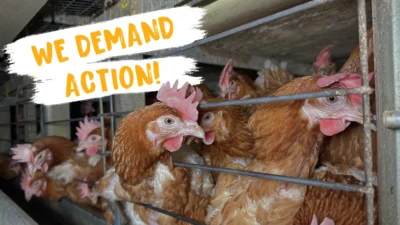
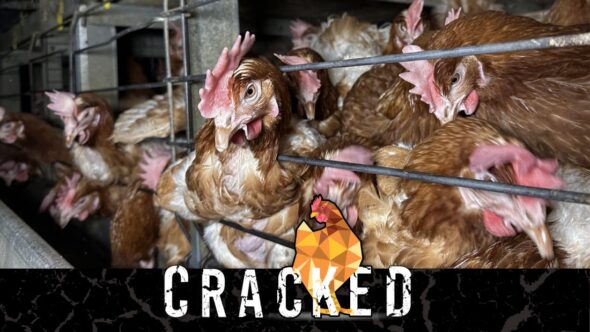
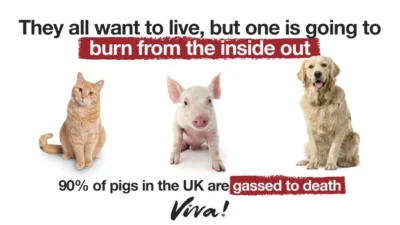
Will you join us on our journey to end cages and reveal the truth about free range?
Juliet, founder of Viva! Campaigns, and her son Jazz expose the egg industry and ask you to join us on our journey to end cages and reveal the truth about free range.
Juliet
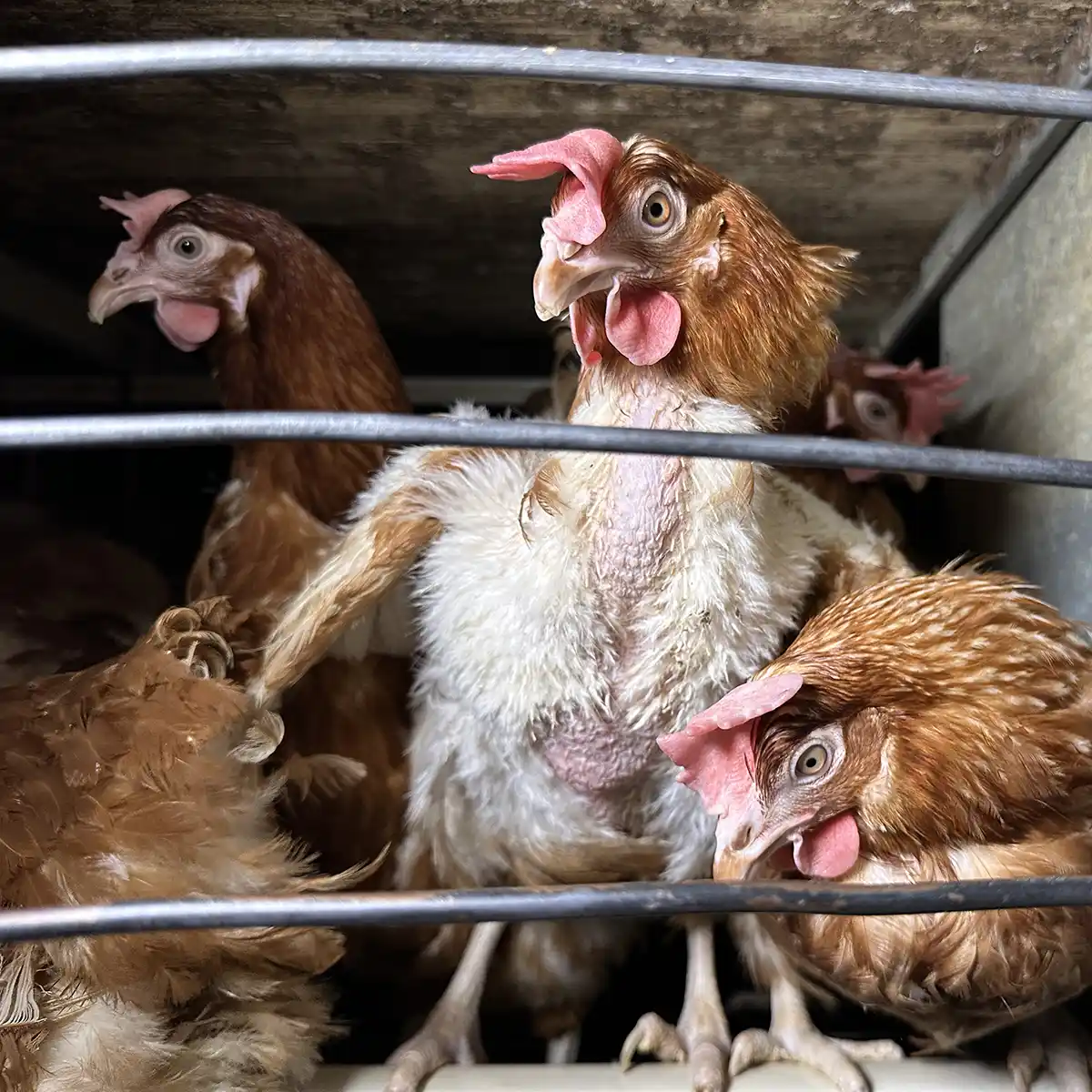
Talk to the public and many assume ‘battery cages’ are a relic of a darker past. It’s true the old-style battery cage was banned in Britain but a cage is still a cage, and the so-called ‘enriched’ replacement is anything but. The reality is grim: around seven million hens in the UK are still locked behind bars.
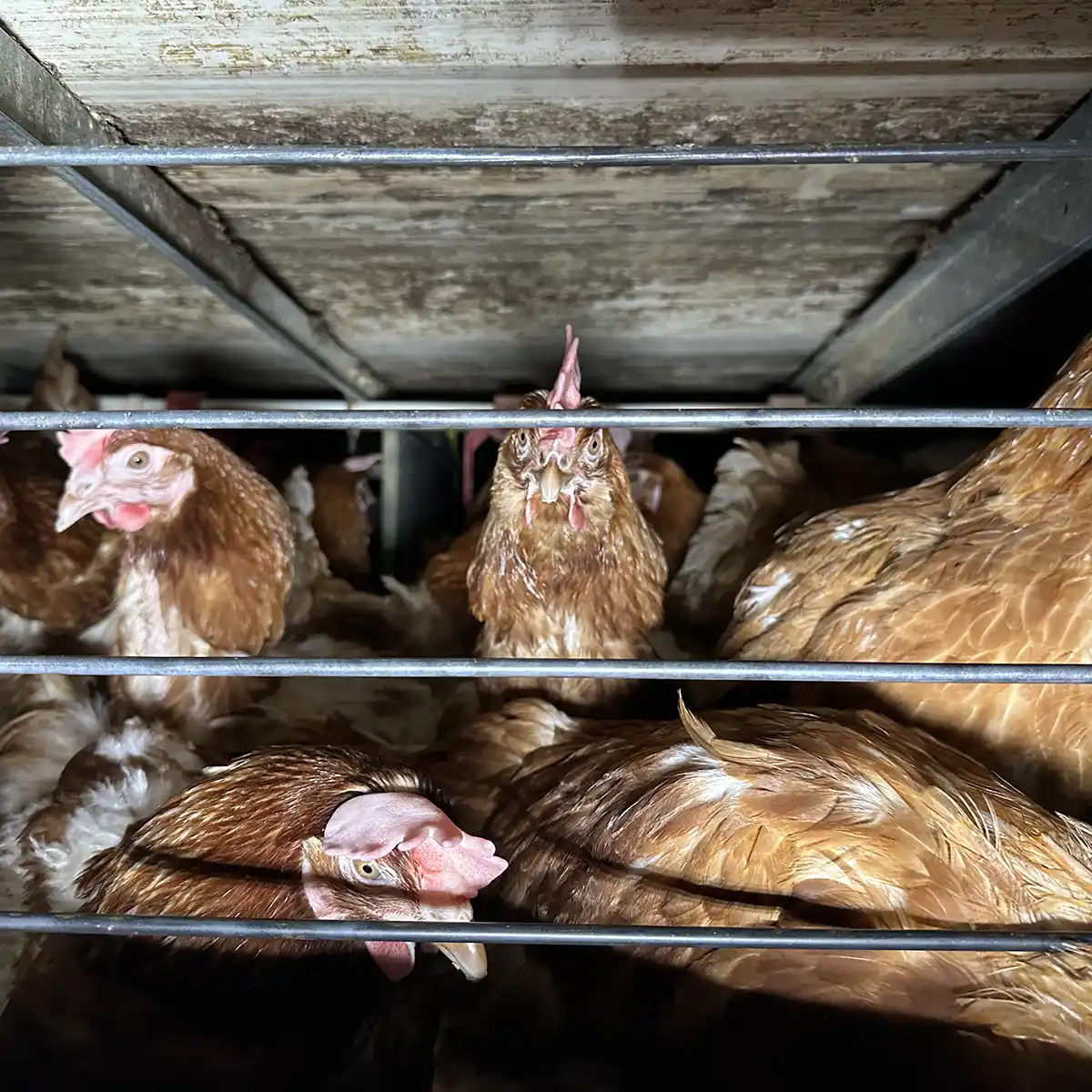
These ‘enriched’ systems are wire prisons – up to 80 birds confined together, each given only a sliver more space than the cages we left behind. The boredom and frustration, the bullying and aggression are built into the system. There’s no escape from the stress, no chance to live naturally and yet it’s sold as progress. Enriched? For the hens, it’s just more pain in a lifetime of captivity.
Labour have launched a public consultation proposing to phase out cages for laying hens, pullets and breeder layers – with a full ban from 2030 at the very earliest, and their preferred option being 2032.
But right now it’s still just words on paper. We need action: a full legal ban passed in this Parliament before the next general election.
That’s why Viva! is launching Cracked – a campaign to expose the egg industry, fight for a cage ban now and help people choose egg-free.
And the first step is already taken. My son Jazz and I have recently investigated both caged and free range ‘farms’. We need these findings to show the Government – and the public – exactly why cages must end and why ‘free range’ isn’t the answer either.
This was the first time Jazz had seen hens in this state. The first unit we entered was a caged egg facility in Shropshire. Watching him walk into that vast industrial shed and take in the sight of tens of thousands of birds – more tightly packed than anything I’ve ever seen before – was devastating. His shock and sadness were exactly what I believe most people would feel if they saw the truth for themselves. Now we have to use what we’ve found to make sure the ban happens – and to stop people buying eggs that come from suffering.
Jazz:
Growing up, we had rescue hens at home. I remember caring for them, feeding them and watching them run for spaghetti, slurping it up as if it were a Michelin-star meal. If one of them saw something interesting, they would call to each other, all of them suddenly alert and alive to the world around them, eager to explore together.
The boldest was Lucy – I still remember her so clearly. She was affectionate, loved a cuddle and used my mum’s wardrobe as her bed! She was the matriarch. So, when we rescued a cockerel who arrived swaggering and pecked one of the hens to try to establish dominance, something extraordinary happened: in an instant, from every corner of the garden, the hens rushed at him together – and made it very clear who was really in charge. After that, he fell into line and became their diligent protector.
Knowing chickens like this is what makes what I saw inside these farms feel even more obscene. Chickens aren’t objects. They’re individuals who feel affection, fierce loyalty, bravery and real curiosity. They’re meant to spend their daylight hours exploring, scratching, foraging and dust-bathing, not locked away in cages and sheds like machinery.
So, when we stepped into the caged farm, one thought hit me straight away. If what we had was chicken heaven, this was chicken hell.
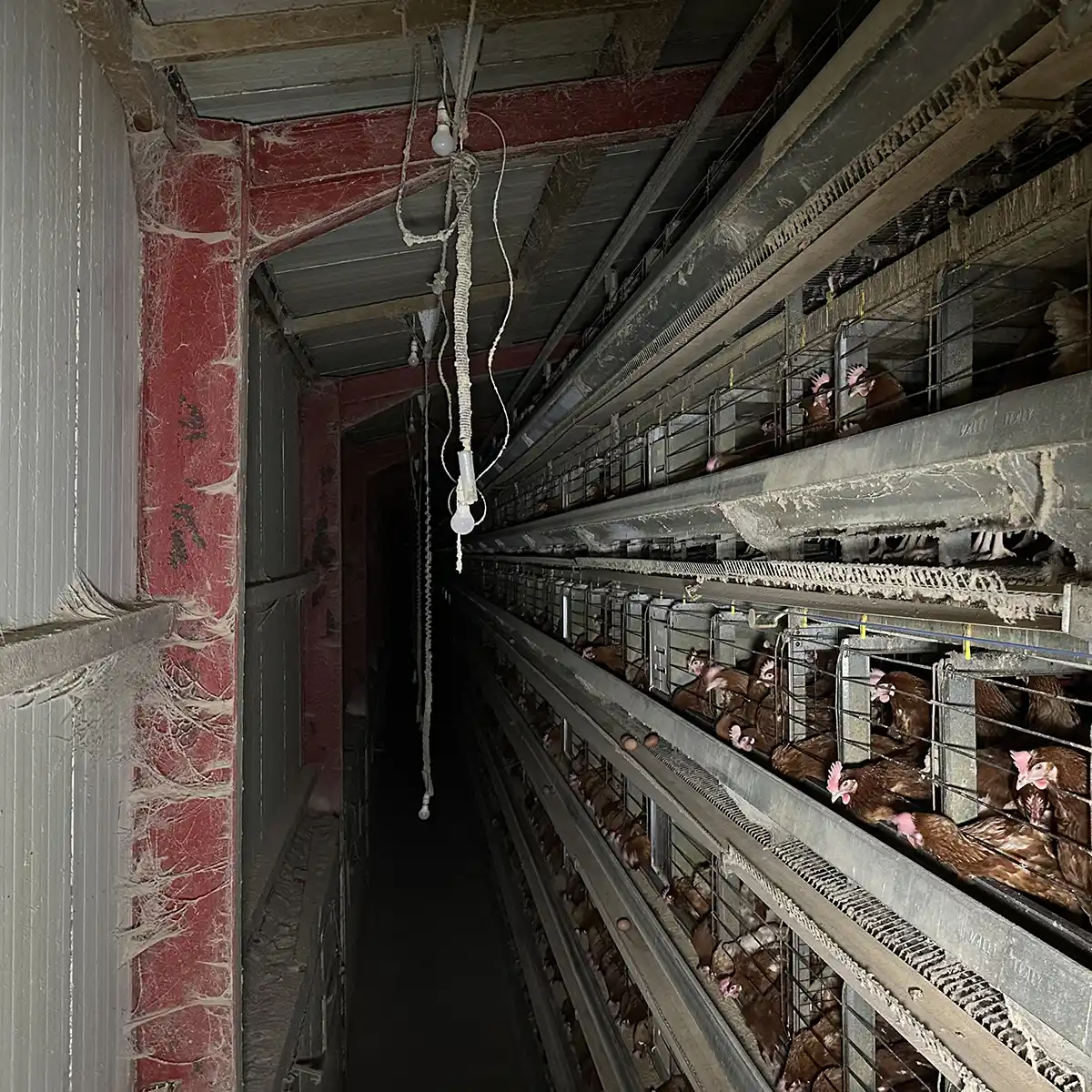
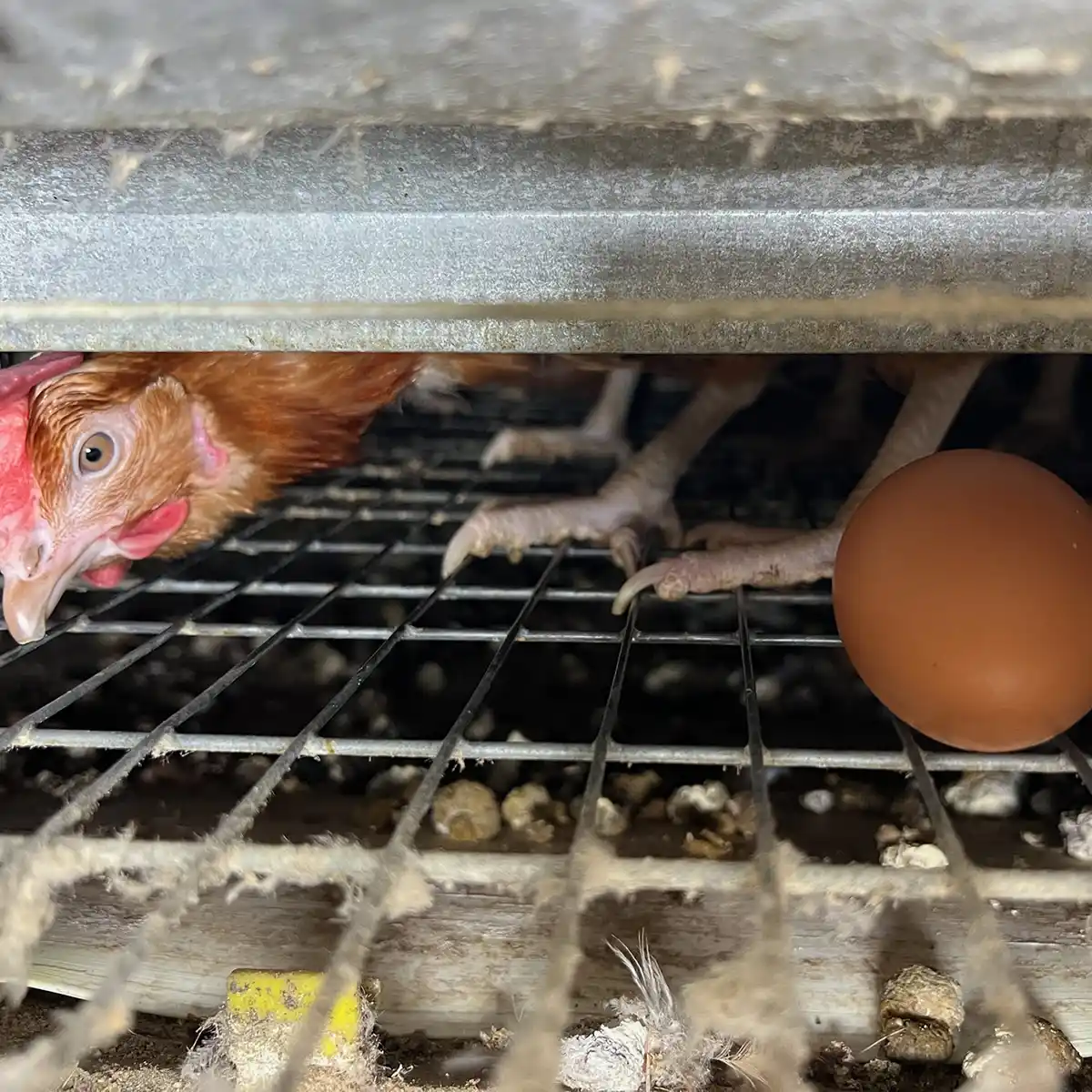
It was worse than I could imagine. Seven tiers high, rows stacked above us, the top cages impossible for us to investigate. Hens crammed into cages so tight they can never spread their wings for more than a few seconds, forced to live pressed against each other every minute of every day. They lay around 300 eggs a year, and with each egg their instincts are screaming at them to hide, to cover, to nurture, to protect their baby. But there is no privacy or comfort. The egg just rolls away, and their frail bodies are forced to make another, and another, and another.
The place was full of filth. The stench of built-up excrement and thick dust filled the air, which caught the back of my throat, like the building itself was trying to push us back outside. But we knew we had to keep going so we could show people the truth.
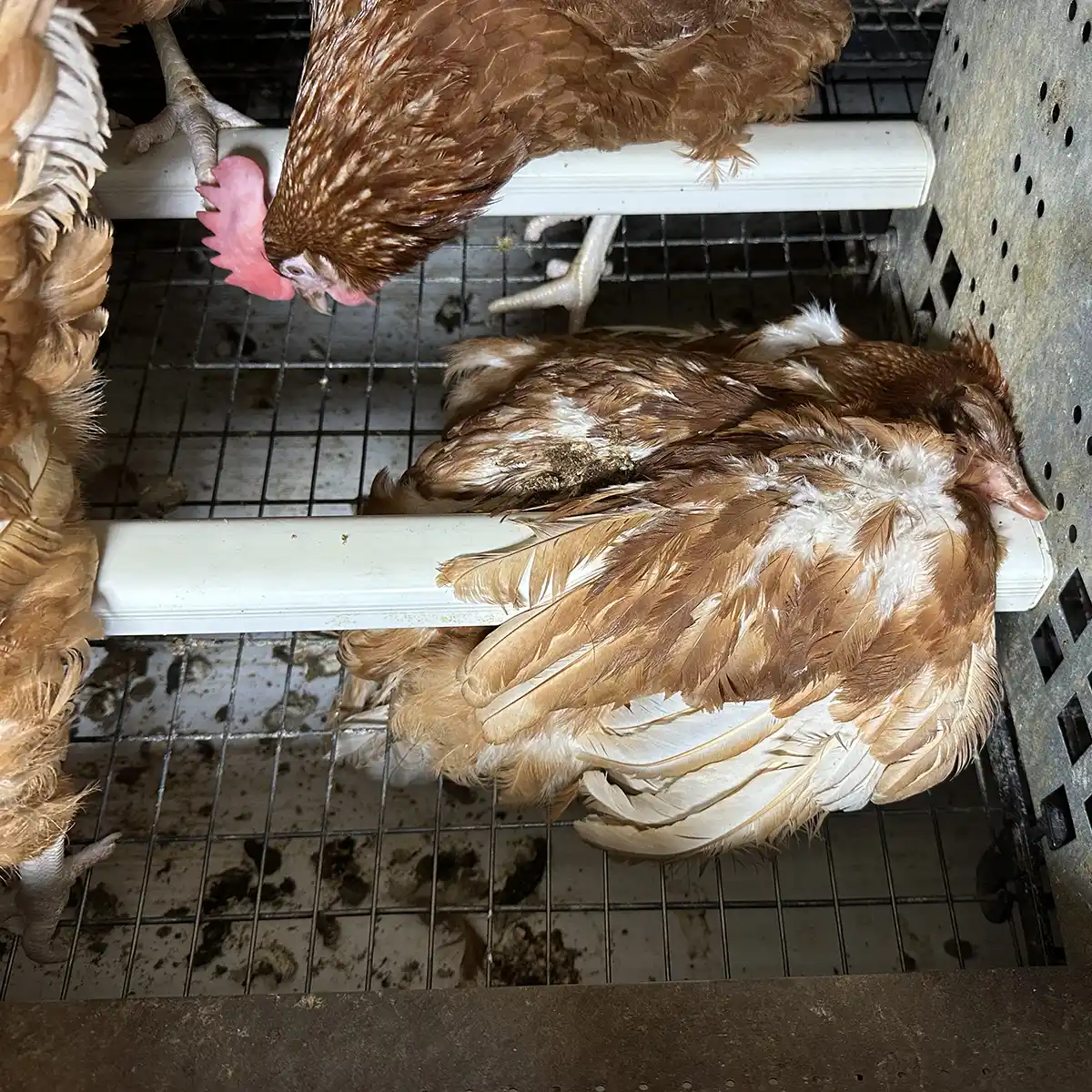
We saw dead hens. One was slumped with her wings spread over the plastic perch, and the other hens were forced to stand on top of her corpse. Another was decaying and blackened. There’s certainly no way to escape from death.
No sunlight on their wings. No rain at their feet. No soil, no grass, no fresh air. This is their life for 18 torturous months until they are gassed to death, and that is the part people rarely understand. Hens die for us to eat eggs – whether from free range, organic or caged systems.
Then the cycle begins again and each year, over seven million hens are living in this hell in the UK.
What about the free range farms?
Having lived with chickens, I know what freedom and natural behaviour look like, and I didn’t find it on either of the free range farms we investigated.
The carefully curated image the egg industry presents of “our girls” enjoying the great outdoors because “we care” collapses the moment you see the reality. The hens were packed in tight rows, barely able to move while perched for the night. We stood in the gangway amongst the filth that had been allowed to build up, hearing the different calls of all the hens, and then something happened that I will never forget.
We heard a gentle chiming wave move through the hens, starting ahead of where we stood, washing past us, and as it passed, they fell silent. All of them together in unity, soothing one another in an environment they were never meant to be in.
We found dead birds at both free range farms. One had her eyes eaten. Another was surrounded by a dust circle where her wings had struggled in the sand.
We went back to one of the farms during the day. We saw very few venture outside. Research backs this up: many hens never set foot outside. And the bigger the flock, the worse it gets. Why? Hens have a strict pecking order – dominant birds block the exits. Add overcrowding and chronic stress, and many hens become too fearful or withdrawn to even try.
A major study showed that in flocks of 24,000 birds, only 23 per cent ever went outdoors. Even in smaller flocks of 8,600, it was barely half – meaning one in two hens still never felt sunlight.
Not exactly natural – and not freedom. Just a different kind of confinement, sold with softer words. The only real way to end all this suffering is to stop buying eggs.
Juliet
We must act now – to ban cages and to get the truth in front of the public.
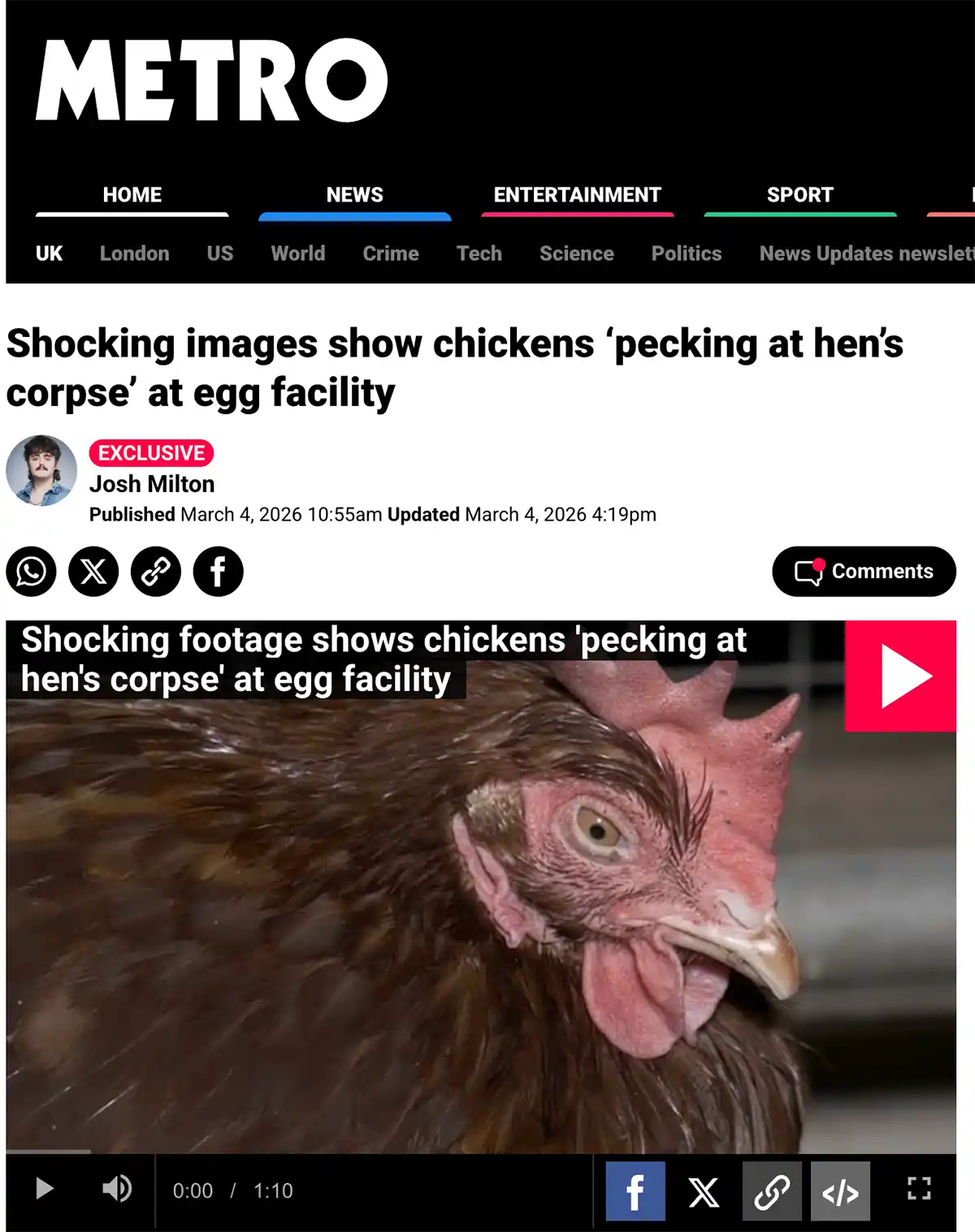
We’ve already made major strides. Our investigation into caged hens – and our call for a cage ban – has been featured by the Metro online and in print, reaching millions of readers. The Metro also has a huge social media presence, and the story has been shared widely across Facebook, Instagram and X.
Now we need your help to turn this momentum into law.
Labour says it supports a phase-out of cages. But promises and consultations are not bans. We need a legally binding ban passed in this Parliament – before the next general election.
For a hen trapped in this system, time is not abstract. She will likely be killed at around 18 months old. That means even “later” is too late for millions of birds: the suffering is happening now. The deaths are happening now. The next generation is being bred into this system now.
That’s why we’re asking for your support. With your donation, Viva! will:
- Launch Cracked – a national campaign exposing the truth behind ‘free range’ and ‘enriched’ cages and demanding a full cage ban
- Hit the road with bold public outreach that shows the reality and makes it easy for people to ditch eggs with simple, affordable swaps
- Carry out further investigations to reveal what happens every day inside egg farms so the industry can’t hide behind packaging and PR
- Mobilise supporters to pressure MPs – pushing Labour to act now and make a cage ban legally binding before the next general election
Take action now
Your donation will help expose the reality of the egg industry and challenge the comforting lie that ‘free range’ means freedom. You can help create real change today – because we can’t afford to delay.
You’ll also be helping people take the one step that ends this cruelty at the root: choosing vegan so no hens are bred into cages or packed into sheds in the first place.
Please donate today, if you can. Whatever you give will be gratefully received – and used to help end the shame of egg farming.
Yours for the animals

Juliet Gellatley
Founder & Director
Summary — Quick overview
SUMMARY
Around seven million hens in the UK are still kept in cages, despite many people believing battery cages were consigned to the past. The old-style system was banned, but so-called enriched cages remain wire prisons, confining up to 80 birds together with only slightly more space than before. Viva!’s investigation found rows of cages stacked seven high, filthy conditions, severe stress, dead hens left among the living and birds denied every natural behaviour that matters to them.
Viva!’s investigation also challenged the comforting myth of free range. On the free range farms visited, hens were packed tightly indoors, filth had built up and dead birds were found. Returning in daylight showed that very few birds ventured outside. Research reflects this reality: in flocks of 24,000 birds, only 23 per cent went outdoors, and even in flocks of 8,600 it was only about half. Free range is not freedom for countless hens.
Labour has launched a public consultation on phasing out cages for laying hens, pullets and breeder layers, but the earliest full ban proposed is 2030, with 2032 preferred. That is far too late for hens suffering now and typically killed at around 18 months old. Viva! is launching Cracked to expose both caged and free range systems, press for a legally binding cage ban in this Parliament and help people choose egg-free so hens are no longer bred into misery.
KEY FACTS
- Around seven million hens in the UK are still confined in cages.
- So-called enriched cages can hold up to 80 birds together and offer only slightly more space than the banned battery cages.
- Viva! investigated a caged egg facility in Shropshire and found cages stacked seven tiers high, filthy conditions and dead hens among the living.
- Hens in the egg industry lay around 300 eggs a year and are typically killed at about 18 months old.
- Viva! also investigated two free range farms and found overcrowding, built-up filth and dead birds at both sites.
- Research cited by Viva! found that in flocks of 24,000 birds only 23 per cent went outdoors, while in flocks of 8,600 only around half did so.
- Labour’s consultation proposes phasing out cages, but the earliest full ban would be 2030 and its preferred option is 2032.
- Viva! argues that the only real way to end the suffering caused by the egg industry is to stop buying eggs and choose egg-free alternatives.
FAQ
Are battery cages still used in the UK?
The old-style battery cage was banned in Britain, but hens are still kept in so-called enriched cages. Viva! says these systems remain cages in every meaningful sense, with birds confined behind bars in crowded, stressful conditions.
Does free range mean hens live freely outdoors?
Not necessarily. Viva!’s investigation found that many free range hens were still crowded indoors, and research shows that many never go outside at all. In very large flocks, dominant birds can block exits and stress can keep more vulnerable hens from venturing out.
Why is Viva! calling for action now?
Labour has proposed a phase-out of cages, but consultation and promises are not enough. With a full ban not expected before 2030 at the earliest, millions of hens will continue to suffer and be killed long before any future deadline unless a legally binding ban is passed in this Parliament.
What does Viva! want people to do?
Viva! wants supporters to back a full legal ban on cages, help expose the truth about the egg industry and choose egg-free food. The organisation argues that going vegan tackles the cruelty at its root by preventing hens from being bred into cages or packed into sheds in the first place.