Investigation: Merri-Folde Farm
Laid Bare: The Free Range Fallacy
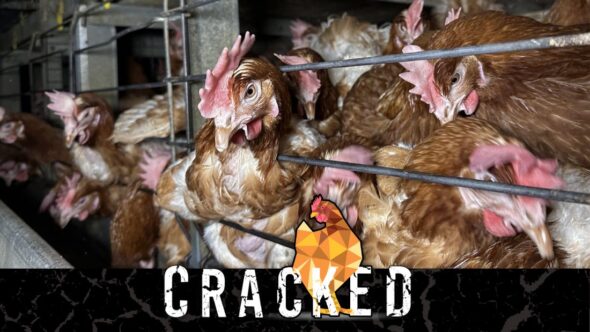
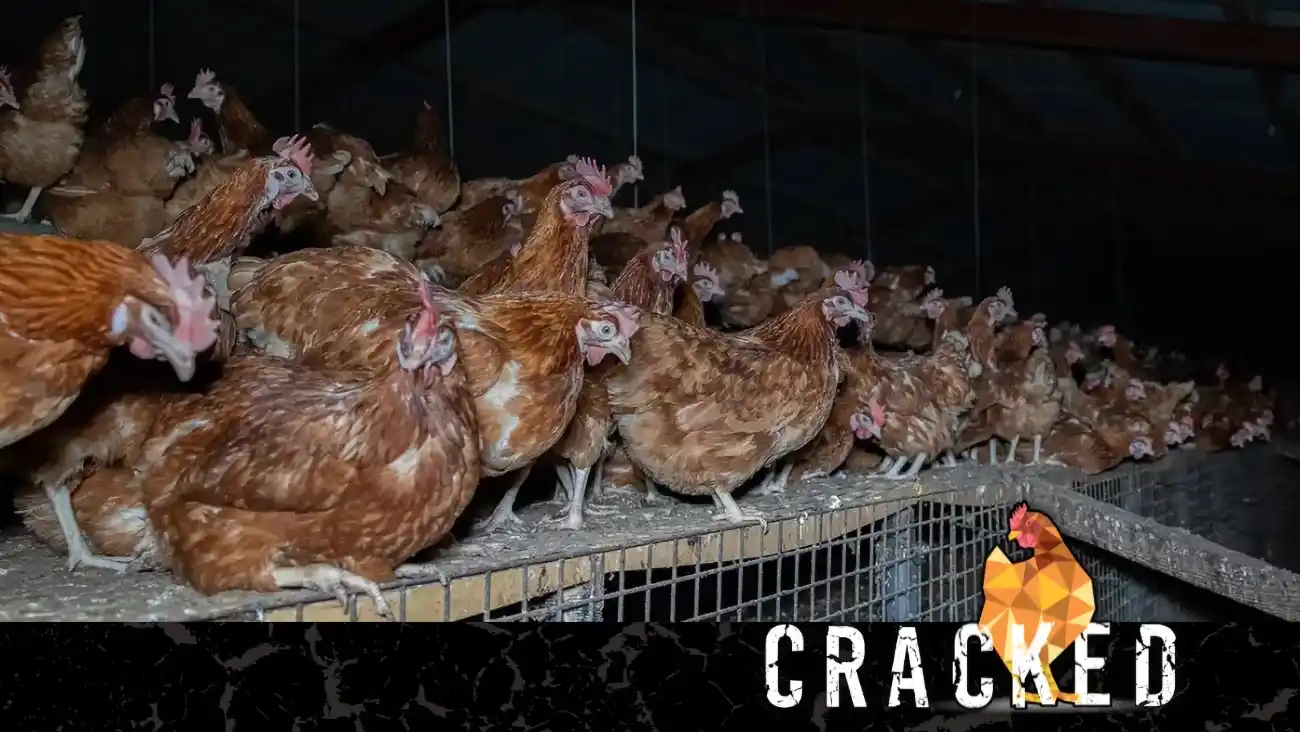
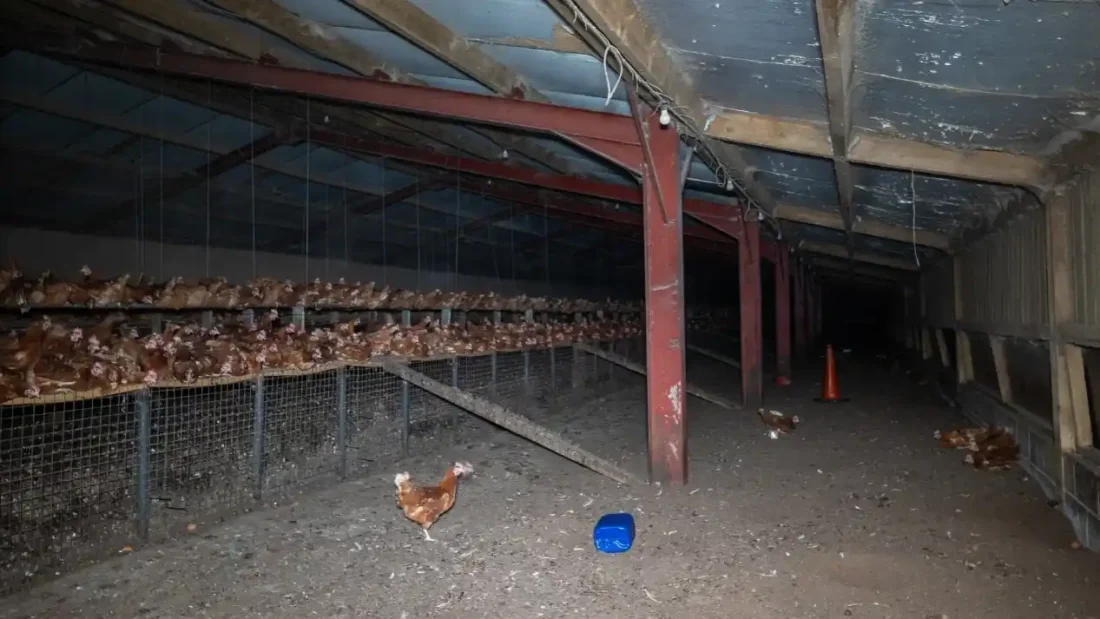
Investigators for Viva! Campaigns installed covert cameras at Merri-Folde Farm – an RSPCA Assured free-range egg facility in Herefordshire contracted to Noble Foods, Britain’s largest egg company and owner of the Happy Egg Co – and once again laid bare the fallacy of free-range egg production.
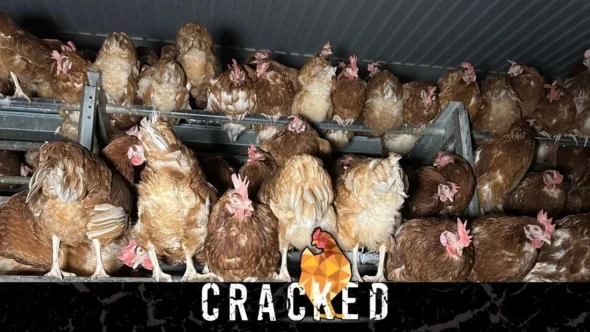
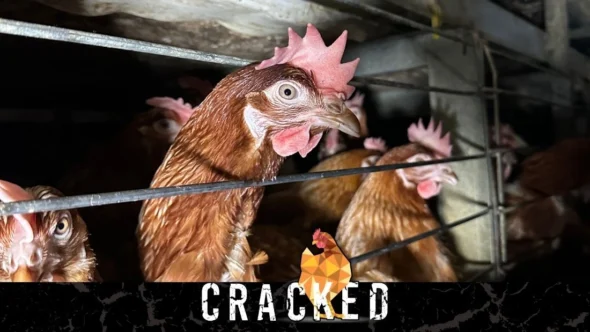
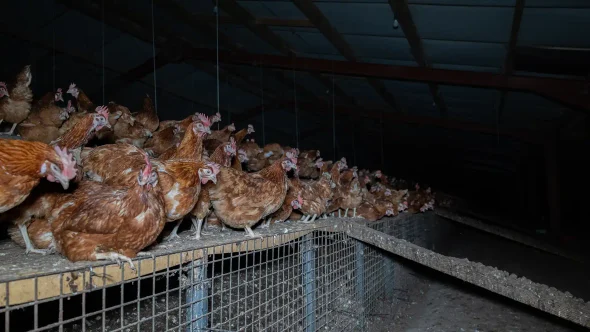
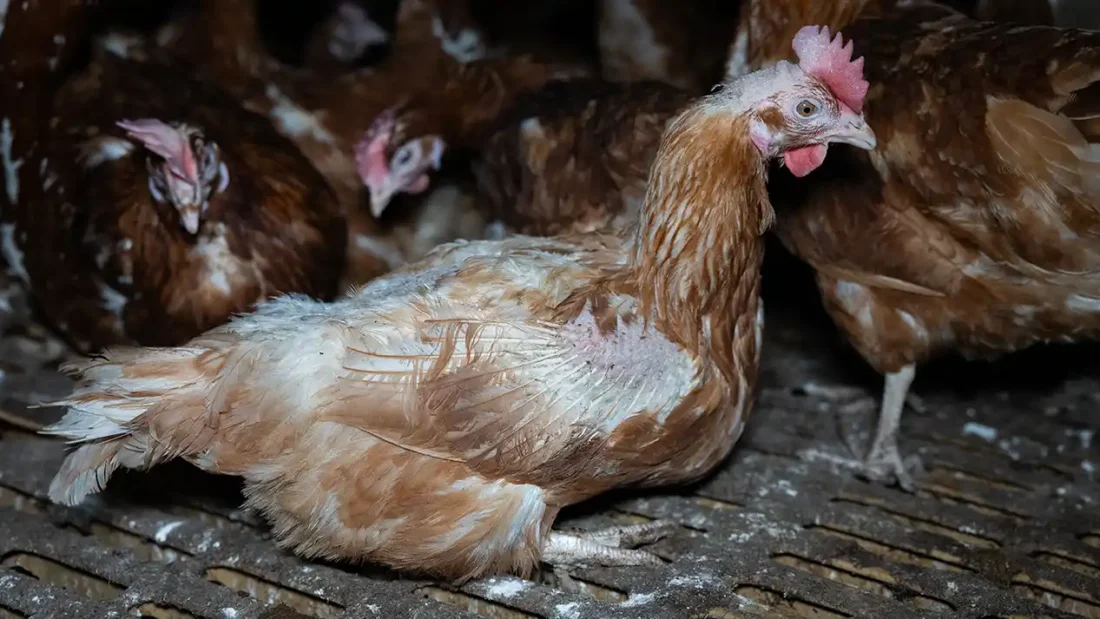
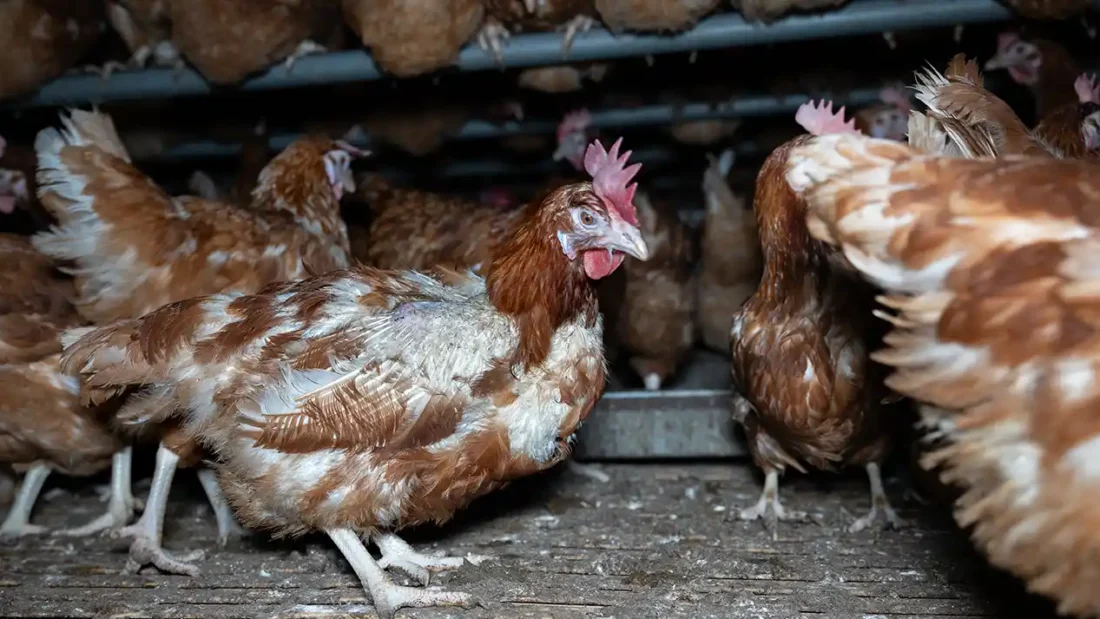
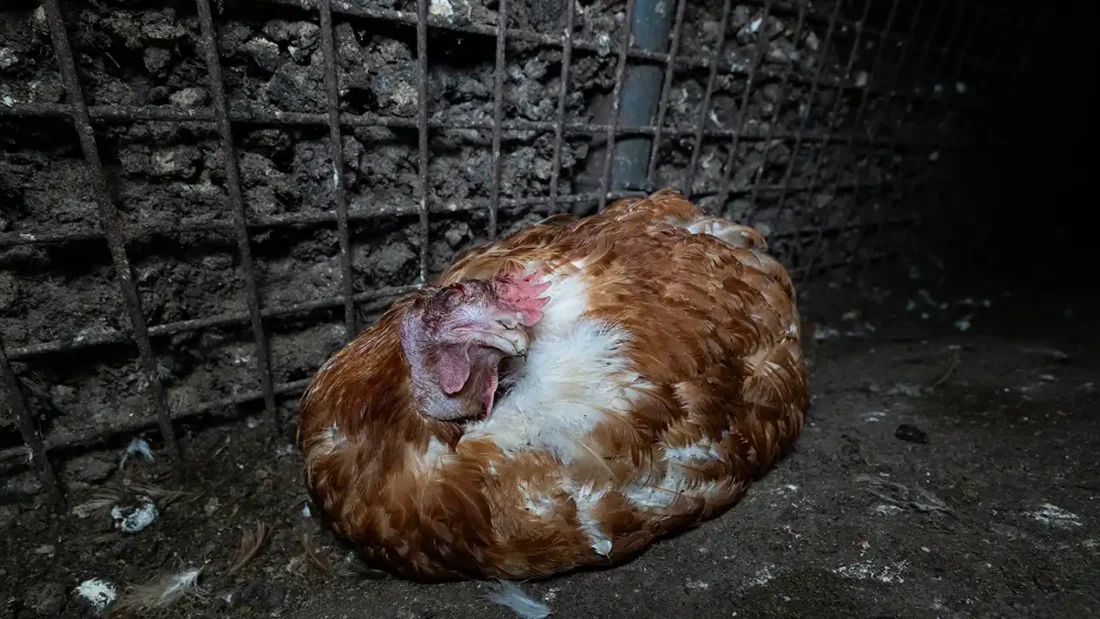
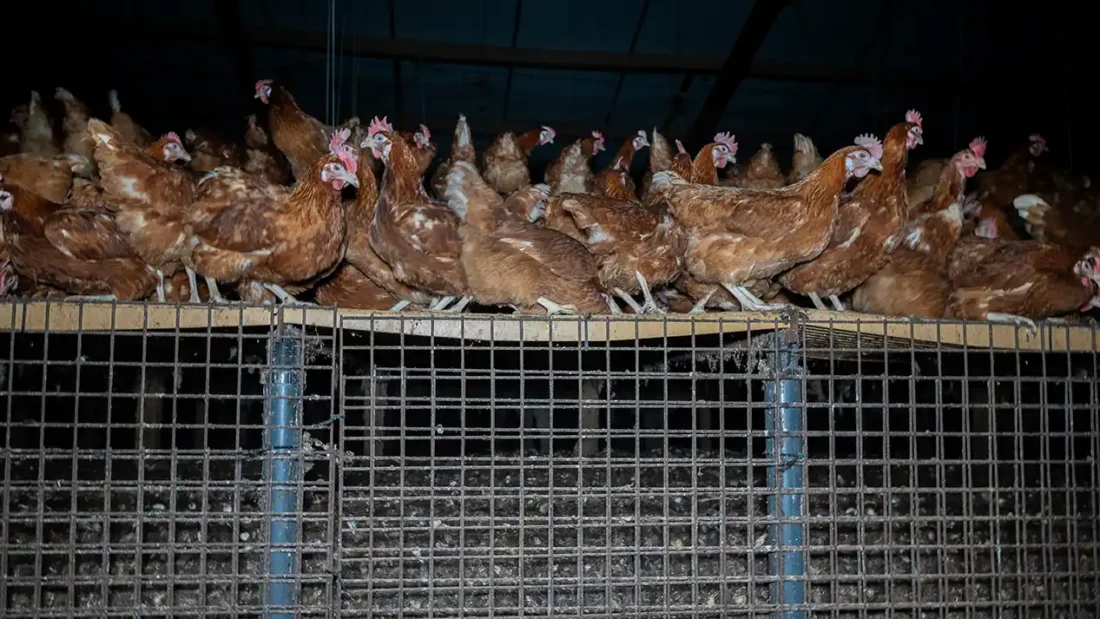
Thousands of bald, battered birds were found crowded inside a dank, dingy shed experiencing moderate to severe injurious feather-pecking – despite routine beak tipping where up to one-third of their beak is removed at birth to supposedly prevent this.
Arguably, one way to tackle this would be to provide adequate environmental enrichment, but at Merri-Folde this amounted to little more than a few plastic bottles strewn around the wet litter covering the floor – an insult to these highly intelligent animals with complex social structures.
RSPCA Assured claim its eggs come exclusively from cage-free hens raised on farms that meet more than 800 strict animal welfare standards, which include access to pecking objects such as footballs and straw bales. But this is simply not the case.
It is not the first time Viva! has exposed the failings of food assurance schemes, nor will it be the last.
Bald, Battered and Bullied to Death
Ignore the glossy marketing campaigns depicting happy hens scratching and clucking around large open fields. Watch the video below to see the reality of free-range egg farming where cage-free does not mean cruelty-free.
Injurious Feather-Pecking
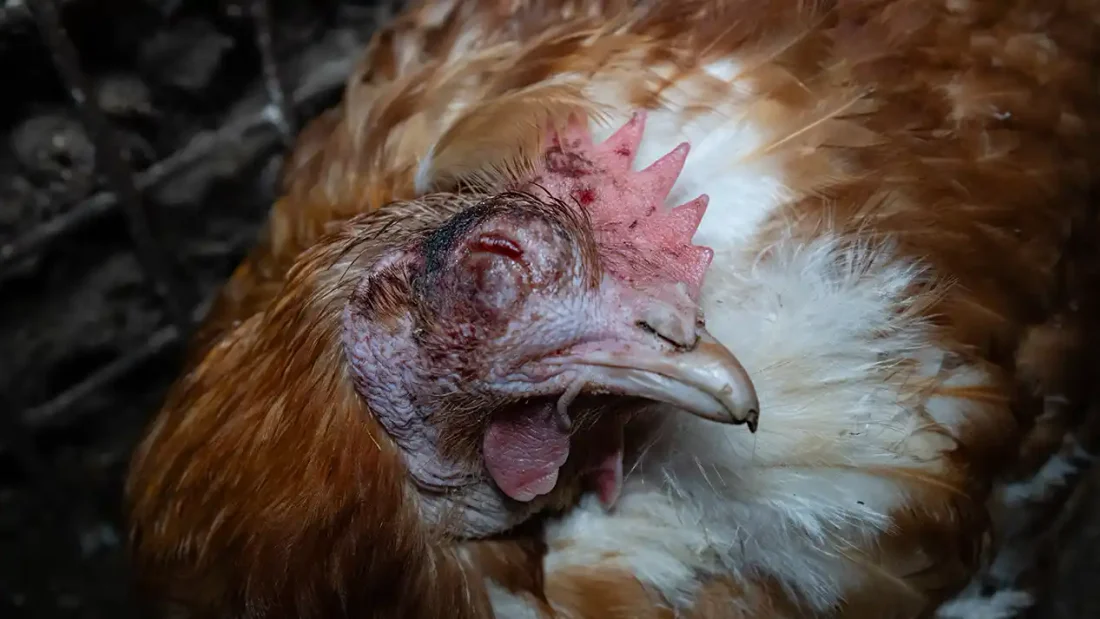
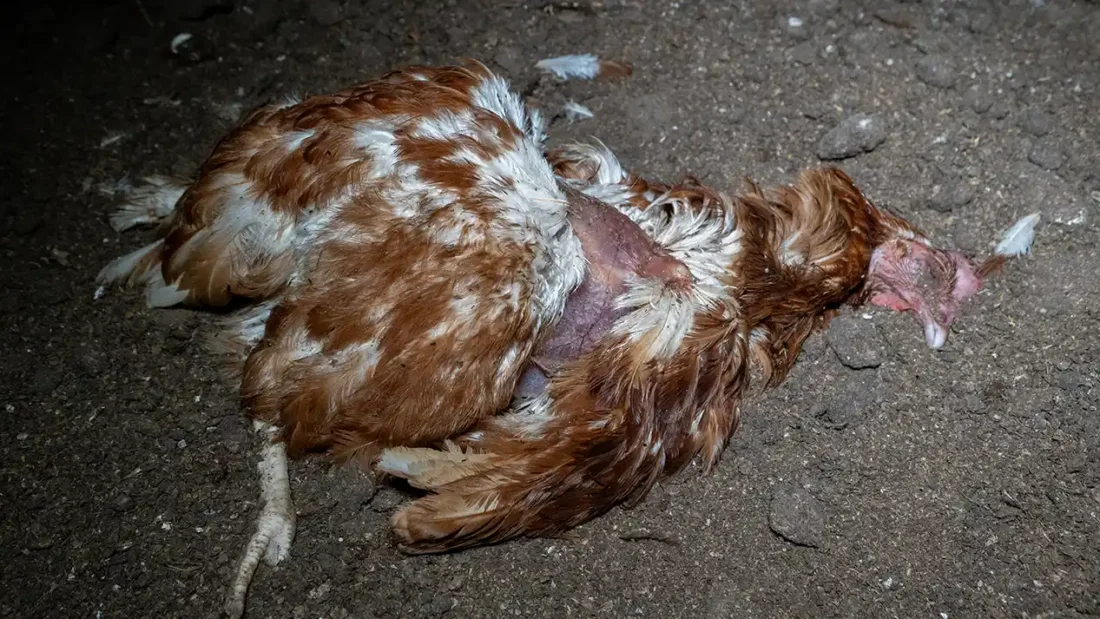
Feather-pecking is an abnormal behaviour that is considered common in free-range facilities due to chronic stress from overcrowding, poor nutrition and a lack of adequate enrichment. It’s when hens peck out the feathers of other birds, leading to damaged feathers or baldness and, in more severe cases, skin injuries and bleeding. Since chickens are naturally attracted to the colour red and scent of blood, small bloody injuries can lead to a dangerous pecking loop that can trigger cannibalism.
One bird with a traumatic head injury observed by investigators in the shed can be seen in our covert footage enduring a prolonged attack from other birds that lasted over four hours and ultimately resulted in her death. She was carried out by her legs when a worker walked through the shed collecting eggs shortly after 7am the next day.
Rarely Roaming the Range
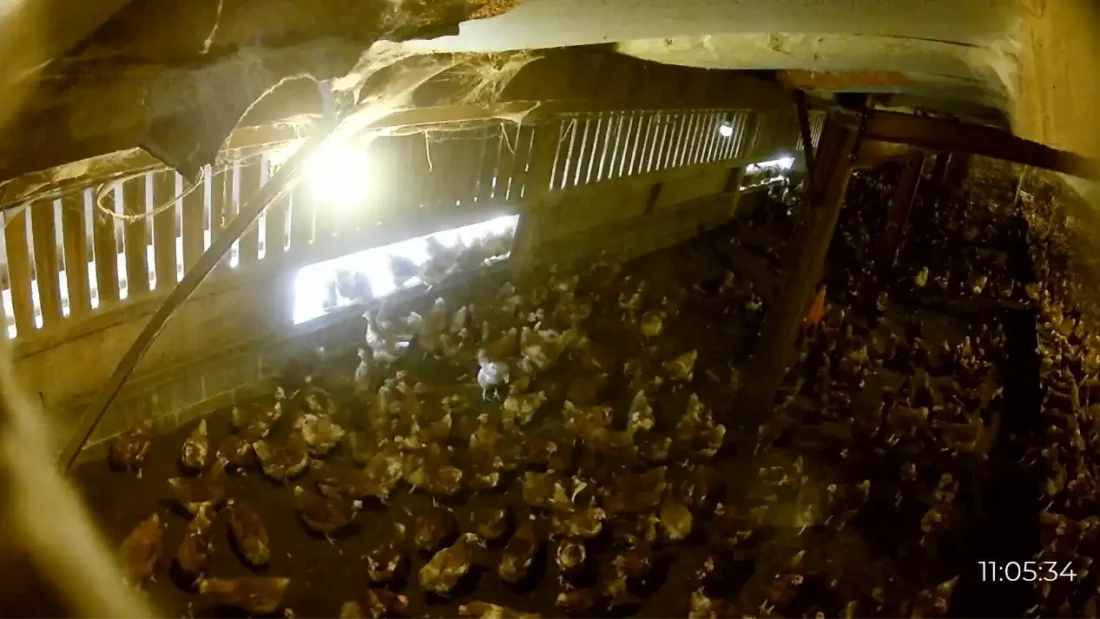
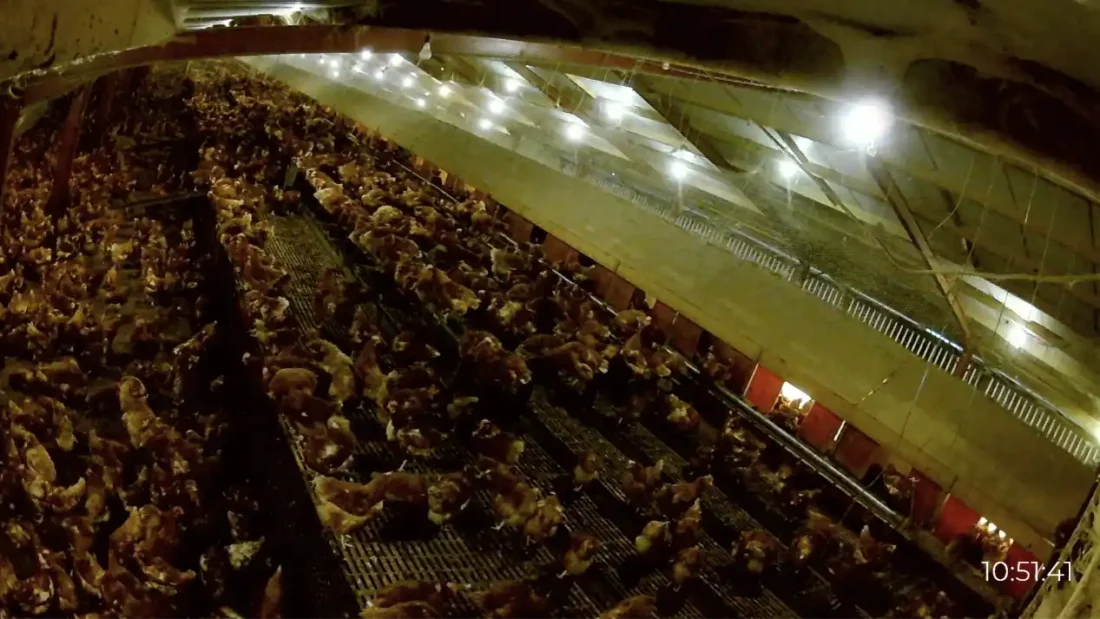
Free-range hens must be allowed access to an outdoor range which allows for natural foraging, scratching and dust-bathing. Despite pop holes along the side of the shed being open for around eight hours a day, providing access to such a range, the hens at Merri-Folde Farm largely remained indoors all day. Most never venture beyond the barn due to an innate fear of predation in barren, unsheltered spaces and crowding near exits where dominant birds may block more timid hens from going outside.
Covert cameras installed by investigators for Viva! Campaigns over a 48-hour period showed no significant reduction in the number of birds inside the shed between the hours of 11:00 and 18:30 when the pop holes were open. This evidence supports research carried out across 169 commercial flocks which found that, in flocks of around 24,000 hens, only 23 per cent were observed outside – meaning that 77 per cent were indoors at the time of observation. Moreover, the authors note that some hens may rarely or never go outside, even when environmental conditions are favourable.
Take action now
The only egg that doesn’t cause suffering is the one left off your plate!
To expose the egg industry, fight for a cage ban and raise public awareness about the realities of ‘free range’, Viva! has launched Cracked. Head to our campaign page to find out more.

See our Top Tips on easy egg replacers. Plus our favourite egg free recipes and baking recipes – from quiche and omelette to eggy sarnies and delicious light cakes!
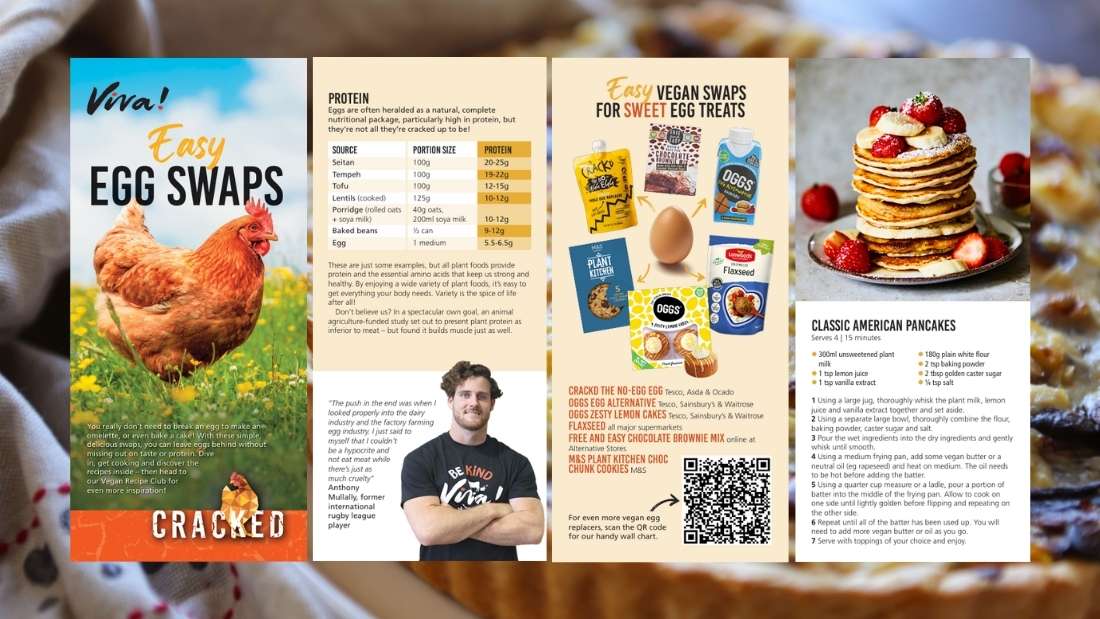
Order our Easy Egg Swaps leaflet, packed with delicious savoury and sweet recipes, protein facts and Top Tips on finding egg replacers for classic recipes.
Summary — Quick overview
SUMMARY
Undercover footage at Merri Fold Farm in Herefordshire once again exposes the reality behind the free range egg label and the failings of food assurance schemes. Viva!’s investigators installed hidden cameras in an RSPCA Assured egg farm using a traditional flat deck system for free range egg production.
They found birds experiencing moderate to severe pecking injuries, leading to excessive baldness, chronic stress and even death. Despite access to a range, the flock largely remained inside the dank dingy shed all day – supporting research across 169 European free range and organic farms indicating that as many as 77 per cent of hens in flocks of 24,000 or more may never leave the house.
KEY FACTS
- Merri Fold Farm is an RSPCA Assured free range egg facility in Herefordshire.
- Hens were found with moderate to severe feather loss injuries.
- Beak mutilations, a practice still permitted in free range systems, were present.
- Despite access to the range, the majority of birds remained inside all day.
FAQ
Do free range hens always go outside?
No. Although free range standards require daytime access to an outdoor range, actual use varies greatly. Research cited by Viva! found that 77 per cent of hens in large free-range and organic flocks of 24,000 birds or more never left the house.
Why does Viva! say free range eggs still cause suffering?
The investigation found hens kept in overcrowded sheds with injuries, feather loss and chronic stress. Beak mutilation is also permitted in free range systems. Viva!’s evidence shows that the free range label does not prevent serious suffering.
You might also like...