
Investigation: Kilforge and Lower Bellamore Farms
The truth behind the free range label revealed
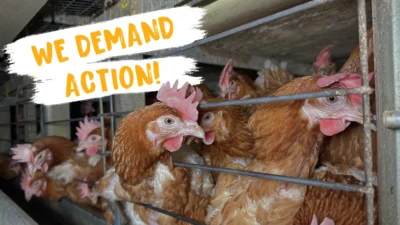
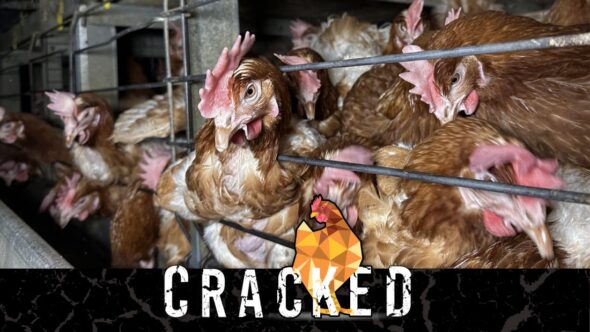
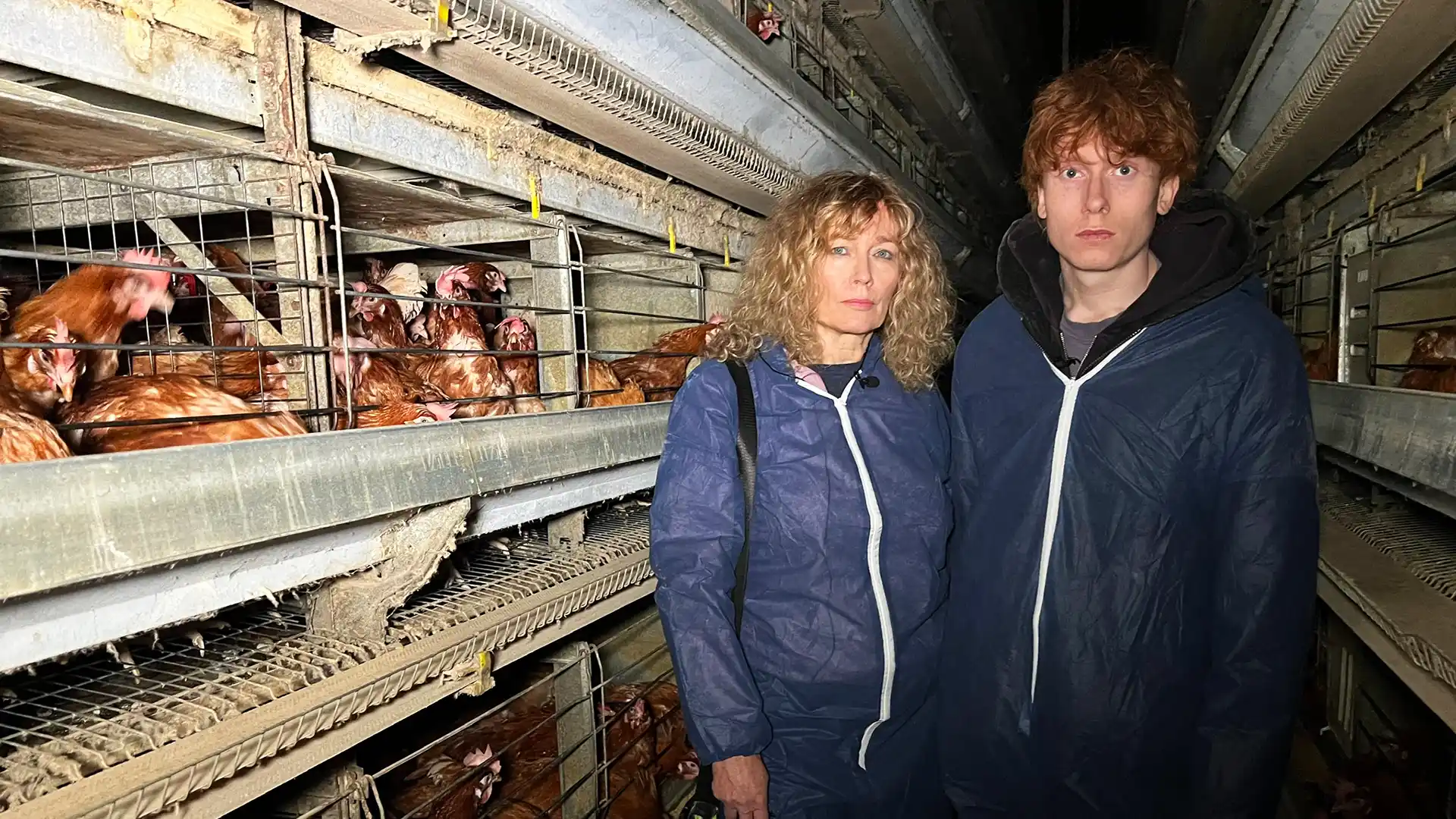
Confronted by multiple tiers of crowded hens, the industrialisation of free range egg production is a far cry from the comforting images of ‘happy hens’ that the industry promotes. Viva!’s founder and director, Juliet Gellatley, and her son Jazz witnessed this first hand whilst undercover with investigators for Viva! Campaigns at two free range egg facilities, all to reveal to consumers what the labels try to hide.
For many shoppers, ‘free range’ suggests a life of freedom where hens roam the great outdoors – dust bathing, scratching, foraging and nest building – but footage exclusively released by Viva! uncovers a very different reality: tens of thousands of birds confined inside overcrowded sheds, struggling with injury, illness and stress.
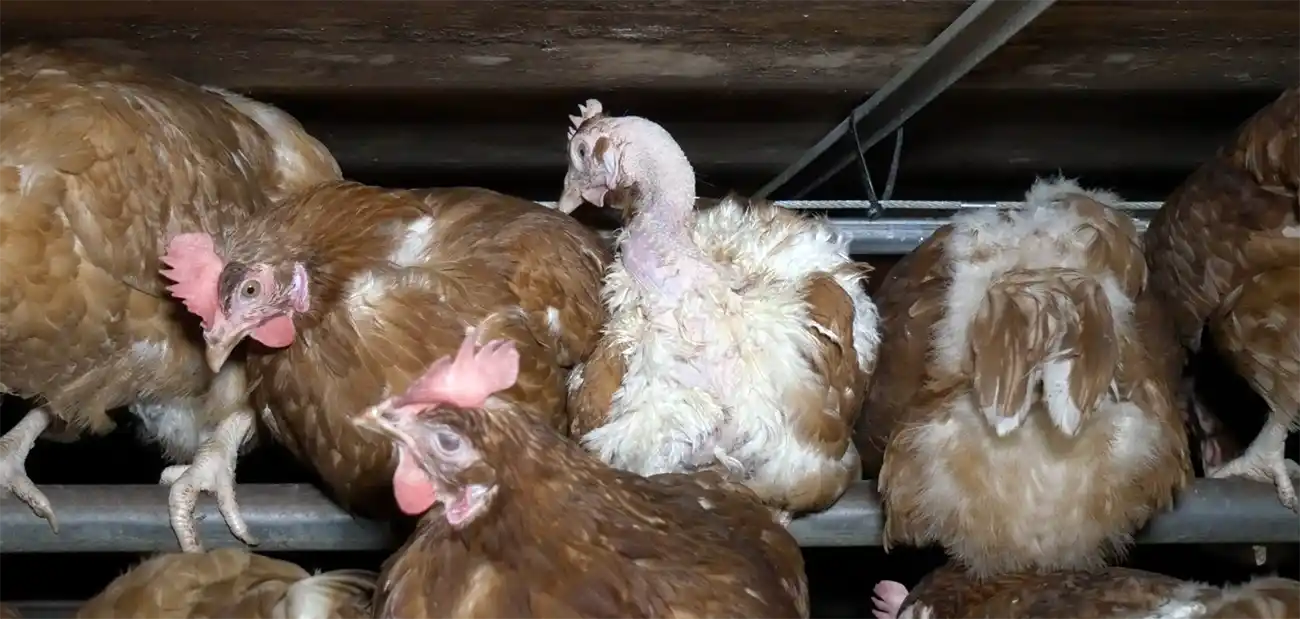
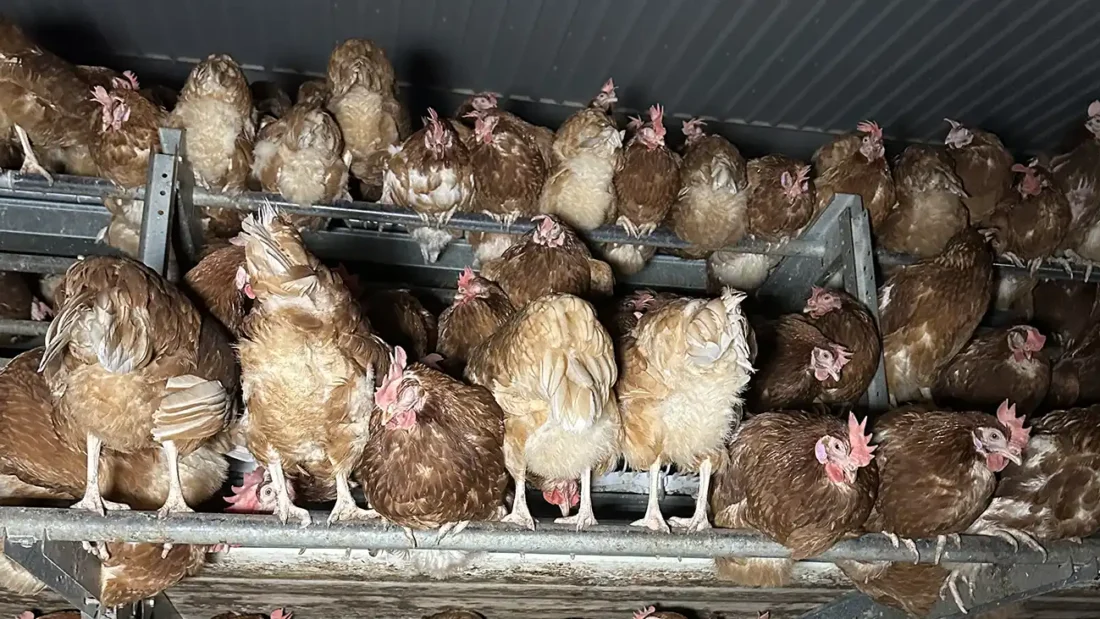
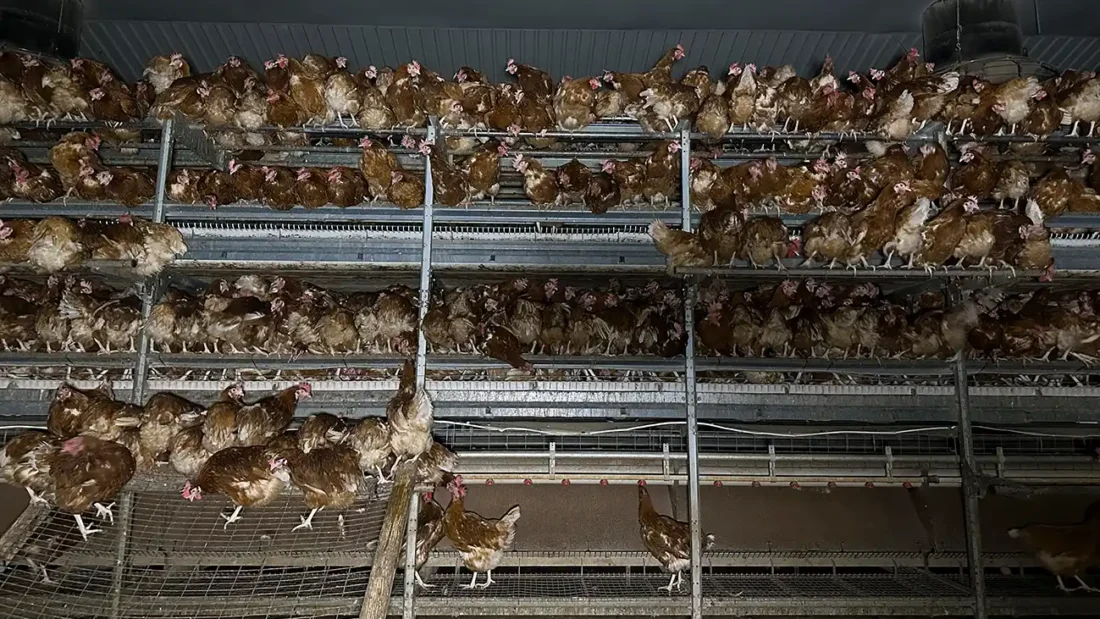
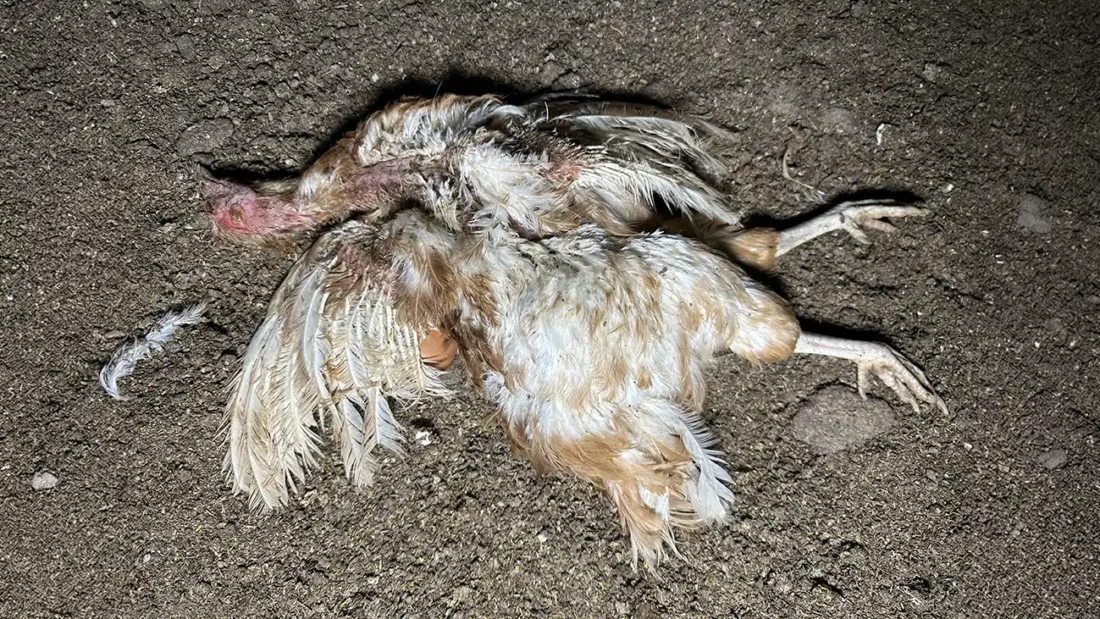
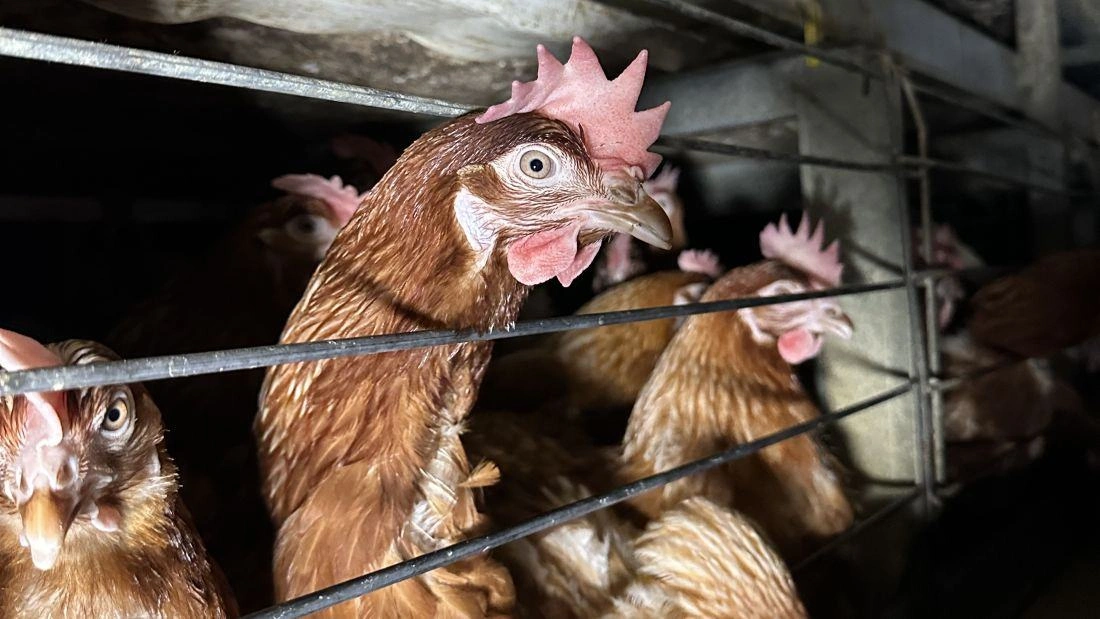
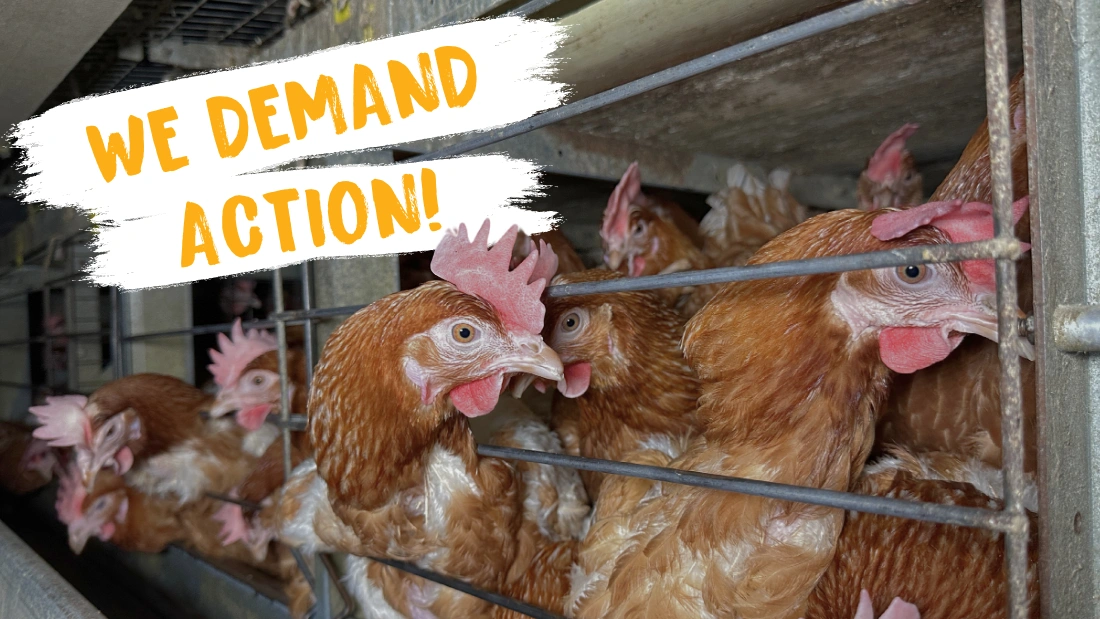
During the visits at Kilforge and Lower Bellamore Farm in Herefordshire, hens were found perching in densely packed sheds, many suffering from moderate to severe feather loss and injuries consistent with chronic stress and injurious pecking. Dead birds were discovered among the living, and some hens appeared too weak or injured to reach food and water.
Both farms supply The Happy Egg Co – the UK’s largest free range egg producers – and are RSPCA Assured.
A life far from free
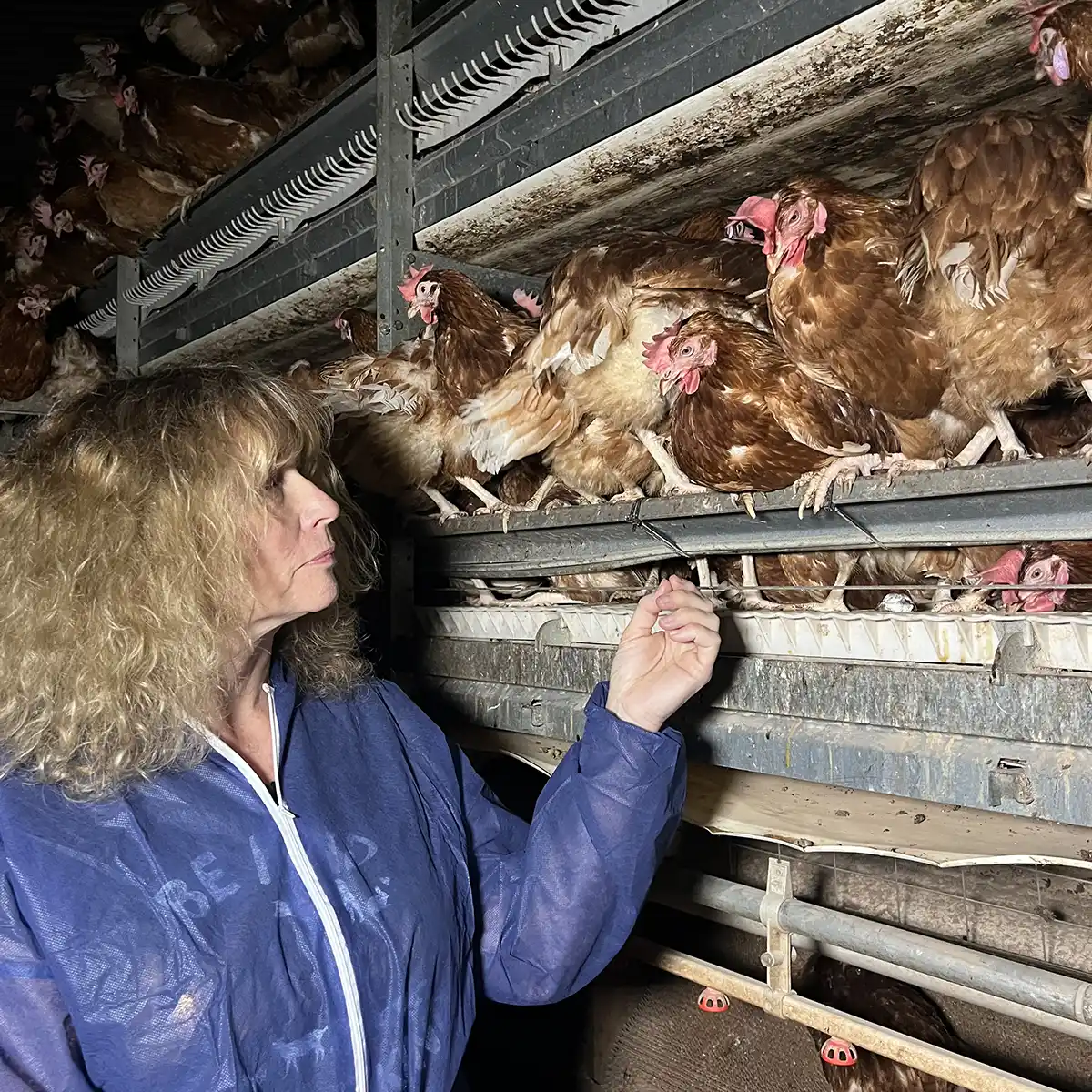
“The term ‘free range’ is used to reassure consumers that these birds live happy, healthy lives outdoors – but the reality we’ve documented tells a very different story. Behind the comforting labels are vast industrial sheds packed with thousands of birds, many suffering from injuries, feather loss and the physical toll of relentless egg production.”
The real crack
Around 75 per cent of British eggs are produced by hens trapped in free range systems, including four per cent of which are certified organic. They’re the most popular consumer choice because the public has been misled into believing these hens live happier, healthy lives – making free range eggs supposedly the more ethical option.
Sadly, this is far from the reality and just like hens confined in other egg production systems, many spend most of their lives in vast, overcrowded, ammonia-laden sheds. Although continuous daytime access to a range is a stipulation of RSPCA Assured standards, the hens’ use of these outdoor spaces varies greatly. Research carried out across 169 free-range and organic farms in Europe found that 77% of hens never left the house in large flocks of 24,000 birds or more. Along with strict hierarchical pecking orders and fear of predators, even in smaller flocks, many hens are discouraged from using the range.
At Lower Bellamore, there are three units, two of which house 32,000 hens each and the third has 16,000 for a combined total of 80,000 hens. Even in the smaller flock, studies indicate that around half of the hens never venture outside, meaning one in two still never feel sunlight.
Once again, the marketing tells a very different story. Kilforge Farm’s own website proudly states: “Our hens roam freely, enjoying open spaces and natural behaviours. We’ve invested in high-welfare tiered housing and continually exceed standard farming requirements to ensure every animal is healthy and happy”. Our team found the vast majority of their 38,000 hens across two poultry houses, remained indoors during the day.
Inside the hen house
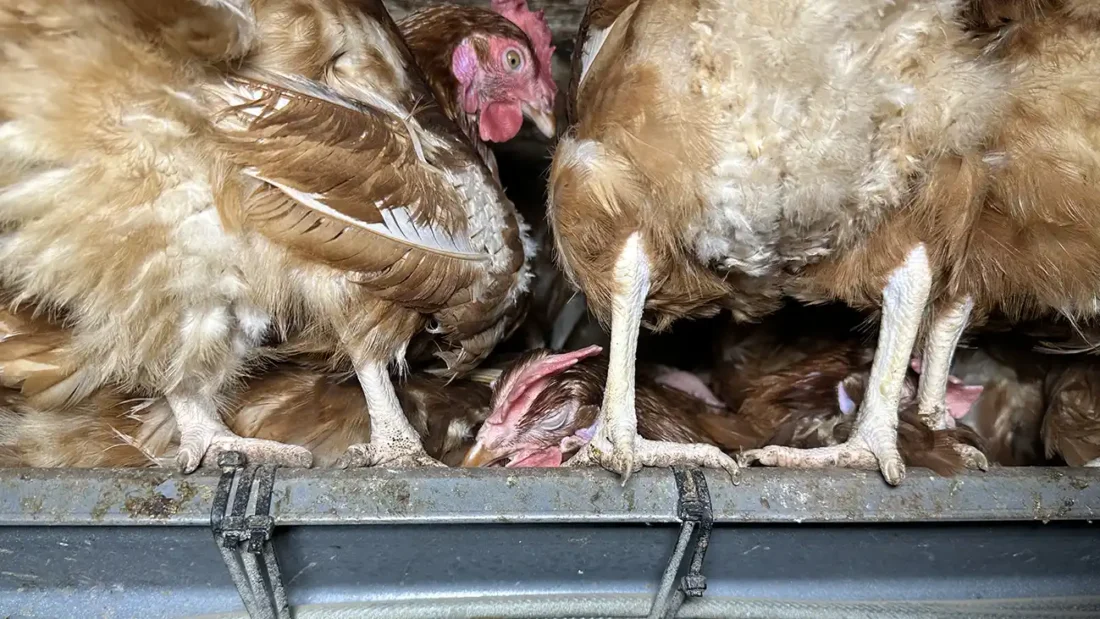
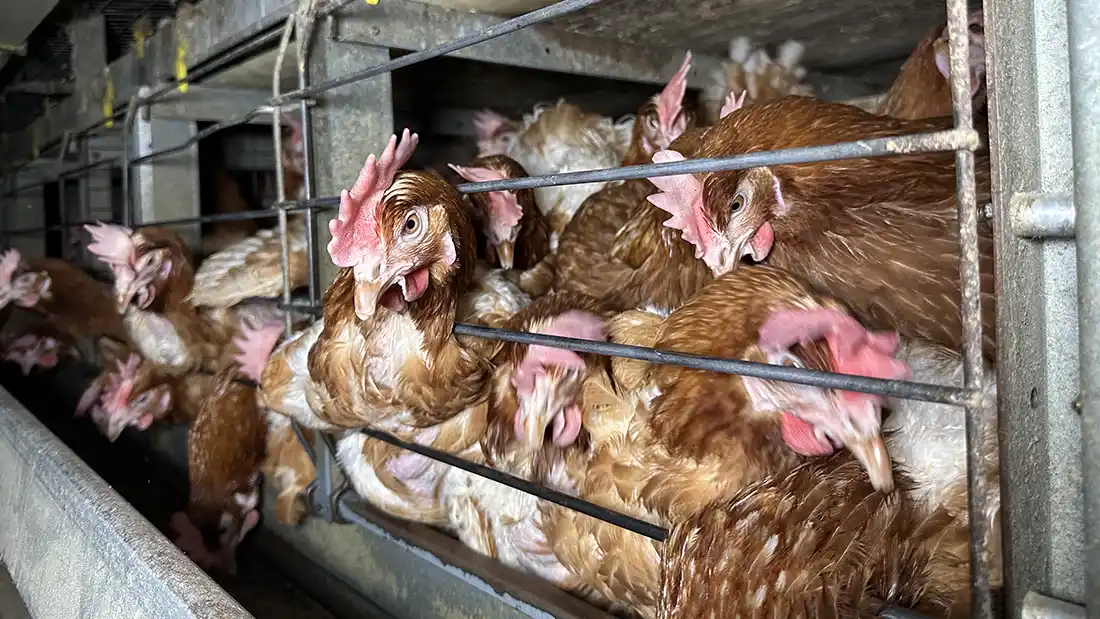
The units our team accessed at the farms were standard multi-tiered systems with separate conveyor belts to carry away the eggs and remove waste. They found tens of thousands of birds crowded over perches – some suffering from moderate to severe feather loss and others with overgrown claws. Beak deformities were also observed such as ‘scissor beak’, caused by a combination of genetic, developmental and environmental factors ranging from hereditary inbreeding defects to nutritional deficiencies.
Even in free range systems, it is permitted to mutilate hens at birth to curb pecking, feather pulling and cannibalism. The hens at Kilforge and Lower Bellamore Farm had had their beaks mutilated. Whilst RSPCA Assured acknowledge the practice of beak tipping can cause acute pain and behavioural changes (such as reduced feeding) it has yet to ban the procedure being carried out with infrared light beams.
Our findings, along with those exposed at Heal Farms, reveal that no matter the system – caged, barn or free range – hens lead a desperately miserably life and remain one of the most abused animals on earth.
Take action now
The only egg that doesn’t cause suffering is the one left off your plate!
To expose the egg industry, fight for a cage ban and raise public awareness about the realities of ‘free range’, Viva! has launched Cracked. Head to our campaign page to find out more.
You may also like
Filming in a typical laying hen farm
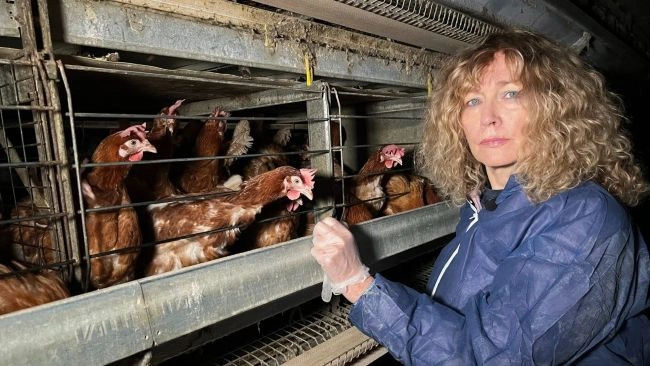
A personal story of how it feels to go undercover in a typical laying hens farm, by Viva!’s founder & director, Juliet Gellatley
Cracked campaign
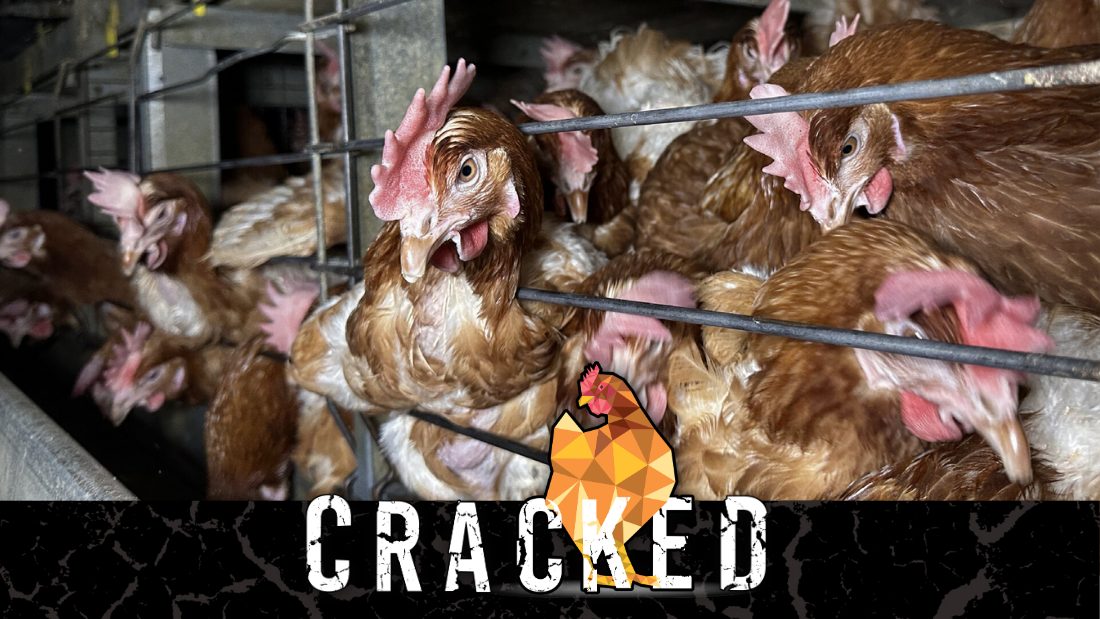
In 2026, Juliet Gellatley, Founder and Director of Viva! and her son Jazz are uncovering the truth behind the myths that abound in the egg industry; from the idea that cages were banned a long time ago to the images conjured up by the clever marketing term ‘free range’.
Secure a Ban on Keeping Hens in Cages
Over seven million hens in the UK are still trapped in cages. The Government has promised consultation – but promises aren’t enough. Urge ministers to legislate now and secure a complete, legally binding ban on cages before 2029.
Investigation: Heal Farms
An undercover investigation by Viva! Campaigns exposes the grim reality of modern egg farming at Heal Farms in Shropshire, where over 120,000 hens remain confined in stacked ‘enriched’ cages despite the 2012 battery cage ban.
Contact Your MP to Ban Cages for Hens
Help Viva! ensure a ban on cages is passed into law in this Parliament by sending our readymade letter to your local MP.
Viva! Cracks the UK Egg Industry
Juliet, founder of Viva! Campaigns, and her son Jazz expose the egg industry and ask you to join us on our journey to end cages and reveal the truth about free range.
Summary — Quick overview
SUMMARY
Undercover footage at Kilforge and Lower Bellamore Farms in Herefordshire exposes the reality behind the free range label. Viva!’s investigators found tens of thousands of hens confined in crowded multi-tier sheds, with many suffering feather loss, injuries and chronic stress. Dead birds were left among the living, and some hens appeared too weak or injured to reach food and water. Both farms supply The Happy Egg Co and are RSPCA Assured.
Free range egg production is presented as humane, yet many hens remain indoors for most of their lives. Research across 169 European free-range and organic farms found that 77 per cent of hens in flocks of 24,000 or more never left the house. At Lower Bellamore, 80,000 hens are kept across three units. At Kilforge, most of the 38,000 hens were also found indoors during the day. The investigation shows that, whatever the system, egg production inflicts routine suffering.
KEY FACTS
- Both investigated farms supply The Happy Egg Co and are RSPCA Assured.
- Hens were found with moderate to severe feather loss, injuries, overgrown claws and beak deformities.
- Dead birds were discovered among live hens, and some birds appeared unable to reach food and water.
- Lower Bellamore houses 80,000 hens across three units, while Kilforge keeps 38,000 hens in two poultry houses.
- The hens at both farms had undergone beak mutilation, a practice still permitted in free range systems.
FAQ
Do free range hens always go outside?
No. Although free range standards require daytime access to an outdoor range, actual use varies greatly. Research cited by Viva! found that 77 per cent of hens in large free-range and organic flocks of 24,000 birds or more never left the house.
Why does Viva! say free range eggs still cause suffering?
The investigation found hens kept in overcrowded sheds with injuries, feather loss, stress and dead birds among the living. Beak mutilation is also permitted in free range systems. Viva!’s evidence shows that the free range label does not prevent serious suffering.