
Scroll to look closer.
Scroll to look closer.
What Do You Really Know About Dairy?
Not good for her. Not great for you.
Good for you
Pure & Natural
Happy Cows
Farm Fresh
None of this holds up to scrutiny.
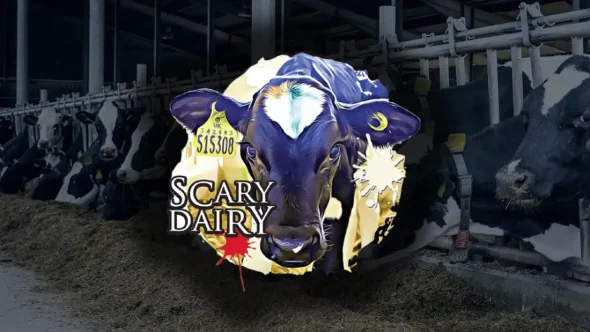
Viva! has created the UK’s first documentary exposing the cruelty, health myths and industry spin behind one of Britain’s most heavily promoted foods.
We are fed a steady diet of propaganda by a £19 billion industry that sells milk as natural, wholesome and kind. But there is nothing kind about taking a mother’s baby, and taking her milk.
She, like every mother cow, will only have a few fleeting hours with her baby.
She, like every mother cow, will only have a few fleeting hours with her baby.
He’ll never see her again.
He’ll never see her again.
Get Documentary Updates
Be the first to hear when What Do You Really Know About Dairy? lands on streaming platforms – plus get the latest screening and campaign updates.
What do you really know?
1
How do cows produce milk?
The same way humans do. They get pregnant, give birth, and produce milk for their baby. A dairy cow is kept in a permanent cycle of pregnancy and lactation: artificially inseminated, milked, impregnated again. She doesn’t produce milk because she’s a cow. She produces it because she’s a mother.
2
What happens to the calves?
They’re taken from their mothers within hours of birth so we can take their milk. Female calves enter the dairy herd. Over 30,000 baby male calves are shot in the head each year in the UK, unwanted because they do not produce milk. Others are killed for veal or beef. The separation causes huge distress to both cow and calf. Dairy farmers document it themselves.
3
Does drinking more milk mean stronger bones?
Milk is sold as natural, and necessary. But humans are the only animals to drink milk after weaning, and the only species to drink another animal’s milk. Cow’s milk is made to rapidly grow a calf, not nourish an adult human. Far from being essential, dairy can bring real health risks: most adults worldwide cannot fully digest lactose; high-fat dairy can raise cholesterol and heart-disease risk; and high intakes have been linked to prostate cancer, acne and other health problems. Strong bones do not require dairy. They require calcium, vitamin D, exercise and a healthy diet.
4
Does the government recommend dairy because it’s healthy?
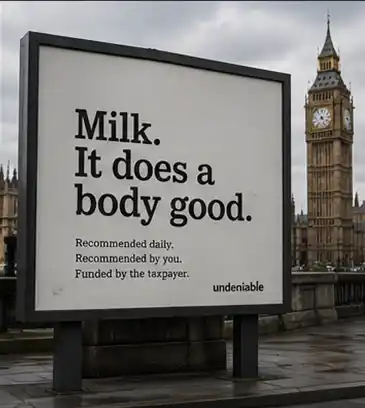
The UK school milk scheme started in 1934, partly to help the dairy industry compete with foreign imports. A government-backed body still exists today whose job includes dairy marketing, running multi-million-pound campaigns specifically designed to stop people cutting back. Those campaigns are partly funded by your taxes. The science and the guidelines are not the same thing.
Presented by
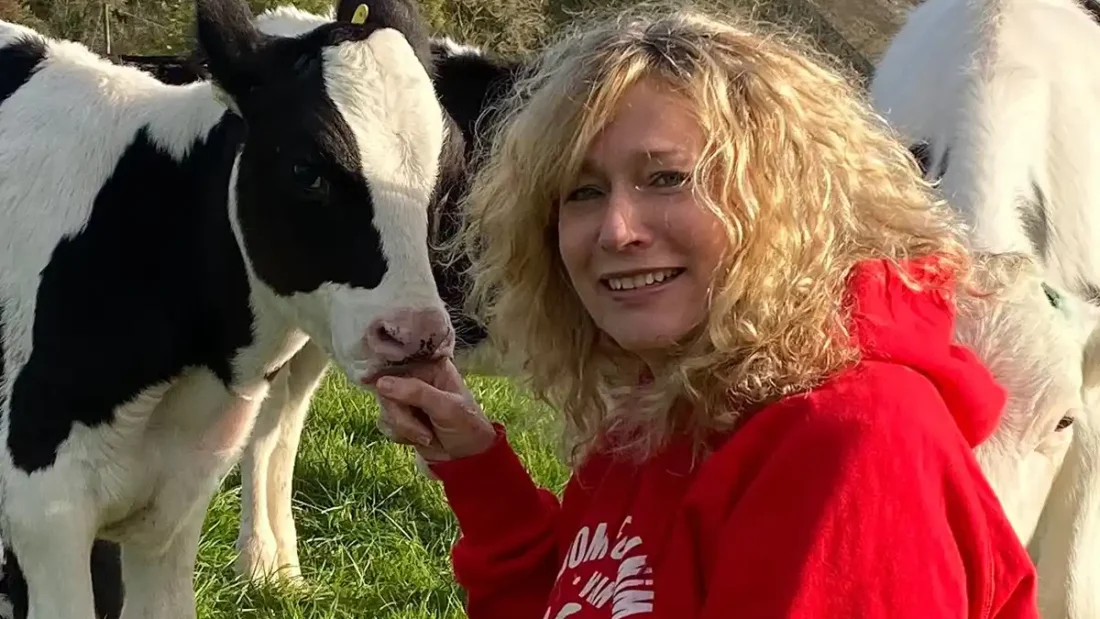
Juliet Gellatley
Founder and Director of Viva!
Juliet has spent more than 30 years campaigning for animals. She founded Viva! in the UK in 1994 and subsequently in Poland and Uganda. It has become Europe’s largest vegan campaigning charity. Since then she has led investigations into some of the biggest names in British food, and exposed what really happens inside them.
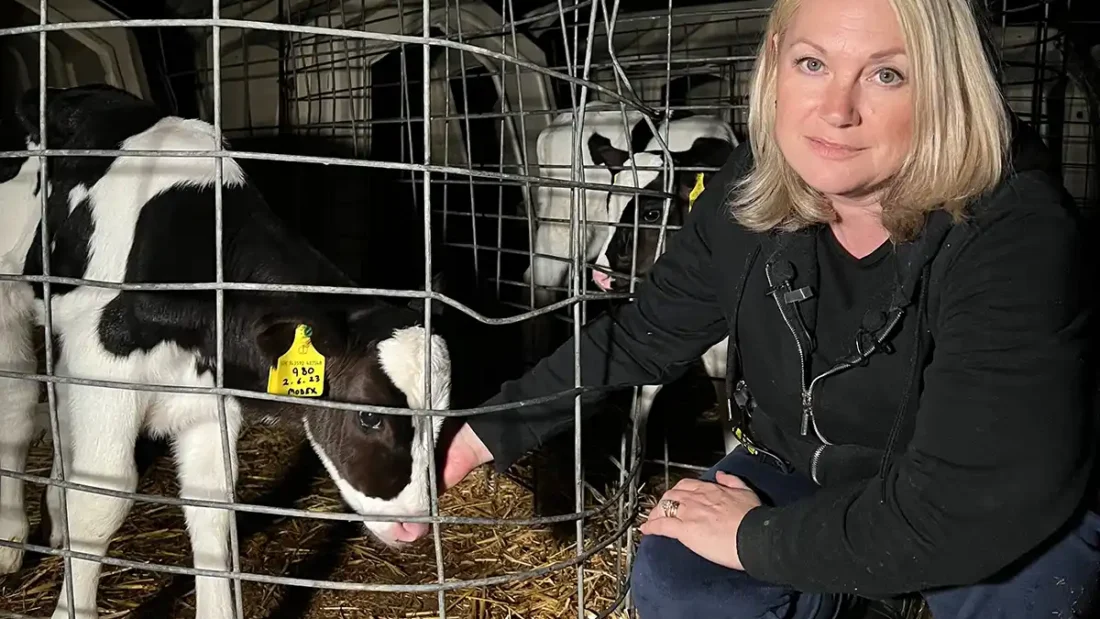
Wendy Turner Webster
TV Presenter and Animal Welfare Campaigner
Wendy is a broadcaster and animal rights advocate who hosted Channel 4’s Absolutely Animals and presented Pet Rescue for seven years. She went vegan at 25 after learning what happens in the dairy industry. She is a patron of Viva!.
Meet the Experts
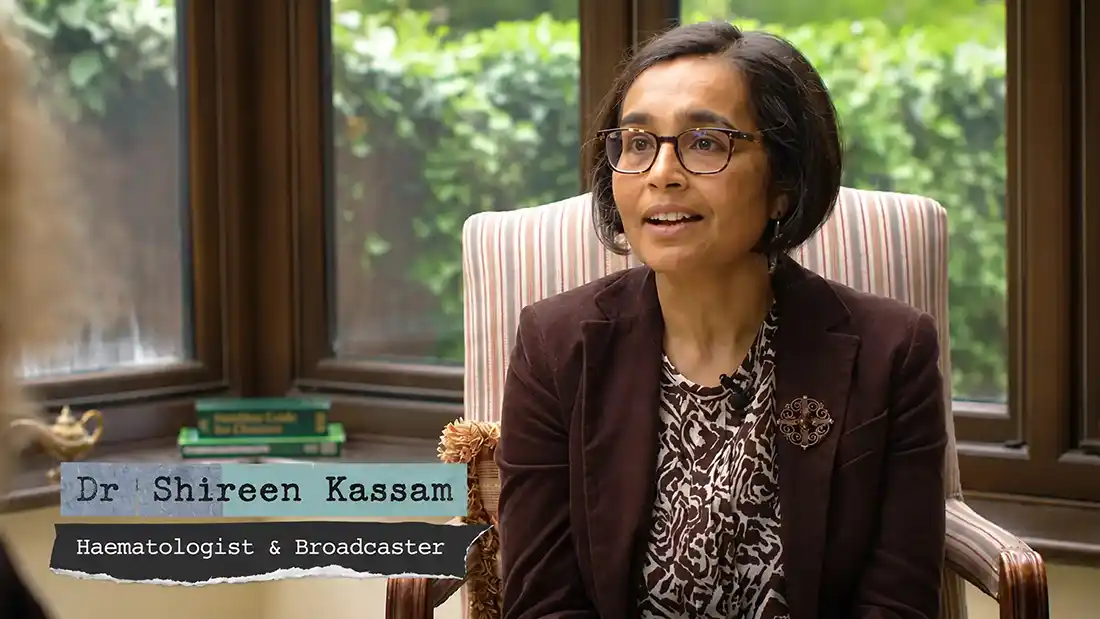
Dr Shireen Kassam
MBBS PhD FRCPath DipIBLM
Dr Shireen Kassam is a Haematologist who practices at King’s College Hospital, London. She is also Professor of Plant-Based Nutrition at the University of Winchester, running the UK’s first accredited course on plant-based nutrition for healthcare professionals. In 2018 she founded the non-profit Plant-Based Health Professionals UK where she is Executive Director. She co-authored Eating Plant-Based and co-edited the textbook Plant-Based Nutrition in Clinical Practice.
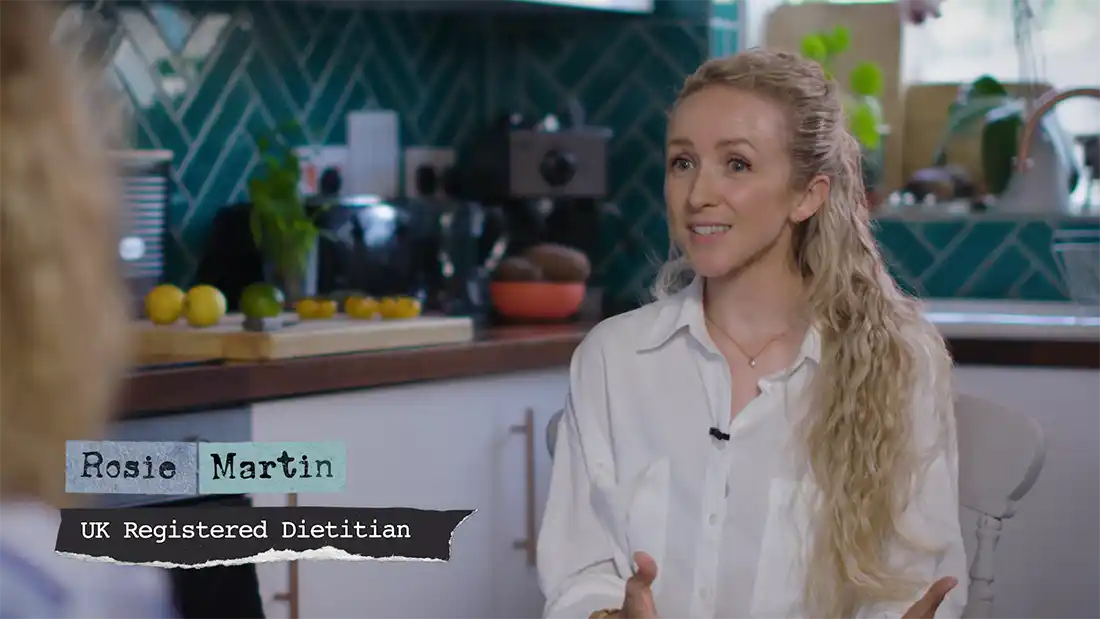
Rosie Martin
BSc MSc RD
A former zoologist, Rosie retrained in nutrition and has since worked across NHS acute and community settings, specialising in gastroenterology and oncology. She is now an NHS Employee Health and Wellness Dietitian and runs her own plant-based practice, Rosemary Nutrition & Dietetics. She is vice-chair of the British Dietetic Association’s Sustainable Diets Specialist Group.
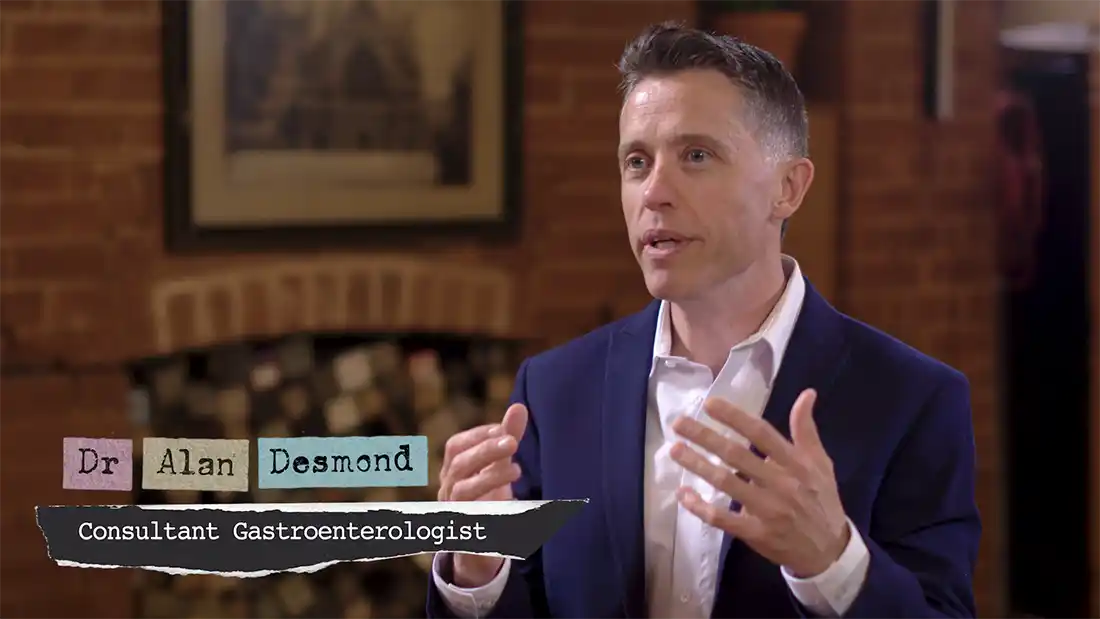
Dr Alan Desmond
MB BCh BAO BMedSc MRCPI FRCP
Dr Alan Desmond is an NHS consultant gastroenterologist and lead clinician at Devon Gut Clinic. He trained at University College Cork in Ireland and is a prominent advocate for a healthier, more sustainable food system. He is the author of two books, The Plant-Based Diet Revolution and What Your Doctor Isn’t Telling You About Food.
Meet the Filmmakers
Written and Directed by Tony Wardle
Filmed and Edited by Gary Thomas
Investigation filming:
Lex Rigy, Ed Shephard and Ellen Cobb
Production Assistant:
Rebecca Page
Graphics:
Pedro Marquez
The UK dairy industry didn’t get this big by accident.
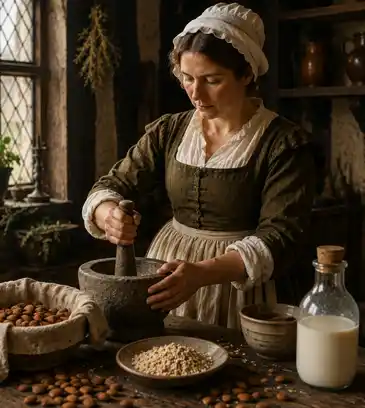
Pre-1900s
MILK NOT MUCH ON THE MENU
Drinking cow’s milk was not new, but it did not become widely consumed across Britain until the late 1800s. It was initially promoted heavily for babies and children before being marketed as essential for everyone. It was known that cow’s milk spoiled easily and carried disease, as pasteurisation hadn’t been invented. In fact, almond milk was widely used in the kitchens of wealthier medieval English cookery.
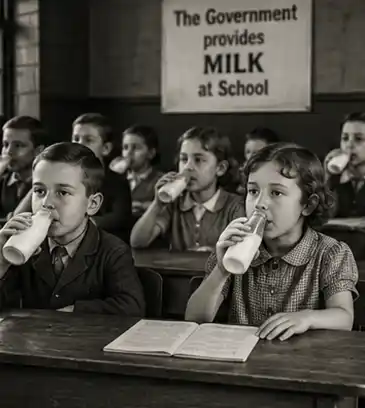
1934
Milk enters schools.
The government puts milk in schools. The dairy industry is losing money to cheaper foreign imports and needs help selling milk.
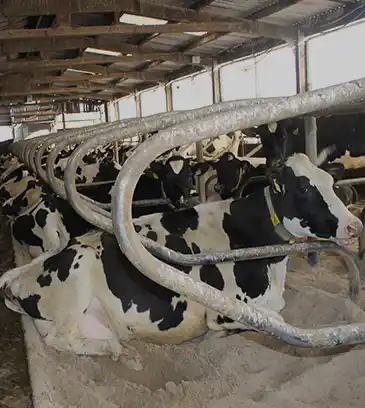
1940s
Farming intensifies.
Milk rationing during the war restricts supply for over a decade. When it ends, farming rapidly modernises and intensifies, setting the template for the decades that follow.
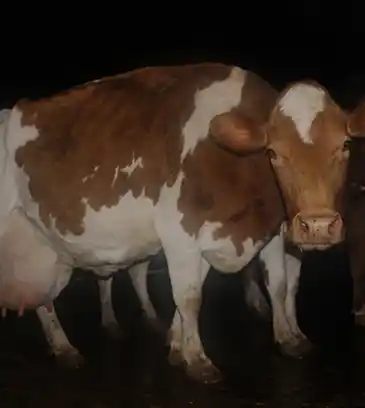
1970s
Cows are pushed harder.
Selective breeding pushes cows to produce roughly twice the milk they did 50 years ago. Their bodies pay for it.
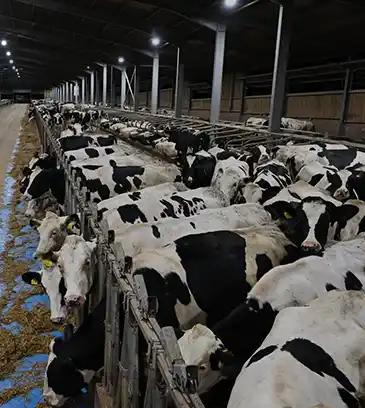
1980s
The field becomes the advert.
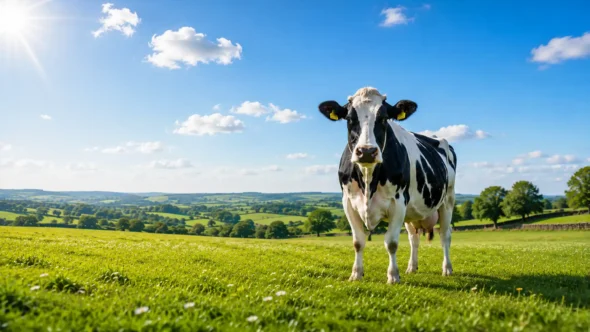
Zero-grazing arrives in the UK. Cows start living indoors permanently. For some, the green field is no longer where they live. It’s where the advert is set.
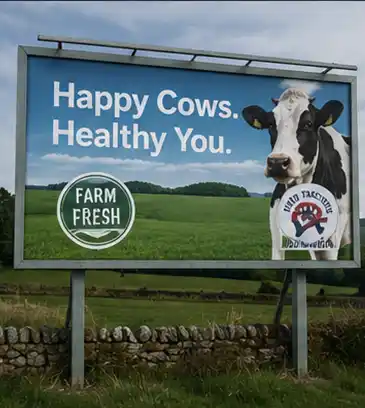
1990s–2000s
The marketing gets louder.
Happy Cows. Farm Fresh. Red Tractor. The marketing gets bigger as the reality gets harder to see.
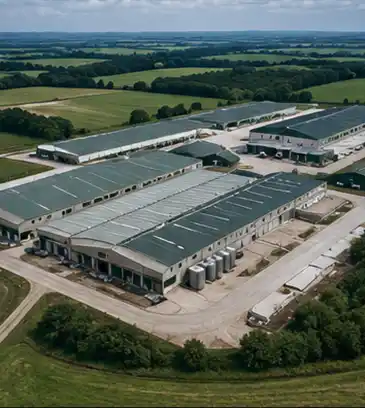
2010s
Mega-dairies arrive.
Mega dairies arrive. Thousands of cows on a single site, no fields, factory farming on a massive scale.
2026
So we had to make a documentary.
The UK still has a government-established body campaigning to promote dairy. The industry spends millions of pounds each year to sell an idealised image of green fields, cared-for cows, and the fiction that cow’s milk is somehow nature’s gift to humans. That is why Viva! made this documentary.
This is what 100 years of “good for you” looks like.
Discover what the dairy industry tries so hard to hide.
The documentary has launched – sign up to hear when it lands on major streaming platforms, find out about community screenings and get the latest campaign updates.
The industry is counting on you not signing up.
Learn more

Why Dairy Harms our Health
Cow’s milk and dairy products are not natural foods for us – we are best suited to drinking breastmilk as babies only.

Why Dairy Damages the Environment
Plant-based milks have a much lower impact on the environment than cow’s milk but did you realise just how harmful dairy is?
How Dairy Cows Are Farmed and Killed
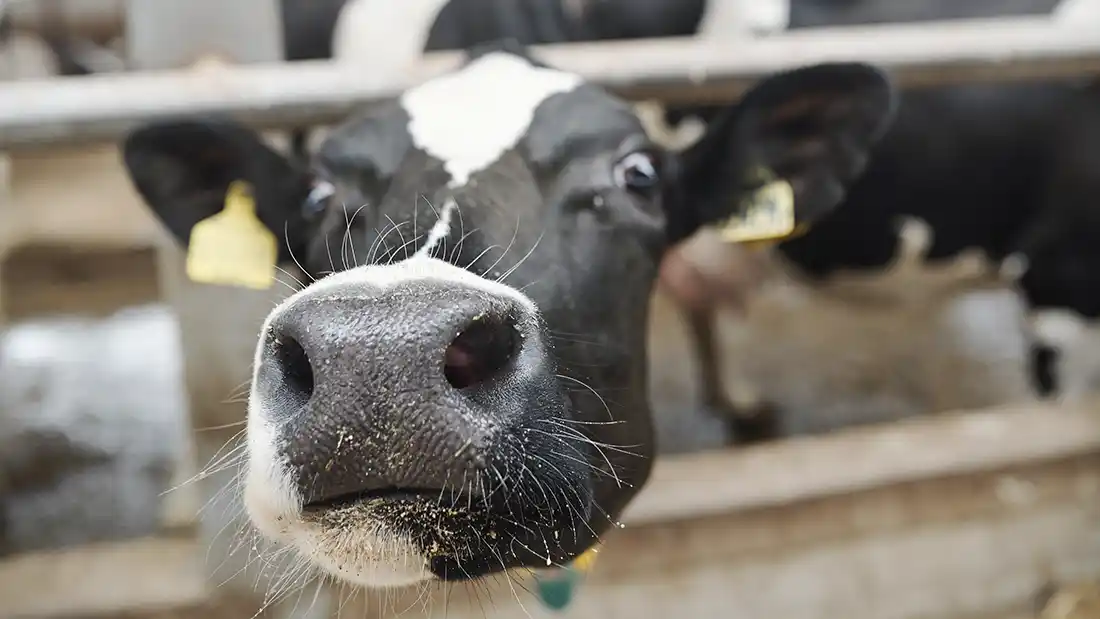
Cows are highly social and intelligent animals. Find out about their nature, how they are farmed and how they are killed.