|
Planet on a Plate
So
what's this got to do with diet? Everything! / Factory
Farming / Water
- The Fountain of Life / Water
Eutrophication / Bio-accumulation / Nitrogen
pollution / Manure / Acid
Rain / Water usage / Top
soil / Energy / Inefficiency
of Meat / Global Warming / Felled
Forests / Desertification / Species
Loss / Wildlife / Fishing / Trawling / Drift
Netting / Purse Seine Netting / Wildlife / Fish
- a healthy option? / Fish Farming / Wildlife / Pollution / Conclusion / References
Introduction
Planet on a Plate is an excellent introduction to the problems wrought
by the traditional Western meat-based diet, and the increasing role that
factory farms play in exacerbating an already dangerous situation. The
production of large numbers of farmed animals under incredibly cruel
circumstances has led to air and water pollution, a huge waste of water
and grain, and a host of public health problems, such as the emergence
of antibiotic-resistant organisms.
Planet on a Plate makes a compelling case that we are individually responsible
for what we eat and the resultant environmental, ethical and health consequences.
There are more than six billion people who share our planet. Ultimately
it is us who have the power in the marketplace to determine which foods
will be produced and sold, and to what extent the industrial model of agriculture
will be replaced. It is clear that the adoption of the Western diet as
a worldwide standard will ensure a planet with more disease, and increasingly
severe environmental problems. Conversely, we know that plant-based protein
is readily available, and it is less costly, both in terms of direct costs,
and in terms of the ‘external’ costs that we are already paying
(eg for subsidies, environmental cleanup and to treat disease).
Planet on a Plate offers insight into how our food consumption patterns
impact on the biosphere and the earth’s ability to sustain a growing
human population. This publication deserves wide circulation and support
- it is a valuable educational tool. Too many of us simply have not seen
the connection between what we put on our plates and the state of our physical
world, and our own health. We have not, for example, related the quality
of our water to the foods that we purchase. We have not related the myriad
of Western ailments to our diets. But the tide is beginning to turn.
The evidence against industrial animal production (‘factory farms’)
specifically, and meat-intensive diets in general is both overwhelming
and compelling. Fortunately, this fact is being widely recognised and changes
are occurring. For example, the veggieburger, once relegated to the status
of a ‘niche market’ is now commonplace in every corner shop
and supermarket. The consumption of soya-based products is rising exponentially
and main stream companies have entered the vegetarian market in a significant
way. Yes, positive change has begun.
While it is true that we have a long way to go, Planet on a Plate will
have enormous impact in hastening the dietary revolution that needs to
occur. We can build the kind of planet, the kind of future that we want.
But we need to act, and we need to get started now.
So
what's this got to do with diet? Everything!
Global warming is increasing, the hole in the ozone layer is getting bigger,
rainforests are disappearing, deserts are expanding, fossil fuels are running
out and seas are dying.
So what’s this got to do with diet? Everything!
The meat, fish and dairy industries directly contribute to all the major
environmental catastrophes facing our planet. The number of farmed animals
in the world has quadrupled in the last 50 years, and this puts an incredible
strain on the environment. Food production no longer nurtures the land;
instead both animals and soil are pushed to their limits and beyond in
an effort to satisfy the voracious appetite of the Western world. It is
an appetite for both food and profit.
The current buzz word is ‘sustainable’ and yet modern agriculture
is anything but sustainable. Rainforests are still being chopped down at
an alarming rate either for grazing or to grow crops to feed to animals.
Crops (mostly grown for animal feed) require pesticides and fertilisers
that then leach into waterways, causing massive pollution. The increased
numbers of animals means more manure, which contributes to acid rain, pollutes
rivers and lakes and renders drinking water unsafe. Soil is pushed beyond
its fertility limits, is not replenished or fallowed and becomes prone
to erosion. Top soil, the very stuff of life, is now a rapidly disappearing
commodity. Oceans are being destroyed by overfishing, which is devastating
entire marine ecosystems, while coastal fish farms are causing extensive
pollution and wildlife decline.
That, in a nutshell, is what confronts us, and it is a pretty depressing
picture. Despite an abundance of scientific evidence that the world’s
life support systems are being seriously eroded, the situation is getting
worse, not better, as the scale of decline accelerates.
Factory
Farming
Farming practices have intensified over the last 60 years and resulted
in a powerful and destructive industry based on ‘intensive’ or ‘factory’ farming.
Its aim is to increase yields while decreasing the cost of production.
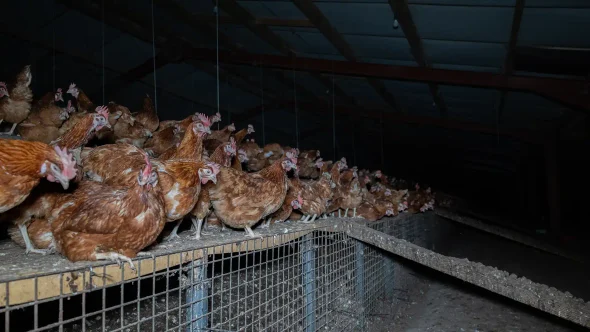
The welfare of animals is rarely considered, so they are kept in tightly
packed and frequently inhumane conditions to ensure maximum profit.
More animals mean more crops are needed to feed them so there is pressure
on agricultural farmers to increase crop yields. Over 70 per cent of the
land in the UK is used for agriculture, and 66 per cent of this is used
as permanent pasture (1) while a high proportion of the remainder is used
to grow crops to feed livestock. In the US a typical cow will consume about
two tons of grain while it is at a feedlot, just to gain 400 pounds in
weight (2).
The world production of grain has more than tripled in the past 40 years,
(during the same period the production of livestock has also tripled (3)),
yet famine is still widespread across the globe. In the developing world,
the share of grain fed to livestock has tripled since mid-century and now
stands at 21 per cent. This percentage is likely to grow further as developing
nations strive to emulate the model of industrial nations, where nearly
70 per cent of grain is fed to livestock.
If the 670 million tons of the world’s grain used for feed were
reduced by just 10 per cent, this would free up enough grain to sustain
225 million people or keep up with world population growth for the
next three years. If each American reduced his or her meat consumption
by only 5 per cent, roughly equivalent to eating one less dish of meat
each week, 7.5 million tons of grain would be saved; this is enough to
feed 25 million people - roughly the number estimated to go hungry in the
United States each day (4).
Forests are cleared, ponds are dried, hedgerows ripped up, precious
water supplies are wasted in order to provide food and grazing
for cattle. This is proven to be an inefficient use of land. Ten hectares
of land will provide enough meat to feed only two people compared to providing
enough maize for 10 people, grain for 24 people or soya for 61
people (5).
Animal feed crops are often products of monoculture - a practice that
involves growing the same single crops in the same field year after year
with no fallowing or rotation. Soil cannot sustain such intense demands,
so chemical fertilisers are used to promote crop growth as a matter of
course. Growing feed for industrial animal agriculture systems changes
land use and harms biodiversity through habitat loss and ecosystem damage
(6).
Improper grazing has caused extensive environmental damage and rangeland
degradation in the Western US; top soil erosion is a serious problem in
the US and in other countries. The application of pesticides and chemical
fertilisers has led to a depletion of organic matter; loss of soil biological
communities, vital for recycling and distributing nutrients.
Fields have been made larger to accommodate bigger machinery. England
has lost over half of its hedgerows - over 330,000 km - since 1947 (7).
This combined with continuous pesticide spraying has decimated the primary
food sources of many birds and small mammals. The RSPB report a 50 per
cent decline in the number of farmland species of bird in Britain and knock
on effects of pesticide applications can be felt throughout the food chain
(8). The constant saturation of our countryside with poisons has had some
unexpected consequences, with some organisms developing resistance to chemicals,
so even more powerful concoctions have been developed.
This chemical warfare has led to a system completely dependant on pesticides.
About 400 different chemicals are available to non-organic farmers and
4.5 billion litres of pesticides are sprayed on to UK land every year (9).
They not only remain in foodstuffs, but accumulate in the soil and leach
into waterways. Some are carcinogenic, while others promote allergies,
birth defects and various health problems (10). Water companies spend £120m
each year removing pesticides from our water (11).
Water
- The Fountain of Life
Water
Eutrophication
The high nitrogen content of fertilisers causes algae to thrive and has led
to algal blooms so toxic that they have killed healthy dogs who have swum through
them. The sheer density of algae can block out sunlight, denying it to other
plants and fish. When the algae dies, its remains are broken down by bacteria
that remove oxygen from the water in the process and can suffocate most life.
This process is called eutrophication and even the seas are not safe from
it. In 1981, ‘83 and ‘86, large quantities of flatfish were
found dead in the North Sea where this process had led to an 80 per cent
oxygen decrease in bottom waters (12). A ‘dead’ zone in the
Gulf of Mexico of up to 7,700 square miles that can no longer support most
aquatic life is linked to nutrients from farm runoff - including animal
waste. This type of pollution is also believed to be linked to Pfiesteria
outbreaks and massive fish kills in the coastal waters of North Carolina
and Maryland (13). Although Pfiesteria, a dinoflagellate, normally exists
in water in non-toxic forms, scientists believe excrement in the water
triggers it to produce toxins. These stun fish, make them lethargic, and
break down the skin tissue - opening lesions and bleeding sores (14). There
are now 150 of these ‘dead zones’ worldwide, and the United
Nations Environment Programme believes they will soon damage fish stocks
even more than overfishing (15).
Farming was the largest source of eutrophication in the UK between 1989
- 1997 with up to 3000 different freshwater bodies affected by algal blooms
(16).
Bio-accumulation
The chemical cocktail sprayed on agricultural land is accumulating and contaminating
reservoirs, rivers, lakes and ponds, and its residues can be found throughout
the food chain. Just as with heavy metals, these residues are increasingly
concentrated the higher up the food chain you go by a process of bio-accumulation.
Chemicals present in waterways are absorbed by microorganisms. Aquatic life
feeds on huge quantities of these organisms, which are then eaten by fish
and the residues they contain are stored in their fatty tissues.
Fish is used as fertiliser or eaten by humans, and the residues continue
to concentrate up the food chain - and the higher you go, the larger the
dose of toxins you receive. A similar process takes place with livestock,
who consume vast quantities of residue-containing food. It is particularly
marked in meat and dairy products, which can contain 14 times more contaminants
than plant foods. The way to reduce your level of ingestion of these chemicals
is to choose your diet from low down the food chain - from plants - preferably
organic plants.
Nitrogen
pollution
The amount of nitrogen used as fertiliser globally is 120 million
tonnes a year, much of which cannot be absorbed by the crops (17).
The excess nitrogen leaches from the soil into underground reservoirs
- the source of much of our water supply. Nitrogen in drinking water
is associated with ‘blue baby syndrome’ - a potentially
fatal destruction of the red blood cells in new-born children (18).
Nitrogen can also transform into nitrites, which can combine with proteins
in food to form nitrosamines, which are carcinogenic - cancer promoting.
Millions of pounds are spent by water companies in the UK to treat the
water in order to bring the nitrate levels down to a legally acceptable
level; this cost is of course passed on to us the customer.
Manure
There is obviously a simple equation - the more animals, the more manure. Both
have increased so dramatically it is estimated that the US cattle herd alone
produces 253,924 pounds of manure a second (19). While in the UK it has been
estimated that the country’s 3 million dairy cows could produce up
to 62 billion litres of excreta a year (20).
Waste from intensive farming also poses an environmental threat. A lot
of manure is stored with water as slurry. This toxic liquid is 100 times
more polluting than human sewage and it frequently leaks into rivers and
streams where it can exterminate all life.
In 1997, the waste from livestock was 130 times as much as from humans
in the US (21). Worldwide, livestock produce 13 billion tones of waste
a year (22). Ammonia emissions from manure can settle on plants and soil,
resulting in toxicity and biodiversity loss; spreading manure on land can
lead to nitrates in groundwater, posing health hazards; manure can accumulate
heavy metals, contaminate crops and increase health risks (23). More than
40 diseases can be transferred to humans through manure (24).
Acid
Rain
Stored slurry contains large amounts of ammonia, which becomes a breeding ground
for bacteria. Their action creates acid, which evaporates, and then combines
with nitrous oxide from fertilisers and industrial pollution to form acid rain.
Acid rain is extremely destructive and sours soil, destroys forests and renders
once prolific waters lifeless. After the burning of fossil fuels, animal manure
is the second biggest cause of acid rain.
Water, wheat and beef
All farming needs water. But the amount of water needed to produce
a pound of beef is far greater than that required for a pound
of wheat.
Amount of water required to produce 2.2 pounds of wheat:
 2,113 pints (1kg of wheat: 1,000 litres)
Amount of water required to produce 2.2 pounds of beef: 
211,000 pints (1kg of beef: 100,000 litres) |
Water
usage
Earth is two-thirds water, and only 0.06 per cent of this is fresh water and
even less of this is available as drinking water.
Animal agriculture uses huge amounts of water, energy and chemicals, often
with little regard for the long-term adverse effects. Between 1960 and
2000 worldwide usage of water doubled (25). Agriculture uses 70 per cent
of all water, while in many developing countries the figure is as high
as 85 to 95 per cent (26). Many irrigation systems are pumping water from
underground reservoirs much faster than they can ever be recharged.
The production of meat is an inefficient use of such a vital limited resource.
It takes 1000 litres of water to produce one kilogram of wheat, yet it
takes 100,000 litres of water to produce one kilogram of beef (27). The
University of California studied water use in their state, where most agricultural
land is irrigated, and said it uses between 20 to 30 gallons of water to
produce vegetables such as tomatoes, potatoes and carrots to create an
edible pound of food. It takes 441 gallons of water to make a pound of
beef (28).
Fresh water, once a seemingly abundant resource, is now becoming scarce
in many regions and that poses a real threat to the stability of the world.
Numerous countries are in dispute over water supplies, and the seeds of
future wars are clearly beginning to germinate.
Top
soil
Top soil is the fertile upper layer of soil without which
almost nothing will grow. It is essential for life and yet it is
being eroded at an alarming rate through over-use and denaturing
due to the excessive use of fertilisers and pesticides.
The US has lost half of its top soil since 1960, and continues losing
top soil 17 times faster than nature can create it (29). Its structure
has been so distorted that wind and water can simply carry it away (30).
With luck, top soil is replenished at a rate of 2.5 centimetres every 100
years.
Some 85 per cent of top soil loss is attributed to livestock rearing (31).
Around the world, top soil is being eroded at rates 16 to 300 times faster
than it can regenerate (32). Globally it estimated that 24 billion metric
tons of fertile soil is lost each year, an amount equal to the entire agricultural
land area of the US (33).
Energy
Intensive farming requires large amounts of energy: fuel to run huge combine
harvesters, tractors and other machinery; energy to produce and transport
pesticides and fertilisers; and fuel to refrigerate and transport perishable
produce across the country and around the world. Fossil fuels are required
throughout this process and their use contributes to ozone depletion and
global warming.
Inefficiency
of Meat
Animals use the energy they gain from food to move around, breathe, grow,
keep warm and perform all their bodily functions - just as we do. Only
six per cent of their energy intake ends up being stored in flesh or milk.
For every 16 pounds of high-protein food fed to cattle, only one pound
of meat results. In terms of food energy, it takes 24 calories in the form
of grain or soya to produce a single calorie of beef (34). In fact, the
more a cow is milked, the more grain concentrate she needs (35).
Looked at from a global perspective, livestock production represents
an obscene waste of food and a betrayal of the world’s poor.
High quality food such as wheat and soya, which could feed humans,
is being fed to animals and largely wasted. The amount of feed consumed
by the US beef herd alone would feed the entire populations of India
and China - two billion people. As factory farming is spread to these
and other developing countries, the implication for world food resources
is deeply depressing. As always, it will be the poorest who pay the
price in disease and famine.
A vegetarian - or even better a vegan - diet is capable of feeding the
entire population of the world - and then some (36)!
Global
Warming
Carbon dioxide, methane and nitrous oxide are naturally occurring gases
in the atmosphere. They act like the glass of a greenhouse by trapping
the sun’s heat and reflecting it back to earth. This phenomenon is
what makes the world habitable, keeping the atmosphere about 33ºC/92ºF
higher than it would otherwise be. But animal agriculture adds significantly
to global warming. Scientific American (9/97) reported that growing feed
for livestock requires intense use of synthetic fertiliser, releasing nitrous
oxide - a far stronger greenhouse gas than CO2. Producing feed and heating
buildings that house animals uses fossil fuels, emitting CO2; decomposition
of liquid manure releases larger amounts of methane into the atmosphere
as well as forming nitrous oxide (37).
Better out than in? Maybe not. More cattle also means more belching and
this is now the second largest contributor to global warming after fossil
fuel burning. Worldwide, livestock accounts for 16 per cent of all global
warming emissions of methane (38). Methane is 20 times more effective at
warming the globe than CO2, which it joins above the earth (39).
The concentration of carbon dioxide, methane or nitrous oxide has, until
now, been determined by a complex interaction between oceans, forests,
soil, ice-caps and clouds. These natural changes have taken place over
millions of years. However, the last few decades have seen an extraordinary
explosion in these three greenhouse gases. The result has been global warming.
All 10 of the hottest years on record have occurred in the last 15 years.
Warmer weather might sound great to those who live in cold climates, but
such dramatic changes could actually mean disaster. Britain’s Hadley
Centre for Climate Change has predicted dramatic events, including, for
example, flooding. As the polar ice caps melt and the world’s oceans
warm and expand, flooding will be a global problem. The number of people
on coastlines subject to flooding each year will rise from 5 million at
present to 100 million by 2050 and 200 million by 2080. Vast tracts of
land, about one third of all agricultural land and some island countries,
will disappear under water permanently as sea levels rise. Mass migrations
of millions of landless people present a potential environmental and humanitarian
disaster as well as threatening serious conflict.
Another 30 million people will be hungry in 50 years because large parts
of Africa will become too dry to grow crops. An extra 170 million people
will live in countries with extreme water shortages.
Malaria, one of the world’s most dreaded diseases, will threaten
much larger areas of the planet (40).
The tundra regions of the world contain within their frozen soil an incalculable
amount of methane. As the soil defrosts with increasing temperatures, billions
of tons of gas may be released to add to the global warming. The more the
earth warms, the more gas will be released. This is called positive feedback
and could mean that the greenhouse effect becomes unstoppable with unknown
consequences.
Felled
Forests
Rainforests are vitally important to life on Earth. They are invaluable
in storing large reserves of CO2. Slash and burn eradicates all growth
and unlocks centuries worth of stored CO2 in only minutes when the wood
is burned. The released gas floats upwards and contributes to global warming.
Tropical deforestation is responsible for approximately 20 per cent of
total human-caused carbon dioxide emissions each year (44).
Every year between 70,000 and 170,000 square kilometers of tropical forests
fall to chain saws, machetes, bulldozers and flames - that is the equivalent
of 21-50 football fields per minute (45). Rainforests are chopped down
initially for the large trees, which are used for timber. The rich tapestry
of saplings, seedlings, shrubs, bushes, plants and smaller trees are cut
to the ground and burned - as are many of the creatures who depend upon
them. The barren land which results from slash and burn is largely used
as grazing or growing feed for livestock cattle (46). In 1996, the US imported
4.2 per cent of our 2.07 billion pounds of imported beef from Brazil; that’s
over 80 million pounds of beef (47).
One of the most affected areas is Costa Rica, which was once almost entirely
clad in trees. In the last 20 years, nearly 80 per cent of its forests
have been cut. Just one hamburger made from Costa Rican beef is estimated
to cost the life of a large tree, 50 saplings and seedlings of some 20-30
different species, hundreds of species of insects and a huge diversity
of mosses, fungi and micro-organisms (48).
When given an economic value it has been estimated that sustainably harvested
for fruits and latex one hectare of the Peruvian Amazon rainforest is worth £3,762.
The same area of land is worth only £551 as clearcut timber and a
paltry £81 as pasture (49).
There is much talk about planting more trees to replace those cut but
it is only a partial answer. Rainforests developed over thousands of years
and constitute the richest, oldest, most productive and most complex ecosystems
on Earth. If deforestation continues at current rates, scientists estimate
nearly all tropical rainforest ecosystems will be destroyed by the year
2030 (41). Old growth forest is characterised by stands of large old trees
which contain large amounts of carbon, provide habitat for many species,
protect soils and conserve nutrients, and have substantial recreational,
spiritual and aesthetic value (42). They also are a source of high-value
timber; 80 per cent of old growth forests have been destroyed globally
and less than 5 per cent remain in the US (43).
As well as the impact on animals, insects, plants and birds, around the
world approximately 60 million people live in forests and depend on them
for subsistence. For these indigenous peoples the forests are their homes,
a source of survival and spirituality, and their culture. The security
of their communities rests with the security of the forests, and so their
deep knowledge of them works to protect and sustain them; however with
the current rate of deforestation and little protection for such peoples
the future looks uncertain. They already face the erosion of their traditional
rights of access and use, displacement of their homes, threats to their
livelihood, disregard and ignorance of their property, traditions, values,
and persecution from authorities. These pressures are expected to intensify
as the demands on forests increased (50).
It is not just rainforest that has been lost. Habitats all around the
world have been adversely affected by agriculture. In the UK, more than
95 per cent of original woodlands have been destroyed - most of that land
is now used to graze or grow feed for farmed animals. Britain once a beautiful
and varied landscape has become a monoculture of grains.
Desertification
According to the United Nations, deserts are growing at the rate of 193,192
square kilometres every year - an area the size of England and Scotland (51).
This decline of once fertile soil into desert land is called desertification,
and affects over one-quarter of the world’s land area (52). One of
the major contributors to the process is cattle ranching and the grazing
of other livestock such as sheep, camels and goats on the margins of existing
deserts.
Forty per cent of global agricultural land has been degraded in the last
century from problems including compaction, nutrient depletion and pollution
(53). Ex-rainforest land is particularly prone to deterioration as the
soil is comparatively thin. It has adapted over thousands years to support
the forest with its network of roots, and these in turn hold the soil together.
The effect of cattle grazing, with their heavy bodies and hard hooves,
is to compact the soil, break down its structure and reduce its fertility.
The loss of trees also leads to a reduction in water vapour, which prompts
climate change and reduces rainfall levels. The eventual end result of
these different factors is desert. Unfortunately, when the soil becomes
dry, lifeless and unsuitable for cattle, the ranchers move on and start
the process again somewhere else.
The most effective way of slowing down desertification is to reduce overgrazing,
deforestation and destructive forms of planting and irrigation (54). It
is widely acknowledged by many organisations that intensive farming practices
are unsustainable and environmentally damaging. The WWF recommend in their
Living Planet 2000 report that people reduce their intake of dairy and
meat products in order to reduce grazing pressure on land (55).
Species
Loss
The scale of deforestation means that thousands of species, possibly millions,
are losing their habitat at an accelerating rate. The richly abundant and often
unique flora and fauna of the forests are disappearing. Every hour, a further
three plant or animal species become extinct (56). It is estimated that at
least one half of the world’s species live in the rainforests.
Many rainforest plants have valuable medicinal properties and contain
the only known cure for certain diseases. They are used to treat cancer,
strokes, heart disease and many other illnesses. By wiping out the rainforests
we are possibly destroying an abundant supply of new drugs capable of curing
major diseases. Many of the species being destroyed are unknown to humankind.
Wildlife
Furthermore, most wildlife is seen as competition to farmers. Many
species are not only killed by pesticides and the purposeful destruction
of habitats such as woodlands, marshlands and ponds, but are also
shot, hunted or trapped. In the UK, foxes, rabbits, badgers and
increasingly once again wild boar are considered a threat to the
farmer’s income. In the USA each year the federal government
hunters and trappers kill about 100,000 coyotes, bobcats, feral
pigs and mountain lions. They are shot from aeroplanes, caught
in steel-jaw leghold traps or neck nooses, or poisoned with cyanide
(57). This number does not include the many animals mistakenly
caught in traps or the animals killed by the landowners themselves.
Fishing
Total fishery production in 2001 was reported to be 130.2 million tonnes,
of which 37.9 million tonnes was from aquaculture (58). As the consumption
of seafood increases so does the global concern for the health of the oceans
and its inhabitants - as well as the other effects of the industry. Countless
birds and other animals suffer and die from injuries caused by swallowing
or becoming entangled in discarded fishing hooks, monofilament line, and
lead weights (59).
Commercial fishing of the oceans has decimated both fish stocks and the
aquatic environment. Herring, cod, hake, redfish and mackerel are the fish
species that are most commonly exploited commercially across the world
- some of which are close to becoming extinct as a result of overfishing.
There are several methods used for commercial fishing:
Trawling
Trawlers, some the size of football fields (60), work non-stop across the oceans’ fishing
grounds, backwards and forwards in a never-ending process. They scoop up huge
quantities of fish and destroy the sea bed, where 500,000 - 100 million creatures
are estimated to live (61). Nets like huge tapering bags are used, the mouths
of which can be 224 ft wide - large enough to hold 12 Boeing 747 aeroplanes!
(62) Their entrances are kept open by huge, metal-bound trawl (otter) boards
that can weigh tons. They are dragged across the ocean floor and crush and
grind to destruction anything in their path.
A variant is the beam trawl, where a long metal beam is fixed to the
underside of the net’s opening. Floatation devices keep the mouth of the net open
and dangling from the beam are ‘tickler’ chains, which drag along
the bottom forcing almost every creature from its hiding place into the mouth
of the net.
Between 60 and 80 million tons of fish are caught from the seas of the
world each year by trawling. The total for all methods is about 100 million
tons. Fish that are too small, non-target species or species with no commercial
value are discarded. This can include almost every creature from the sea
or sea bed - sea urchins, brittle stars, crabs, dolphins, seals and sea-birds.
As shrimp nets are dragged through the water, they catch every living
creature in their path - trapping both shrimp and unwanted fish and sea
turtles. Sea turtles caught in shrimp nets are held under water until they
drown. Thousands of endangered sea turtles are killed in this way every
year (63).
The ecological balance of oceans is disturbed when the catch rate exceeds
the natural reproduction rate. This is overfishing. The Food and Agriculture
Organisation report that 11 of the world’s 15 most important fishing
areas are in decline and 60 per cent of the major fish species are now
either fully or overexploited. Between 30 and 40 per cent of the biomass
of exploited fish species are removed from the North Sea each year (64).
Drift
Netting
Drift nets hang like curtains from the surface of the sea. Constructed from
thin but strong monofilament nylon, they are virtually invisible to all sea
life. They can be up to an incredible 30 miles long. The target fish are often
tuna, but as dolphins tend to congregate where tuna swim, they too die in large
numbers. Rays, sharks, sea birds and small whales all become entangled in these
ghostly nets.
It is not uncommon for nets to become detached in rough weather and float
away to kill large numbers of animals and birds. When weighed down with
dead bodies they sink to the bottom, but once the carcasses have rotted,
they float back to the surface and continue their destruction. Thousands
of dolphins, porpoises, small whales, sea lions, and walruses are killed
by drift nets each year (65). After years of campaigning, drift nets were
banned by the EU from January 1 2002 in the Atlantic and the Mediterranean.
Sadly, the Baltic Sea was exempted after lobbying by Denmark, Sweden and
Finland who continue to use this destructive fishing technique with their
350 vessels.
Purse
Seine Netting
A purse seine net is suspended from the surface, the bottom of it many fathoms
below the surface. The boat pays out the net in a complete circle so the effect
is like that of a tube of netting hanging down, surrounding the target shoal
of fish. A kind of drawstring at the bottom of the net is pulled tight so the
net represents a purse with an open top but a closed bottom. The top is then
also closed and the net hauled inboard. Tuna are the main target, but again,
dolphins also get trapped and drown.
Wildlife & Fishing
Many birds, including razor-bills, cormorants, and puffins, feed mainly on
sand eels, sprats and small herrings, all of which are heavily exploited
by fishermen. In 1994, overfishing in the North Sea was believed to have
caused about 100,000 birds to starve, and the problem seems to be worsening
(66).
Commercial fishermen often blame the low numbers of fish on local wildlife
and demand culling to solve the problem. As a result, seals have been killed
in their thousands - 51,000 in Russia and in 2004 over 300,000 in Canada,
and there are similar demands being made in Britain. In February 1999,
a proposal was presented to the US Congress by the National Marine Fisheries
Service to allow fishermen and ‘resource’ managers to shoot
Pacific harbour seals and California sea lions along the coasts of California,
Oregon and Washington to protect the dwindling stocks of salmon and steelhead,
and to reduce competition for fish between these pinnipeds and humans (67).
Fish
- a healthy option?
The flesh of fish often stores dangerous contaminants, such as
PCB’s, suspected of causing cancer, nervous systems disorders,
and foetal damage; dioxins, also linked to cancer; radioactive materials
like strontium 90; and such toxic metals as cadmium, mercury, lead,
and arsenic, which can cause health problems ranging from kidney damage
and mental retardation to cancer (68). (See the VVF Fishing for Facts
report at www.vegetarian.org.uk)
Fish
Farming
Overfishing and the subsequent collapse of many commercial fisheries has
led to an increase in fish farming. The growth of the number of fish farms
has adversely affected wild fish populations. Numerous fish farms are based
in coastal regions of the world. In the Scottish lochs, where many of the
UK’s fish farms are found, there is a slow exchange rate of water,
lochs containing fish farms tend to have unnaturally higher nutrient levels
and eutrophic conditions which inevitably lead to more frequent algal blooms
(69).
There has been a dramatic rise in the amount of factory farmed salmon
produced in Scotland. There are 340 salmon farms in Scotland; in 1980 the
amount of salmon produced was 800 tonnes, in 2002 it was 145,609 tonnes
(70). Salmon are carnivorous and a large proportion of the oceanic catch
is caught to feed them; it takes five tons of fish caught from the sea
to produce one ton of factory farmed salmon (71). Inland factory-farmed
fish are kept in shallow concrete troughs. The intensive crowding - as
many as five fish per square foot - spreads infection and parasites, so
factory fish farmers use antibiotics and growth hormones to get more fish
fatter faster (72).
Parasites commonly found on factory farmed fish are also infecting wild
populations - wild fish would never come into contact with more than a
few lice during their lifetime. Increasing numbers of fish farms has led
to greater numbers of lice in waters, which effectively eat fish alive.
Salmon also often escape from their farms - in the past five years over
one million escaped from Scotland - and interbreed with wild salmon and
hybridise with brown trout. This ‘genetic pollution’ decreases
the fitness level of the wild fish and threatens them with extinction (73).
Besides antibiotics, growth-promoting drugs and disinfectants, other chemicals
used in fish farming include artificial colourings. In the wild salmon
get their pink hue from natural food sources such as algae and small crustaceans.
Farm species rely on the pigment Canthaxanthin to turn the fish’s
flesh from its natural grey to pink (74). The Swiss company who produce
this dye even supply a colour grading chart, the ‘SalmoFan’ -
similar to those used when choosing paint - so farmers can select a flesh
colour for their fish. Canthaxanthin is banned as an additive in food,
but fed to fish which are bred to be eaten. It has been linked to eye defects
in children (75) and is banned in the US because it is believed to be carcinogenic
(76).
Wildlife & Fish Farms
As well as altering the natural balance of coastal waters, fish farms attract
fish-eating wildlife. So the fish farmers often try to protect their stocks
by killing the wildlife, including seals, otters, guillemots, herons, dolphins,
porpoises and basking sharks.
On March 4, 1998, a federal law took effect that allows fish farmers in
13 states to kill unlimited numbers of cormorants to protect their profits.
The US Fish & Wildlife Service estimates that 92,000 of these birds
will be killed by fish farmers each year - about 5 to 10 per cent of the
North American population (77). Seabird numbers plummet as a result of
overfishing, while the catch is fed to carnivorous fish and herbivorous
livestock as high protein food.
Pollution
Northern Hemisphere fish farms are commonly found in the same coastal areas
as those polluted by industry, human sewage and agriculture. It is inevitable
that fish will take in some of the toxins and concentrate them.
Fish farms also cause their own pollution. One ton of farmed trout produces
pollution equal to the untreated sewage of 200-300 people. It has been
estimated that the amount of pollution in Scotland due to the ammonia input
from fish farming is comparable to sewage produced by 9.4 million people
(78). Faeces and food pellets are concentrated around the netted underwater
cage, but the bulk accumulates beneath the cages. This toxic build-up causes
de-oxygenation and can adversely affect local wildlife communities. Eutrophication
can occur as the water is enriched with nitrates, phosphates and nitrogenous
waste products.
Unfortunately, fish farming is now a global phenomenon for expensive creatures
such as prawns and yellow tails. The coastal areas chosen for the farms
are usually mangrove swamps, seen as useless areas ripe for exploitation.
In fact they provide the most productive and important habitat in the oceans.
Ninety per cent of marine fish rely upon the amazing diversity provided
by the mangroves, particularly for spawning. Over 2,000 species of fish,
crustaceans and plants thrive there.
Mangroves act as buffers, they prevent flooding, stop erosion and are
the nursery of ocean life - and they are being ripped up faster than anyone
can count. Indonesia, the Philippines, Malaysia, Thailand, Ecuador, Panama
- clearance is rampant everywhere. The subtropical regions of the world
have lost 70 per cent of all mangrove swamps since 1960, largely to fish
farming. The construction of fish farms has led to the decline in wild
populations of fish and shell fish in particular. Mangroves are destroyed
as more farms are built, however farms rely upon wild larvae to stock them,
but numbers are dwindling because they are destroying the very habitat
from which they originate. After a few years the farms have to be moved,
cutting down yet more mangroves. Desolation is left behind.
The environment pays a terrible price for that prawn cocktail!
Conclusion
As the world’s resources sink and the environmental problems soar
leading scientists, ecologists and experts are repeatedly calling for decisive
action before it is too late. There is one thing within your power that
will have a huge and immediate impact in protecting our planet, and that
is to change your diet. Stop eating meat and fish today - and, give up
dairy products. Any step you take is important, and you can immediately
begin to remove yourself from the cycle of exploitation and destruction.
Even better, raise your voice in protest, join with others such as Viva!
and actively fight against the ruthless corporations who will allow greed
to destroy the globe.
References
|