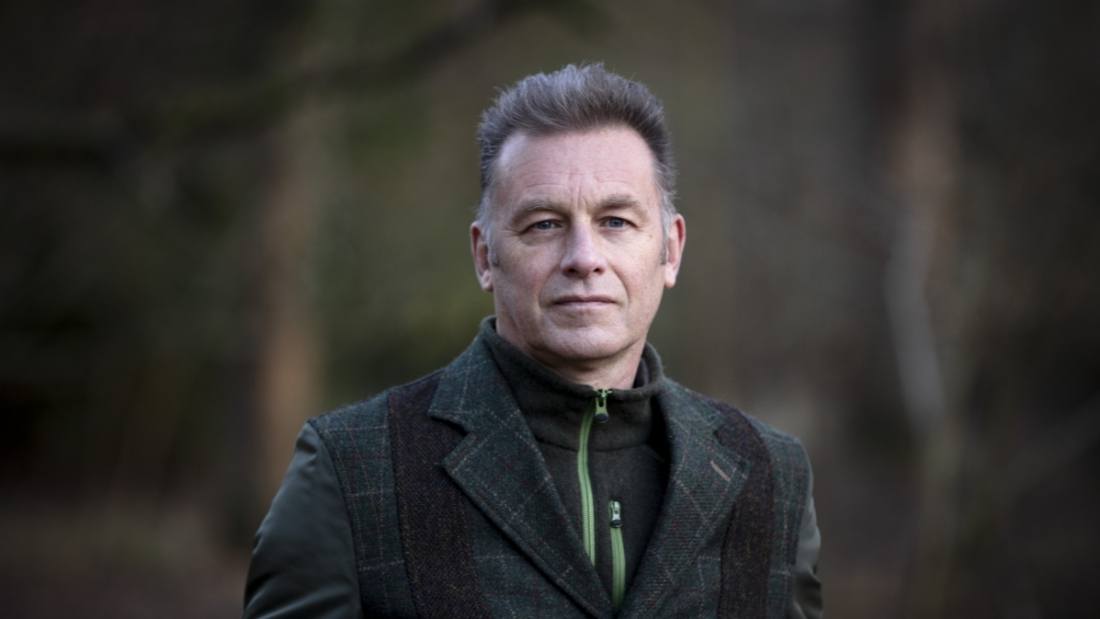
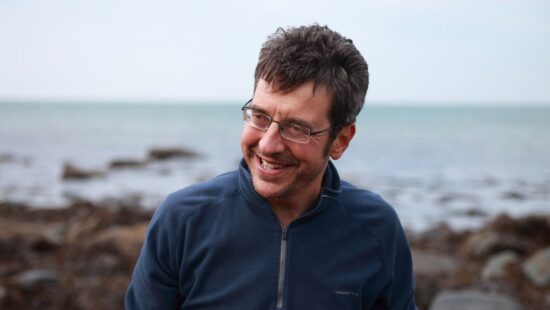
Wendy Turner-Webster…
Absolutely Animal Friendly
The gloves are off for
TV’s star presenter as
she talks to Viva!’s
Juliet Gellatley about her love for animals and why people get
up her nose
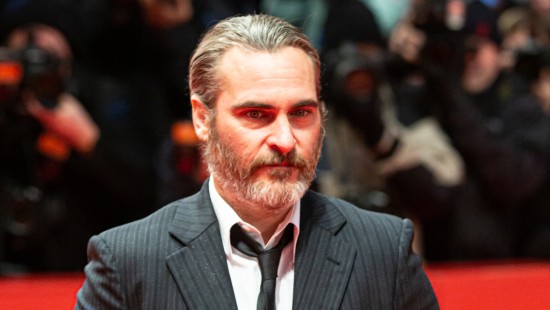
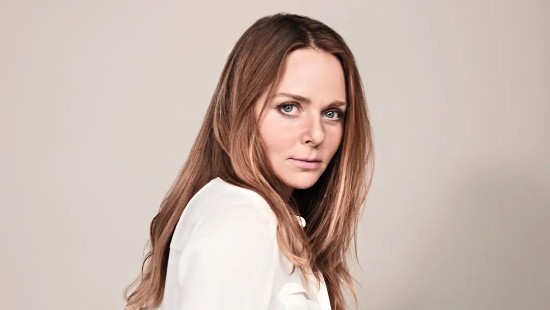
Don’t be fooled by Wendy Turner – or rather Wendy
Turner-Webster, following her marriage to actor Gary Webster. As
host of Channel Four TV’s hit series Pet Rescue, she comes
across as warm and concerned, smiling and friendly. She’s
all of those things but running right through the middle of her
is a streak of real passion and determination.
When it comes to animals she is completely upfront and blunt – wonderfully
blunt, spicing her concerns with the occasional flourish of florid
language for emphasis. But even when verbally slicing the legs
of someone for hypocrisy or greed, laughter lurks just below the
surface. When it erupts – and it does so regularly – it
is totally infectious.
She can afford to be occasionally judgmental because of all the
animal programme presenters Wendy is
the one with the best credentials – she cares about animals
so much that she has become a committed vegan.
I met her at the Orange Tree pub in Richmond, one of the few London
pubs with a theatre attached. Appropriate, really, as she loves
appearing on stage. In fact, this Christmas she will be indulging
in a bit of flamboyant thigh slapping as Genie of the Ring in the
pantomime Aladdin right here in Brighton.
“I love performing and being on stage in front of an audience.
It’s so different to TV work where there’s just you
and the camera and no one to cheer you or react to you. I like
having the chance, even if it’s only once a year, to do something
different.”
Last year she did something very different as Maid Marion – fell
in love with and married Robin Hood. She was, when I met her, expecting
their first merry little man (or woman). He or she will be brought
up as a vegan.
“I hate it when they put that little by-line on milk saying
that it’s completely ‘natural’ – yes, natural
for the cow but not for humans. I’m adamant that cow’s
milk is for cows, goat’s milk is for goats and human milk
is for humans. If you’re standing up and publicly saying
these things, you can’t suddenly change your mind because
you have a baby. I’ve set my stall out and I’m going
to stick to it.”
The last sentence was said with a glint in the eye and real determination.
It might have something to do with the fact that Gary still eats
meat.
“It’s quite tough trying to explain to him that our
baby isn’t going to drink cow’s milk because he can’t
really believe there’s an alternative. “I handed Wendy
a draft of the article Losing Your Bottle (page 15) and she accepted
it eagerly. Again the glint of determination: “I’ll
make him read it!”
Wendy Turner-Webster’s journey to veganism is, in many ways,
a familiar one. The sudden association between real, live, breathing
animals and the lamb chop on the plate. It came about because Country
File was showing during Sunday lunch when she was about 13 years
old.
“The equation fell into place instantly. I loved my cat
and dog and my pony and yet there were other animals which it was
okay to eat. It was just illogical and I specifically remember
this piece of lamb going round and round my mouth and I just couldn’t
bring myself to swallow it. Not long after I went vegetarian my
mum followed me. Because she controls the kitchen and refused to
have any meat in the house, my dad had no option but to join us.
He claims now that he’s vegetarian of his own free will – but
there was bit of coercion at the beginning.”
Like many vegetarians, Wendy remained ignorant of the dairy industry
until comparatively recently when some campaigning literature
plonked on to the door mat.
“It is always a source of amazement to me that I didn’t
become vegan earlier. I was so ignorant and I’m still not
sure if it was simply because it’s easier not to think about
the cruelty of the dairy industry. As I read the details I realised
that if you give up meat for moral reasons, you really have to
become vegan. And so I did, immediately. It was the biggest change
in my life because there are a lot of clothes and shoes to be thrown
out.”
Perhaps the most irritating question which every committed vegan
or vegetarian asks themselves – the one that keeps churning
around in your brain endlessly but to which there's is no real
answer – is why do some people respond when they discover
the truth and others don’t. Certainly Wendy has asked herself
this question and answered it – and it’s an answer
that irritates her.
“Like a lot of things in life, it’s easier to ignore
cruelty and bury your head in the sand. Killing animals, vivisection,
they’re not the least bit fluffy or cuddly. They’re
not nice – in fact they’re bloody unpleasant. And,
quite frankly, I think a lot of people are greedy and think about
their stomachs before they think of anything else. You hear them
say ‘I couldn’t possibly give up cheese’, or ‘I
couldn’t survive without my roast’ and I think ‘get
a life’. It’s all so self-indulgent and just smacks
to me of greed. Of course they can survive, that’s just a
pathetic thing to say.
“You can’t claim to be an animal lover and eat them
at the same time. To me that is the height of hypocrisy. You’ve
probably heard the expression that if slaughterhouse walls were
made of glass most people would be vegetarian. Unfortunately they’re
not.”
Even when she’s laying into meat eaters with passion and
voice projection that could reach the back row of the Palladium,
still there’s a smile playing around her lips and as she
finishes the hatchet job, she bursts into laughter. What must it
be like to be on the set with her?
“Politically, it would be difficult for me to start challenging
the people I interview or those I need co-operation from for the
programmes. I’m very careful not to preach to people nor
to try and force my beliefs on them but usually I don’t have
to because people are very good at raising the subject themselves.
There’s something about it which worries them and they can’t
leave it alone. As soon as you sit down for a meal with them they’ll
ask something – like whether it’s difficult to be a
vegan.
“I find it absolutely bizarre that most of the people I
come across in my work – people who look after animals, try
to save them or campaign for them – are meat eaters. They
eat factory farmed meat! They spout off about what great animal
lovers they are and they do it while they’re munching on
a ham sandwich.”
Wendy Turner-Webster is 32 years old and her background is in
writing and journalism. There is one thing she has in common with
her older sister Anthea, comedian Nick Hancock and my dog Charlie.
They all come from Stoke-on-Trent and you can still hear that distinctive
Potteries twang in their accents – well, perhaps not Charlie’s.
She claims that television presenting simply fell into her lap.
“I auditioned for Absolutely Animals about three years ago
and, of course, I was totally passionate about animal welfare.
It wasn’t just another presenting job to me but something
which combined my two great interests. I think the passion showed
through and that’s why I got the job. Presenting Pet Rescue
was a spin off from it and I consider myself very lucky to have
this particular job.”
It would be easy to imagine that someone who respects animals
so much would find it sometimes harrowing to cover the stories
she does on Pet Rescue. But Wendy is incredibly pragmatic about
it, putting most of the ill treatment down to irresponsibility,
neglect or simply being ‘thick’. And the positive side
is that most of the animals are eventually rehomed. There are,
she says, few stories of calculated cruelty in the programme although
she is fully aware that some terrible things do happen.
“I don’t actually find it very distressing because
there are many other worse things, such as factory farming and
the lies and deception which support it. If people want to see
something really distressing then this is what they should bloody
well look at. They should look deeper and see the really heart-breaking
stuff rather than agonising over a cat waiting a couple of months
to be rehomed.”
Wendy has no illusions that Pet Rescue will suddenly transform
people’s eating habits but she does think the rash of animal
programmes is successfully communicating an important message – the
need for responsibility towards companion animals.
“I never miss an opportunity to tell people not to buy animals
from breeders but to get them from rescue centres and I’m
really vigorous in my opposition to buying reptiles. I just wish
more people would relate their own animals to what they’re
putting in their mouths. To challenge the segregating of animals – ‘we
mustn’t eat dogs but we must eat pigs’ – you
have to overcome a huge psychological barrier.
“There’s a lot of compassion out there but also a
lot of blindness and it all comes down to education. That’s
why it’s so important to reach young people, who are still
taught to love some animals and to eat others and if you don’t
eat them you won’t survive. It’s heavy propaganda and
that’s where you have to start chipping away at it to break
the circle . It’s amazing how difficult it is to get away
from that thinking. It seems that some things have got to hit you
in the face before you take any notice. And that’s why Viva!’s
campaigns are so important, particularly those for young people,
because they actually change minds.”
Wendy has no false illusions about the size of the struggle and
being in the media, is aware of the difficulties of getting coverage
when you’re not able to afford the huge sums which advertising
can swallow up. She also has no false illusions about the role
of TV in exposing such things as factory farming and making a stand
on them.
“I’m quite surprised that these animal issues aren’t
given more coverage but it’s probably because they won’t
pull in the advertising revenue. It’s a simple equation – people
don’t want to know about them therefore the viewing figures
aren’t going to be very high
and so the powers that be won’t commission them. People never
cease to annoy me!
“The truth is that there are too many vested interests involved
and it all comes down to money. Whole industries and careers are
built on the cruelty of vivisection and factory farming and they
don’t want to look for alternatives. Change would be like
a revolution to them and their worlds would start to collapse.
It’s nothing but short-term gain for a few and it’s
frightening that the human race as a whole can’t see that
or doesn’t have the bottle to say ‘we have to take
the animals out of the equation’. And in the meantime we’ll
keep getting the advertising telling us how good meat is for us.”
One thing the media has been very good at recently has been filling
our screens and newspapers with pictures of pathetic farmers, wringing
their hands and telling us how hard times are for them and how
much they love their animals and how it pains them to have to shoot
them. We know from experience that this is the story journalists
have decided is the one the country wants to hear – and no
other.
The thousands of press releases we’ve issued – outlining
the destructive effect of subsidies, how animals are destroying
the environment and human health and how we now have the opportunity
to rethink agriculture – have been almost completely ignored.
I somehow suspect the Wendy is also going to have strong views
on this subject.
“I look at farmers and wonder how they can have become so
desensitised that they can keep animals in the conditions they
do.
They obviously no longer see them as living, breathing, feeling
creatures.
They happily take them to slaughterhouses to have them killed in
appalling circumstances, chopped up and disguised with nice packaging.
To them, animals are just a product and they trot out the old excuse
that we need them to survive. And the people who eat them are just
as bad. It’s a load of bullshit.
“You see the farmers in the media almost expecting – demanding – sympathy
for their plight. Well tough, it’s no different to any other
industry. If people don’t want to buy curtains any more then
your little curtain shop goes bust. It’s supply and demand.
You can’t expect people to prop you up out of some misguided
loyalty or sympathy when your business ain’t working any
more. Sorry, but that’s just tough. That’s how things
are changing. We don’t want factory farming any more!”
I resisted the urge to cheer and Wendy smiled beautifully, like
she had just paid someone a huge compliment. She shifted her
position to make herself more comfortable, reminding us both that
she would soon have someone else to worry about.
“Before you have children you tend
to think in terms of what will have happened in the world by the
end of your lifetime. Suddenly, I have to think what changes
my baby will see. If he’s a boy he’ll be called Jack.
Scientists are just contemplating breeding animals to use their
organs in human transplants but in Jack’s life it might
become the norm. You know, I find that so depressing.”
Much as I hate the hype over the new millennium, it’s impossible
not to think how you would like the next thousand years to differ
from the last. I asked Wendy about her hopes.
“I would like people to think about all animals in the same
way and not to discriminate between one and another. Once that
psychological barrier has started to break down and people don’t
discriminate between their cat and a couple of sausages, I think
there would be major changes. The simple truth is, you can’t
love animals and eat them at the same time.”
By Juliet Gellatley & Tony
Wardle
|