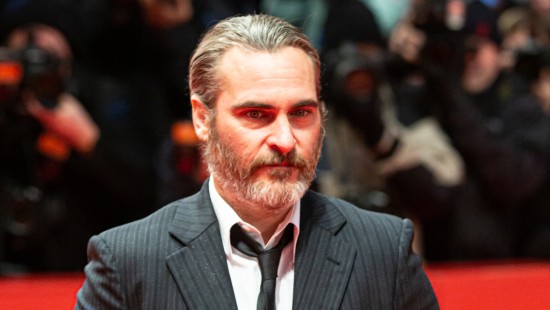


Martin Shaw
a very good judge in Deed
By Juliet Gellatley
As
you enter the Bushey production office of the TV drama Judge John
Deed, you’re
left in no doubt about the ethos which underlies it. “Please
note – all the catering on this production is vegetarian.”
Starring in the title role is Martin Shaw, co-star is Jenny
Seagrove and the writer is G F Newman – all committed veggies.
And the plots and sub-plots weave their way through issues such
as vegetarianism, vivisection and animal cruelty. This is one
of the most cerebral TV dramas for many years and it is all the
more entertaining for it.
In an age when celebrity is all and the third world war would
probably be cancelled if Posh or Becks could not put in an appearance
at its declaration, it comes as something of a shock to realise
that Martin Shaw avoids publicity like the plague. Although he
and his beautiful TV presenter wife Vicky Kimm have the looks
and charm that could keep them on the front cover of OK! or Hello
magazines, they don’t even appear in the classifieds. There
are clearly far too many important issues in their life for them
to waste time on this trivia – like flying an old bi-plane,
for instance. The fact that they live in the sticks – in
Norfolk – places them way outside the London celebrity
circuit.
Judge John Deed is filmed on the rambling acres of a massive,
disused Victorian school near Watford, part of which also now
forms the International University. In exterior shots, careful
camera angles hide the fact that there is virtually no traffic
on screen other than the vehicles directly involved in the
story. That’s because there aren’t any! Once you
know this, you can’t help noticing!
Judge Deed is played as a thinking man drawn from an ordinary
background who, far from keeping his distance from the cases
he tries, gets intimately involved in them. He’s not averse
to bending the rules a bit if it aids the cause of justice and
he’s kept firmly rooted in the real world by a daughter
who homes rescued beagles and
flirts with the slightly lawless side of life. Oh, and John Deed
is a
terrible womaniser.
When you meet Martin Shaw, it’s at first difficult to
disentangle the actor from the character – apart from the
womanising bit, of course. We first interviewed him for our anti-factory
farming video Not in my Name during a break in filming.
When he stood there in judge Deed’s trademark collarless
shirt and braces, it at first sounded for all the word as though
it was the judge who was taking the interview. Like his character,
Martin never speaks in rehearsed phrases, even though he must
have been asked some questions many times over, but weighs each
response carefully.
When he replies it is with precision, as though this is the
first time he has considered the proposition. He delivers his
words in a measured way, speaking gently and without obvious
emotion as though it is essential not to use a single word in
the wrong place or give it the wrong emphasis so that it fails
to communicate precisely what he feels. The outcome is that when
Martin Shaw reaches a conclusion it has the ring of absolute
truth about it and only a fool would disagree with him. He possesses
an innate sense of power, perhaps drawn from deep and painful
experience. If he hasn’t personally partaken in all the
world’s suffering, he certainly feels it and empathises
with it.
 |
And of course, he has had some direct physical suffering of
his own. In 1969, enjoying a good night out, he was attacked
by drunken muggers who beat him so badly that they completely
smashed his right cheek bone. Reconstructive surgery included
the insertion of a plastic plate and the whole experience caused
him to give up alcohol entirely. Smoking wasn’t elbowed
until 1979, a few years after he became veggie. It was factory
farming that brought about that change.
“I had a mixture of feelings when I first discovered what
went on in those places. First of all there was rage that animals
could be subjected to such suffering. It was followed by a sense
of guilt that I had tacitly tolerated it for so long. Finally
there was a sense of relief that I didn’t have to be involved
with it at all – all I needed to do was stop eating meat.”
Of all the many horrible images of factory farming that jostle
each other for attention, I wondered which one in particular
stays with him, a reminder of why he has excluded meat from his
diet. When Martin answers he is, as always, careful not to reach
for the polemical and tries to defuse in advance the outrage
his response might cause in some people:
“My answer is not only controversial but it might be offensive
and for this I apologise but it puts me in mind of Belsen and
Auschwitz. I’m not making value judgements about the
difference or similarity between human and animal life but
my sense of outrage and disbelief that we can allow this to
happen is
very similar.”
Both barrels of his rhetorical shotgun discharged and we’re
only at the beginning. There’s more to come.
“What this says about us as a society is that we have
a way of diverting our minds from things which are going to give
us profound discomfort, probably in a very similar way to those
people who lived near concentration camps. They chose to ignore
what was happening until they were forcibly marched in and made
to see it for themselves. Our society does the same thing with
factory farming. If before they ate meat, people were taken to
a factory farm and saw the misery, degradation and torture that
they were party to, I don’t think most would want to carry
on because I do believe that, innately, human beings are good.”
A devastating critique delivered with the gentleness and consideration
of a sensitive man who cares about the abuser as well as the
abused. Whether he realises it or not, Martin is able to play
good cop and bad cop all in the same sentence and it is that
which makes his words so powerful, so persuasive and utterly
reasonable. As a public advocate for a more compassionate world,
I cannot imagine anyone being listened to more intently or being
more successful in changing hearts and minds. None so deaf as
those that don’t want to hear, goes the old expression – except
when Martin Shaw is speaking. I give you due warning, Martin,
it is our intention to get you to speak at a Viva! rally one
day!
He is a Brummie, born in 1945, who won a scholarship to the
London Academy of Music and Dramatic Art and it seems that he
has not stopped work since then. His list of credits is almost
endless and includes great classic roles as well as a string
of films, tele dramas and series. Men of a certain age go all
peculiar and green with envy at the reminder that he appeared
as Purdey’s ex-fiancé in The New Avengers. Purdey,
of course, was played by another great veggie – and also
an interviewee in our video – the fantastic
Joanna Lumley.
So, hands up anyone who can remember the character Martin played
in Coronation Street in 1967? If the words hippie, headband and
student haven’t given it away then I’ll tell you – Bobby
Croft! Bobby who?
Anonymous he wasn’t in the TV drama with which people
still associate him and which took him to international stardom.
It will probably hang around his neck like an albatross until
the day he retires. He was, of course, the lavishly-curly-headed
Ray Doyle in The Professionals, acting alongside Lewis Collins
and Gordon Jackson. I didn’t talk to him about the role
but it has often been reported that he viewed the character Doyle
as little more than a violent puppet – and Martin Shaw
does not believe in violence.
“For me it us utter conviction that by turning a blind
eye and tolerating violence in one area – such as factory
farming –
it makes us susceptible and likely to tolerate violence in other
areas, in all areas. Someone who is upset and hurt by seeing
cruelty to animals would find it impossible to tolerate cruelty
to people.”
Although he doesn’t spell it out, it is clear that Martin
believes that the corollary is also true – people who tolerate
cruelty to animals are also capable of tolerating cruelty to
humans.
“I think a whole raft of our problems as human beings
on this planet would be solved by being sensitive to the plight
of other creatures. To me it is as clear as the fact that night
follows day – if you care about animals and are kind to
animals, if you don’t tolerate degradation and cruelty
to animals, you won’t allow it
or tolerate it elsewhere.”
It’s ironic that anyone who attends a rally or demonstration
against animal cruelty will inevitably be stung by the barb from
some angry, red-faced bystander: ‘What are you doing for
people.’ The answer should
be, ‘Plenty’.
So secretive and so locked behind closed doors is the majority
of today’s animal farming that most people who oppose it
have only ever seen examples on video, such as the exposes Viva!
produces. Quite by chance, Martin came into contact with free-range
duck farming a few years ago but the conditions he witnessed
were so appalling that they might just as well have been factory
farmed.
“I had a ‘phone call from Vicky to say a distressed
duckling was running around in the road and would I come and
help her catch it. It had escaped from a field where there were
several acres of filthy, grey ducks. They should have been white
but they had no water in which to clean themselves and no shade
from the sun. Some were incapable of standing.”
Martin and Vicky took the bewildered little duckling and an
ailing adult bird home with them after the farmer said they were
going to die anyway so it didn’t matter to him.
“It was one of the most moving things I have ever seen.
We put them in a paddling pool to see what would happen and they
were ecstatic – I mean truly, literally ecstatic.
They went round and around like little motor boats. We have
a pond in our garden and when we put the adult bird on
this deeper water, she immediately sank. She couldn’t walk
or stand and hadn’t been able to preen properly so subsequently
had no oil on her feathers. Yet still she was ecstatic and swam
with only her head above the water. I had to get in the water
to rescue her.
“After that I spent about an hour a day helping her to
swim, supporting her from underneath, wrapping her in a towel
when she had finished. As I dried her she would immediately start
to preen.
“When, because of work, I no longer had the time to continue
with the regime, the wonderful people at Hillside Animal Sanctuary
(Martin and Vicky are patrons) took on both ducks. They now have
their own pond, can walk perfectly and are absolutely fine.”
No surprise, then, that vegetarianism is absolutely central
to Martin’s life and has been for more than 30 years.
“It’s so second nature to me that I don’t
think about it. But there are times when I have to check what’s
in food. For example, this is a vegetarian shoot and I have to
ask if their are eggs in things because eggs are presumed to
be vegetables by a lot of people.” And I’m sure he
does it politely, firmly and without rancour.
It follows that Martin is not in favour of what he terms powerful
direct action. He believes that if you imitate the problem – and
in the context of animal abuse that problem is violence – then
you simply add to it. And very generously, he speaks so warmly
about Viva!’s work that I’m almost embarrassed.
“You are absolutely vital! People like me, however sympathetic
and however vociferous, don’t have the time. We can do
only the odd ten minutes here and there, the occasional evening,
the odd function, letter or photograph and it can only have a
minimal effect. What we need are people like you who are committed
enough and brave enough and dedicated enough to give all your
time because the only way you can change society is by changing
yourself and getting the information out there.” Kind words
indeed.
When you are aware that someone feels as passionately as Martin,
it’s impossible not to identify the little bits of themselves
they bring to the characters they play. I hear sentiments and
phrases in Judge Deed’s words that are pure Martin Shaw,
scenarios that I know he empathises with and an inherent set
of beliefs that are not a million miles away from those of the
actor. Maybe that’s why it felt like interviewing the judge,
maybe that’s why he’s such a good judge, maybe Martin
is the judge. One thing is certain, he is the antithesis of Ray
Doyle and that has to be a good thing.
|