
The road
from villainy to poetry
is a rough one.
Juliet Gellatley meets the gentle,
vegan poet who made
the journey…
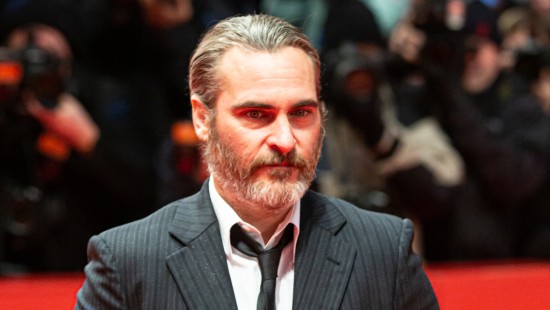
Benjamin Zephaniah
the people’s poet
"One day when I was 11, I asked my mother where did meat come
from and she said from the butcher and I said where did the butcher
get it from and she said the farmer and I said where did the farmer
get it from and she said the cow and I said where did the cow get
it from and she said – it is the cow! A shudder went through
me!”
When Benjamin Zephaniah speaks, the words don’t come out
like they do from any other person. For a start, there’s
always a lot of them. But he can turn a conversation about tax
returns into a stream of consciousness that lilts and croons, purrs
and modulates like a stream running over pebbles. When simply asking
what you want to eat, he sounds as original as a character from
a Pinter play but without the self consciousness.
So, at just 11, he went vegetarian and at only 13, he completed
the journey and gave up dairy products. The transition was again
sudden:
“I read a book about how humans drink milk that was meant
for the animals’ young and I decided I wanted to disturb
the animal kingdom as little as possible. But it was sometimes
difficult to explain why. One day a kid gave me an ice cream and
I said I didn’t want it because it had milk in it and milk
belonged to babies.
“`You’re a vegan’, he said – and I thought
he was calling me a nigger or something so I went to beat him up.
He was yelling, ‘No, no,
it’s a good thing!’ I was quite proud then because
I was the only vegetarian or vegan I knew.”
When you’re not black, it’s almost impossible to understand
the effect that racism must have – a constant, daily diet
of insults, abuse and aggression. It’s clearly an everyday
part of life in Britain and that’s what makes it doubly disturbing.
“I was often the only black kid at school and most of the
others were hostile so I’d get beaten up all the time. Because
of that, I’d often go over to a corner in the playground
on my own and perhaps a cat would come along and I’d play
with it. Or I’d be happy to sit and play with the ants.”
This gentle, warm, vegan poet has been forced to view the world
from a raw and at times harsh perspective. He had every right to
turn his back on its failures and say stuff you. But in fact he’s
taken unto himself its most intractable problems and it is that
which informs his poetry. He cares – he cares because everywhere
he looks he sees ignorance and cruelty and he can’t just
walk away from it. Selfishness and exploitation are the constants
which bolt together seemingly unrelated problems.
“I was listening to a radio report by a female journalist
on the way women are treated in Saudi Arabia and Pakistan. Girls
are taken out of school as soon as they reach puberty and are kept
locked away in the house. The men say that they are the spirits
and the women are the animals – they’re seen as dirty,
they’re not educated and aren’t allowed to be anything
apart from slaves to the men. And they quote the Koran to support
it. It was horrible and I just related it back to the way animals
are kept in factory farms. The same kind of attitude – utter
exploitation”.
Benjamin doesn’t just single out Islam for criticism – he’s
pretty even-handed in his contempt for all organised religions.
 |
|
| Benjamin in his home recording studio |
|
“I used to do all kinds of things with the words that were
written in the bible, justifying the robberies I did. You just
find little quotes about the poor taking what is due to them. Nazis
used the bible. Apartheid South Africa had one of the most concentrated
communities of church goers in the world. That’s one of the
flaws in religion. You can interpret it in so many different ways
and to me it’s anti-intellectual, anti-thinking for yourself.”
Despite his view of formal religions, Benjamin Zephaniah is genuinely
disturbed by the world’s loss of spirituality. What he particularly
dislikes is the segregating of issues, sorting them into categories,
prioritising them. “People say that we have to get justice
for this or that first – for kids for disabled or black people
or women, and then we can worry about the animals. I don’t
think that’s the way we should look at things. I think they’re
all as important as each other and they’re all related.”
Robberies? Oh yes! Benjamin Zephaniah didn’t have the most
promising start in life.
Dyslexia, ignored by school teachers, not learning to read or
write until he was 21, moving from city to city and school to school – some
30 in all – on the run with his mother, often sleeping in
doorways or in cheap and tatty rooming houses, trying to keep one
step ahead of a violent father. That was life in the early years.
As soon as they tried to register for benefit his father would
pick up their whereabouts through his job with the GPO, tapping
into the grapevine. He then went in search – and always found
them.
This part of Ben’s depressing story reached its tragic conclusion
in the middle of a busy city street. His father appeared and attacked
Benjamin’s mother so fiercely that the young Ben feared for
her life. He did the only thing he felt he could to save his mother.
He pulled a knife from his pocket and stabbed his father.
He didn’t kill him but the attack marked the start of a
five-year period filled with approved schools and borstal, adding
yet another oppressive dimension to a life which seemed to have
been built entirely on turmoil
and change. It gives a poignant twist to his poetical words:
‘When I was your age, I loved my mother
and my mother loved me,
We come so far from over the sea,
We hear that the streets are paved with gold,
Sometimes it’s hot and sometimes it’s cold’.
In fact the only constant which has run throughout Benjamin’s
life is his poetry and it started as soon as he
learnt enough words to string together.
“I just memorised everything and because I couldn’t
read or write I think I compensated with my memory. I always had
a love of words and yet I didn’t like any of the poetry I’d
heard around me. There was a whole generation, particularly of
black poets, that was scared of using the words poetry or poets
because of the image it had of wise old men. The term rapper was
better. It meant talking, fast talking – and we did and felt
we were in a world of our own – our world”.
At the age of 10, the young poet was secretly sharing lines with
a few other, like-minded kids. In fact it wasn’t that big
a secret because at the age of 13 Benjamin was expelled from his
Birmingham school for writing poetry – on the school wall
in letters three feet high. He never bothered to go back.
Although the prognosis for Ben’s life was pretty grim, he
had a constant belief that he was going to be a poet – a
proper, full time, paid poet. Considering there’s a hardly
a white poet who can make that claim it was an extraordinary hope
for someone hobbled by prejudice. It certainly infuriated his mother
who thought a proper job should be the aim. What’s extraordinary,
is that he had nurtured the belief since he was a little kid.
It was a dose of injustice that made him finally transmute criminality
into art. Lifted by the police for a burglary he didn’t commit,
Benjamin was dragged off to the nick protesting. ‘It wasn’t
me, I was writing poetry, man’, must rank as one of the least
believable alibis in criminal history.
“I changed. I used to think I was fighting the system but
I suddenly realised I wasn’t doing that at all. I used to
think that all whites were the enemy and that anybody with a car
was fair game. I had a bit of a reputation with the Birmingham
police so I decided to get out of there.”
And he did, by running off to London with the girl friend of a
guy from UB40. But the streets weren’t paved with gold. After
dossing around for a while, poetic justice struck. His new girl
friend high-tailed it back to Brum when she saw that UB40 were
rocketing up the charts. Benjamin smiles ruefully as he tells the
story, the passage of time allowing him to appreciate the humour
in it.
This was the time of great turmoil in London with big demos for
women’s right’s, against the infamous ‘sus’ law
and against National Front marches. At last Benjamin had a platform
for his poetry and beliefs.
“It was great for me because I was doing political poetry – poetry
that wakes you up, makes you want to go out and do something. It
all came together and I quickly got well known.” So there
was some gold in the mortar joints after all!
Everything about Benjamin Zephaniah is warm, friendly, endlessly
understanding and gentle – above all gentle. And yet his
poetry is often highly political, critical, angry.
“I am angry. I feel let down by a lot of people in ‘show
business’. They don’t talk publicly about their beliefs
when they could easily influence people. It bothers me that there’s
such a small pool of artists in the vegetarian and vegan movement
to go for publicity.”
When Benjamin tried to form an organisation called Artists Against
Apartheid (AAA) with Jerry Danders (The Specials – Free Nelson
Mandela), only a few artists were prepared to commit themselves
and no athletes!
“Because of our experiences on the streets with the NF,
the British flag is almost a symbol of Nazism to us so when people
like Linford Christie wrap the British flag around them, it’s
hard for the black community. Not because they do it but because
they do it but refuse to speak out about racism.”
I suppose the word which sums up Benjamin Zephaniah’s beliefs
is justice – and it shows through in the wide range of civil
and animal rights organisations he supports, including Blackline
which supports prisoners on death row. Benjamin’s book about
capital punishment called Out of the Night – is a thought
provoking, disturbing account of one aspect of human’s inhumanity
to humans.
While Benjamin Zephaniah has talked away almost non-stop, we have
chomped our way through the best vegan Indian meal I have ever
tasted, in a small and unpretentious café, Milan, within
sound of Kings Cross Station. But the conversation is still in
full flow so I take off with him as he heads for a photo-shoot
in the West End. He poses, and poses some more, still talking between
shots, his Brum and West Indian accents stapling together words
in a seamless tapestry of beliefs, worries, fears and hopes spiked
generously with humour. This isn’t a rant but a sensitive
and entertaining man exploring his feelings, each one he pulls
out dragging behind it a coterie of others, so interlinked are
his beliefs.
The final flash pops but Ben still has things to say so we head
for his home in the East End of London. He can afford something
more affluent than this now so why does he still live here?
“It’s really not a great area to live in if you’re
in the arts – you want to live in West London or North London.
That’s where the poets are. But it’s the people around
here that I want to reach because they’re in the real world.
I love listening to what they think. They love their kids and don’t
want to be shoving Ribena and other rubbish into them, but they
feel stuck in this situation. They see health food shops as elitist,
expensive places. They say to me, ‘Ben, when I go to the
supermarket I want the cheapest bloody thing. I’ve got a
baby crying here, I’ve got a baby crying there, don’t
ask me to read the labels ‘cos I don’t know what those
big words mean.’
“What gets me is that one of the areas manufacturers are
really concentrating on is genetically modified food for babies – the
most vulnerable, the ones who haven’t got
their immune systems completely built up yet. It’s all about
money. I don’t know who it was, it might have been Marx who
said that capitalism will eventually eat itself and I really think
it will.
“I think we will have a kind of revolution one day but I
can’t sit down and wait for that, I’ve got to work
for it. You’ve got to keep working away at it, you know!”
His involvement with the South African revolution shows his commitment.
When the South African government blew up the ANC’s Tanzanian
radio transmitter, Ben Zephaniah did a tour to raise money to rebuild
it – Radio Freedom it was named. The news was passed to Nelson
Mandela in prison, along with copies of Ben’s books and tapes.
When Mandela was released he asked to see Ben and the meeting took
place in London. There have been three subsequent meetings, here
and in South Africa.
 |
|
| Benjamin with Viva!’s Juliet Gellatley |
|
Benjamin is now a regular visitor to the country, working with
kids in the townships.
“They can’t read or write, just like me at their age
so I get them to learn poems, to chant them. When you say goodbye
there’s 300 kids shouting goodbye to you and now they’ve
got poetry in them, a love which was almost lost during the apartheid
days”.
I have to ask about Nelson Mandela who, along with Mahatma Gandhi,
is one of my great heroes.
“The thing about Nelson Mandela is that he’s a very
ordinary person. He’s done something that we think is extraordinary
but really, when you strip it down, all he did was stick to a simple
principle. When the South African government said ‘we’ll
let you out if you just give up’, he said ‘no’.
I would have said ‘yes’ got out and then gadded off,
but he didn’t do that on principle. He doesn’t have
a great big aura around him, he’s just a nice guy.
“I saw him again the other day when I was hosting a two
nations show at the Royal Albert Hall. I asked him if he remembered
me and for the first time I felt like I’d offended him. He
said ‘Of course I know you, who do you think I am, a politician?’ He’s
right, politicians do forget you. Once they’ve used you and
they’re finished with you, they spit you out.”
Benjamin says it with feeling. “New Labour has taught me
that politics is a dirty job. I used to think that they were closest
to animal rights and human rights but once they got into power,
they changed their views so much.
“Now they’re talking about forcing disabled people
to work, they’re penalising single parents. They could please
the vast majority of people just simply by banning fox hunting
or introducing a moratorium on genetically modified foods but they’re
in the hands of the big boys now.
“The people who are doing it for me are those who are saying ‘forget
the politicians’, those who stand in front of lorries taking
the animals out; the people who are fighting for justice for Stephen
Lawrence. Tony Blair is insignificant, you’ve just got to
forget him, you’ve got to take the power back. If only you
knew how much power you have!”
Listening to Benjamin Zephaniah makes me realise why the feedback
I get from Viva! supporters excites and encourages me – because
they are using their power. One of those supporters is Benjamin
Zephaniah. In everything he does –
his music, his poetry and now his first novel – he pushes
ceaselessly to raise awareness, to bring about change.
After his novel, Face, to be released in August, comes a little
book of vegan poems.
“I’ve got this little character called Vegan Steven
and there’s little limericks written about him.
‘There once was a vegan called Steven
Who just would not kill for no reason.
He would not eat cheese and not eat meat
And he hated the fox hunting season’.
“What inspired me to do it was talking to one of the girls
in your office about one of her friend’s kids.”
Ben obviously loves kids and sees them as our only hope for the
future. His role as presenter in the Vegan Society video Truth
or Dairy is making his face known to them. One young lad came up
to him recently: “Here, I saw you in that film, you know,
the one about…er… about… viagra!” Okay,
so there’s still a way to go.
So what does Ben see as the philosophical lode stone that will
guide the next generation? He doesn’t particularly like ‘isms’ and
describes the battle between Russian socialism and capitalism as
being like two boxers in the ring who have just worn each other
out.
“Tired old capitalism is still boxing away but it hasn’t
really won but now there’s nowhere to go, no real leadership.
When you listen to someone like Castro, he still has so much to
say. What the world needs now is a young 19 or 20 year old Castro;
someone who can address today’s people, today’s kids;
a Castro that’s in touch with hip hop.”
It’s now nearly five o’clock but the man is still
talking, still working out ways of putting the world to rights.
I wonder if that includes accepting the anachronistic post of poet
laureate if it’s offered. He hasn’t helped his chances
by condemning the monarchy and writing a poem that says his family – all
eight brothers and sisters – are just as royal as the royals.
“I don’t understand why I’m even in the debate.
These people haven’t even read my work properly. They’ve
just gone – popular poet, everybody likes him, he’s
up for the job.”
More exciting for Ben is the University of North London’s
recent bestowal of an Honorary Doctorate on him. What really delights
him is that it wasn’t just for his poetry but for his humanitarian
work as well:
“They actually talked about me being vegan, which I thought
was just so good and I really commend them for it because so many
big institutions are a little bit up their own backsides. The Nobel
Peace Prize, for instance, has become a joke. You don’t win
it by campaigning for peace, you win it by being a butcher, by
going to war and then stopping.”
The clock is still ticking away and eventually it’s me who
reluctantly calls the interview to an end. I could go on indefinitely
talking to this extraordinarily forthright poet who laces deep
concern with warm humour, who slices through prejudice and bitterness
with disarming joviality, who sees love and compassion as central
to survival.
“I passionately love life and I understand now how important
love is to me. I really think about the true meaning of the word – that
and compassion. If I have just one sentence on my tombstone to
be remembered by it would be, ‘He tried to love every body’,
with everybody as two separate words.”
Can you imagine anyone better to be a patron of Viva!?
Article by Juliet Gellatley and Tony Wardle
|